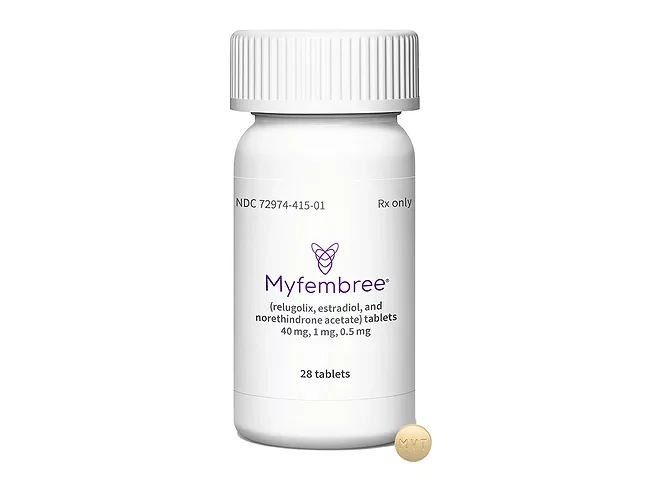
Women now have a new treatment option for dealing with the pain associated with endometriosis with U.S. FDA approval of Myfembree (relugolix/estradiol/norethindrone acetate) for managing moderate to severe pain associated with endometriosis in premenopausal women.
Women now have a new treatment option for dealing with the pain associated with endometriosis with U.S. FDA approval of Myfembree (relugolix/estradiol/norethindrone acetate) for managing moderate to severe pain associated with endometriosis in premenopausal women.
Immunogen Inc. leads a busy earnings season with numbers that pushed the stock (NASDAQ:IMGN) 30.3% higher on Feb. 12. The antibody-drug conjugates developer posted revenues of $132.3 million for 2020 compared to its $82.3 million in revenues for 2019, a 62.2% increase.
Thanks to Myovant Sciences GmbH’s potential $4.2 billion deal with Pfizer Inc. for recently approved Orgovyx (relugolix) in prostate cancer (PC), more physicians are going to be learning about [the compound] faster,” said chief commercial officer Adele Gulfo. “This is going to create huge demand.”
Following a priority review of Orgovyx (relugolix), an oral hormone therapy developed by Myovant Sciences GmbH, the FDA has approved the medicine for the treatment of adults with advanced prostate cancer. The first success among three indications for which Myovant has developed the gonadotropin-releasing hormone (GnRH) receptor agonist, the green light marks Myovant’s transformation into a commercial-stage company, SVB Leerink analyst Ami Fadia noted. Company shares (NYSE:MYOV) fell 4.5% to $23.61 following the Dec. 18 approval.
With a Dec. 20 PDUFA date bearing down on relugolix from Myovant Sciences GmbH, of Basel, Switzerland, freshly released and slightly downbeat secondary endpoint phase III data created a rift with management and analysts on one side and investors on the other.
With the PDUFA date for relugolix against prostate cancer growing nearer and data in castration resistance-free patients closer still, Myovant Sciences GmbH aims to wring more from the oral, once-daily gonadotropin-releasing hormone receptor antagonist, studying it in uterine fibroids and endometriosis.
Geneva-based Obseva SA’s phase III Primrose 2 trial with gonadotropin-releasing hormone (GnRH) antagonist linzagolix in heavy menstrual bleeding (HMB) due to uterine fibroids (UFs) hit the primary endpoint in 94% of patients, and the company in the second quarter of 2020 will report six-month data from the Primrose 1 study, which is also a phase III experiment, in the same indication.