South Korea’s Ministry of Food and Drug Safety announced Sept. 12 plans to significantly raise drug application fees for biosimilars but slash their review times starting next year.
South Korea’s Ministry of Food and Drug Safety announced Sept. 12 plans to significantly raise drug application fees for biosimilars but slash their review times starting next year.
Nature Cell Co. Ltd. won U.S. FDA breakthrough therapy designation of its autologous adipose-derived mesenchymal stem cell therapy, Jointstem, March 20, becoming the first Korean company to earn the label in the field of cell therapy.
Celltrion Inc. is on a biosimilar roll with the U.S. FDA this month, having gained clearance of Stoboclo and Osenvelt as products referencing Amgen Inc.’s biologic, denosumab (Prolia, Xgeva), along with Omlyclo becoming the first and only interchangeable biosimilar to omalizumab (Xolair, Genentech Inc. and Novartis AG).
Celltrion Inc. is on a biosimilar roll with the U.S. FDA this month, having gained clearance of Stoboclo and Osenvelt as products referencing Amgen Inc.’s biologic, denosumab (Prolia, Xgeva), along with Omlyclo becoming the first and only interchangeable biosimilar to omalizumab (Xolair, Genentech Inc. and Novartis AG).
South Korea’s Ministry of Food and Drug Safety said it released the world’s first guideline on reviewing and approving generative artificial intelligence-based medical devices Jan. 24, to help establish standards on the technology’s applications in the medical field.
South Korea’s Ministry of Food and Drug Safety said it released the world’s first guideline on reviewing and approving generative artificial intelligence-based medical devices Jan. 24, to help establish standards on the technology’s applications in the medical field.
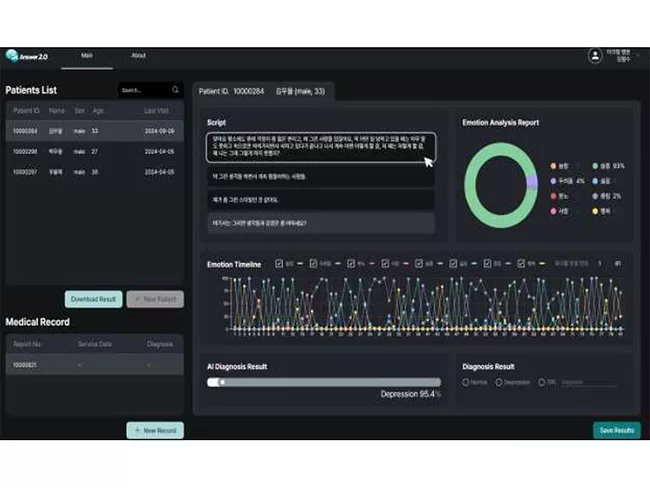
South Korea’s Ministry of Food and Drug Safety cleared Acryl Inc.’s Acryl-D01 as the country’s first AI-based digital therapeutic software solution to aid depression screening and diagnosis on Dec. 20. Approved as a class II software as a medical device, Acryl-D01 utilizes a patient’s medical records to quantify and analyze the individual’s emotional response and assess the probability of having clinical depression based on the data.
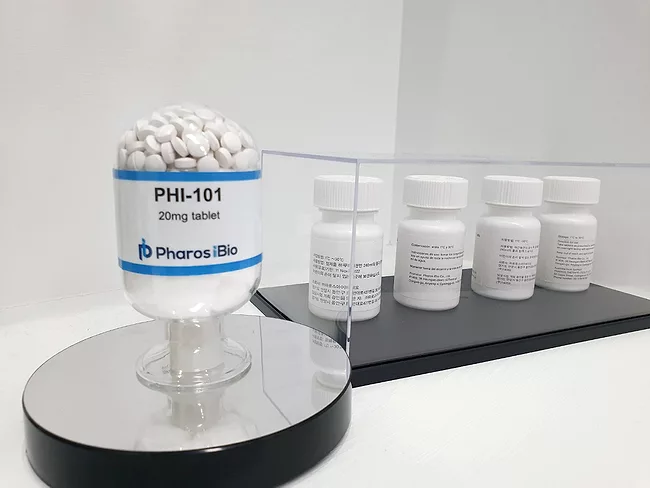
South Korean artificial intelligence-based drug developer Pharos Ibio Co. Ltd. said that the Ministry of Food and Drug Safety (MFDS) granted an orphan drug designation for PHI-101, a second-line therapy for acute myeloid leukemia (AML).
South Korean artificial intelligence-based drug developer Pharos Ibio Co. Ltd. said that the Ministry of Food and Drug Safety (MFDS) granted an orphan drug designation for PHI-101, a second-line therapy for acute myeloid leukemia (AML).