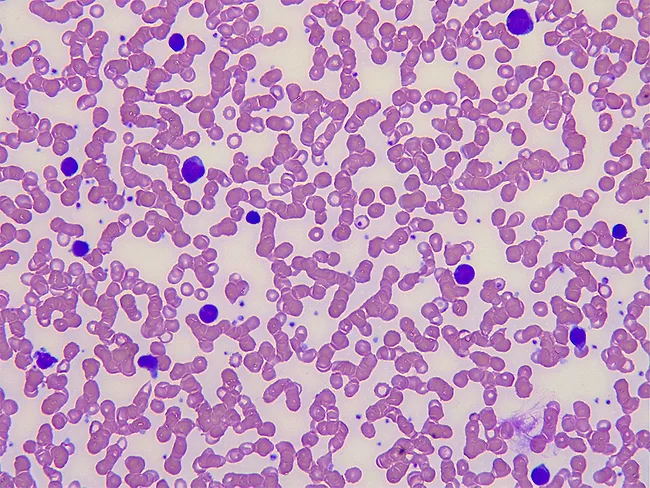
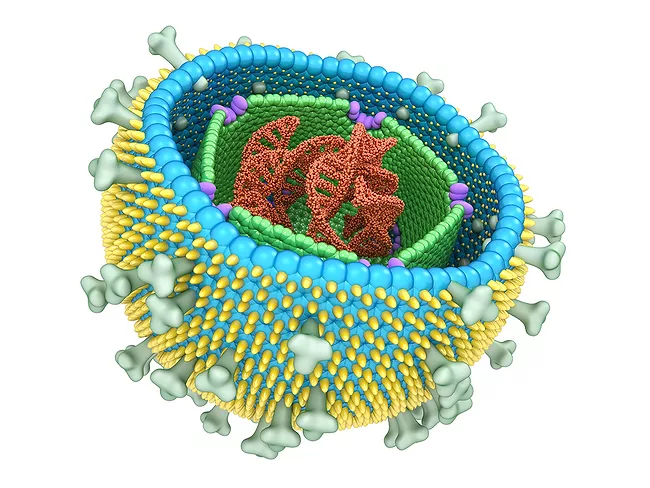
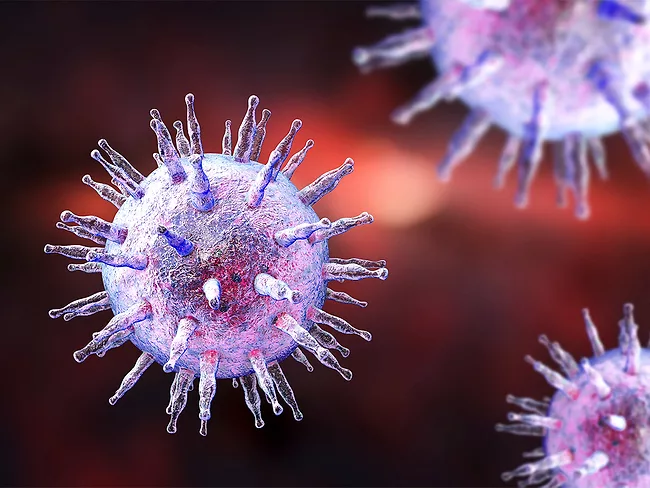
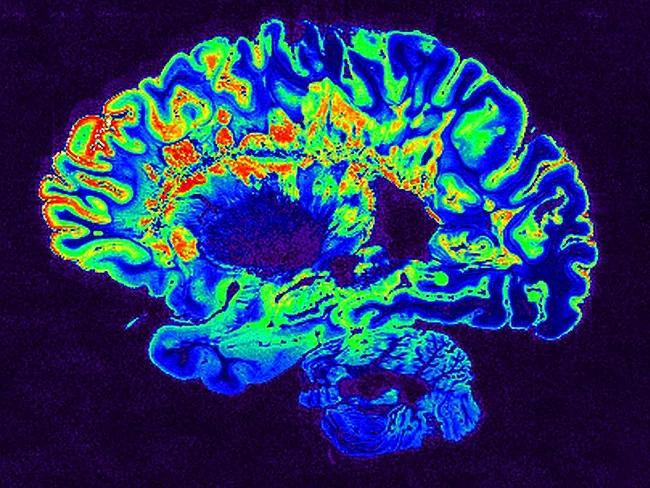
An Anglo-American team of researchers has devised a new computational method for quantifying Epstein-Barr virus (EBV) directly from human genome sequences and used this to identify 22 genes that link higher levels of the virus to a range of chronic diseases. The new method sets the scene for further exploration of biobank DNA sequence data to gain greater understanding of the nature and the role of the human virome, the 10(13) – largely unstudied – viral particles that coexist in humans.
Multisystem inflammatory syndrome in children (MIS-C), a serious disorder that develops after SARS-CoV-2 infection, could arise from latent infection of another pathogen, the Epstein-Barr virus (EBV). Researchers at Charité – Universitätsmedizin Berlin and the German Rheumatology Research Center (DRFZ) have linked the inflammatory effect of this co-infection with transforming growth factor β (TGF-β), ruling out the possibility that MIS-C is caused by an autoimmune reaction, or persistence of the coronavirus in the body.
A combination of Epstein-Barr virus (EBV) antibodies and genetic factors may be linked to an increased risk of multiple sclerosis (MS), according to a study led by scientists at Karolinska Institutet and Stanford University. “The Epstein-Barr virus has been a suspect for many years for having a role in causing MS. The evidence for it has increased though one has not really reached complete proof of its role,” Tomas Olsson told BioWorld.
Treatment with indoleamine dioxygenase-1 (IDO1) inhibitors reduced both viremia and B cell transformation in animal models of post-transplant lymphoproliferative disorder (PTLD), while IDO1 up-regulation occurred in patients who would go on to develop PTLD. The findings, which were reported in the May 24, 2024, issue of Science by researchers from the University of Basel and the University Hospital Basel, point to new ways to predict, prevent and treat complications of Epstein-Barr virus (EBV) infection.
Treatment with indoleamine dioxygenase-1 (IDO1) inhibitors reduced both viremia and B cell transformation in animal models of post-transplant lymphoproliferative disorder (PTLD), while IDO1 up-regulation occurred in patients who would go on to develop PTLD. The findings, which were reported in the May 24, 2024, issue of Science by researchers from the University of Basel and the University Hospital Basel, point to new ways to predict, prevent and treat complications of Epstein-Barr virus (EBV) infection.
Spybiotech Ltd. has entered into a sponsored research agreement with the University of Oxford for the development of a vaccine against Epstein-Barr virus (EBV).
Ebviously GmbH, a spin-off from Helmholtz Munich (HMGU), has presented new in vitro data for its Epstein-Barr virus (EBV) vaccine candidate EBV-001. Based on noninfectious virus-like particles (VLPs) derived from EBV, EBV-001 is designed as a highly immunogenic, multiantigen vaccine to prevent EBV-associated diseases, such as infectious mononucleosis.
An experimental vaccine that contained antigens of both lytic and latent phases of Epstein-Barr virus (EBV), and induced both an antibody and a T cells response, was able to generate broad and long-lasting immunity against EBV in mouse models of infection. Researchers from the QIMR Berghofer Medical Research Institute and Elicio Therapeutics Inc. reported those results online in Nature Communications on Aug. 8, 2023.
For some viruses, the challenge to developing a vaccine is their rapid mutation rate. This is the major challenge to developing an HIV vaccine or a universal flu vaccine. EBV is different. Its superpower is its ability to hide.
A team of scientists led by The Wistar Institute has been awarded a 5-year National Cancer Institute (NCI) Program Project Grant valued at more than $12 million to explore the role of Epstein-Barr virus (EBV) in epithelial cancers. The project, which brings together scientists from The Wistar Institute and Harvard University, will focus entirely on the EBV-epithelial cancer link and look at metabolic and epigenetic vulnerabilities simultaneously.
Multiple sclerosis (MS) is and remains “a problem in the immune system” Stephen Sawcer told BioWorld. As in other autoimmune diseases, a faulty immune system attacks otherwise healthy tissues that it should be leaving alone. In the case of MS, the tissue in question is oligodendrocytes. And a study published online in Nature on June 28, 2023, suggests that while MS’ beginnings are autoimmune, the path it takes in an individual patient is determined in part by how well the brain can cope with the autoimmune attack.