While the annual State of the Union address has morphed over the years from a summation of the state of the U.S. government and the president’s legislative agenda into political theater on both sides of the aisle, President Donald Trump did include some recommendations to Congress in his Feb. 24 speech. Among those recommendations was a request for Congress to codify his most-favored-nation pricing policy for prescription drugs.
Undeterred by all the unsuccessful biopharma suits challenging the U.S. Medicare price negotiations, Abbvie Inc. filed its own complaint Feb. 11 in the U.S. District Court for the District of Columbia, seeking to undo CMS’ selection of Botox in the third round of the negotiations.
A federal judge in Maine has put the brakes on a pilot program that would have enabled biopharma companies to offer rebates instead of up-front discounts as part of the 340B program beginning Jan. 1, 2026.
The U.S. Centers for Medicare & Medicaid Services (CMS) rolled out negotiated costs of the second batch of drugs subject to such bargaining under the Inflation Reduction Act. Wall Street was not surprised to learn that the numbers amount to much greater cuts than the Biden administration managed for 2026. CMS said the adjusted maximum fair prices would have achieved 44% lower net spending had they been implemented in 2024 – 36% if forgiven discounts from the part D redesign of the Medicare prescription drug benefit are figured in. Fifteen drugs are listed.
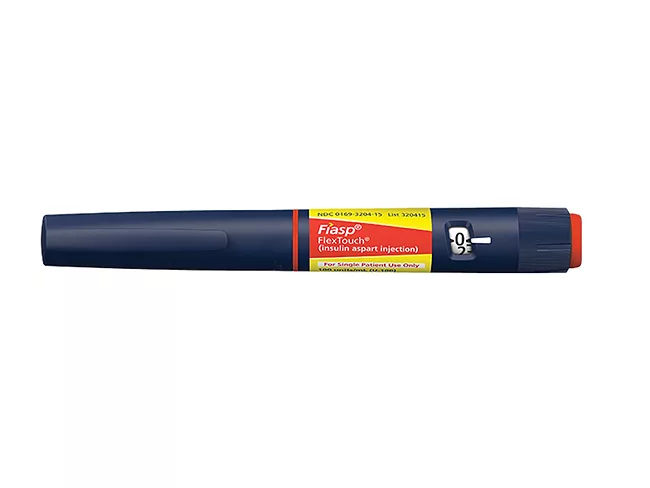
Like the federal district court before it, the U.S. Court of Appeals for the Third Circuit said it lacks jurisdiction to rule on the merits of Novo Nordisk A/S’ claim that the CMS violated the Inflation Reduction Act (IRA) when it treated six of the company’s insulin aspart products as one negotiation-eligible single-source drug.
Oddsmakers placing their bets on which drugs will be in play for round 3 of the U.S. Inflation Reduction Act (IRA) price negotiations are doing some reshuffling, thanks to an orphan drug provision tucked into the Trump administration’s One Big Beautiful Bill Act (OBBBA) that was signed into law on the Fourth of July.
Drug companies and organizations challenging the Medicare drug negotiations have yet to convince a U.S. court that the process, mandated by the 2022 Inflation Reduction Act, violates the Constitution. The most recent decisions came this week when the U.S. Court of Appeals for the Second Circuit ruled Aug. 7 against Boehringer Ingelheim GmbH and the Sixth Circuit ruled Aug. 6 against a challenge filed by the Dayton, Ohio, Chamber of Commerce, the U.S. Chamber, and the Ohio and Michigan Chambers.
Korean pharmaceutical stocks rose across the board May 13, a day after U.S. President Donald Trump signed off on the most favored nation executive order, a drug pricing policy expected to benefit biosimilar makers in the U.S., according to Celltrion Inc.
Ill-considered government policies, pharmacy benefit manager market abuses and an unpredictable future are casting doubt on the long-term sustainability of the U.S. biosimilar market, Craig Burton, the executive director of the Biosimilars Council, told a House Ways & Means subcommittee April 8.