Abbott Laboratories saw its shares fall in early trading April 16 after cutting its guidance for 2026 on the back of dilution related to its $21 billion acquisition of Exact Sciences Corp. The company revised its full year adjusted earnings per share guidance to $5.38 to 5.58, down from $5.55 to $5.80 previously. The updated outlook includes 20 cents of dilution related to the Exact deal. Abbott also reported first quarter profits of $1.08 billion, down 18.7% from a year ago.
Med-tech M&A activity surged in March 2026, with deal value reaching $23.66 billion, the highest monthly total since June 2022’s $36.27 billion and a sharp increase from $17.53 billion in February and $1.69 billion in January.
Med-tech deal value, excluding M&As, totaled $628.41 million in the first quarter (Q1) of 2026, an increase of about 322% from the $149.08 million recorded in Q1 2025 though a 36% drop from Q4 2025‘s $978.58 million.
Grail Inc.’s share price dropped more than 50% in premarket trading Feb. 20 after it reported late the day before that the NHS-Galleri trial did not meet its primary endpoint. The U.K study, done though the National Health Service with 142,000 individuals enrolled, evaluated the ability of Grail’s Galleri multicancer early detection test to look for cancer-specific methylation patterns in blood.
Four optimization trends dominated the med-tech industry in 2025. Growth-driven acquisitions propelled major players into hot markets, while strategic realignments at several large companies prompted notable exits as well as a few tuck-in deals. Spin-offs continued their mixed performance, with several companies on track for significant splits and others changing plans. Private equity entered — and exited — with leveraged buy outs, and a record-setting cash out.
Med-tech dealmaking totaled $1.72 billion through the first three quarters of 2025, signaling a potential rebound in the works from the subdued activity seen in 2024, when publicly reported full-year deal value reached $2.12 billion. Q3 was the strongest quarter so far this year, contributing $1.37 billion, nearly 80% of the year-to-date total, following slower starts of $149.1 million in Q1 and $192.2 million in Q2.
Abbott Laboratories made plans to enter the cancer screening market with its reported acquisition of Exact Sciences Corp. The deal will pay Exact Sciences shareholders $105 per share in cash, a nearly 50% premium to Exact’s unaffected share price on Nov. 19. That represents a total equity value of approximately $21 billion and an estimated enterprise value of $23 billion.
Through the first eight months of 2025, med-tech M&A deal value reached $30.74 billion, a modest rebound from $34.77 billion during the same period in 2024. August contributed $2.42 billion, down from July’s $6.21 billion, yet still ahead of several earlier months in 2025.
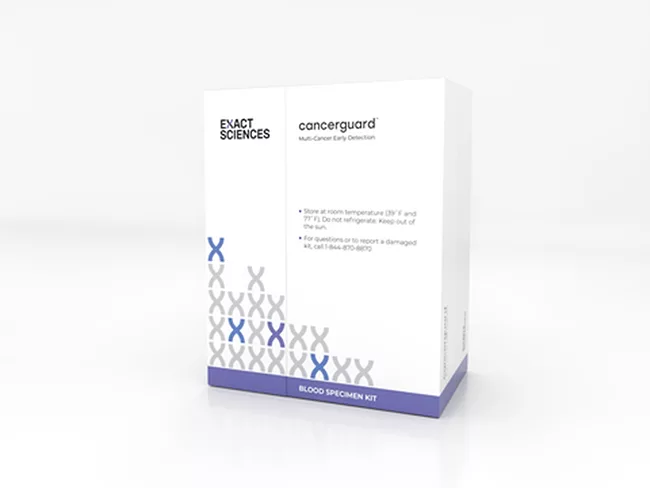
Exact Sciences Corp. rolled out its multi-cancer early detection test nationwide to expand screening and identify malignancies when treatment has the greatest chance of being curative. Cancerguard can detect signals for cancers accounting for more than 80% of all cancer diagnoses in the U.S. each year.
Palmetto GBA of Columbia, S.C., issued a draft local coverage determination that provides coverage for biomarker testing to stratify a patient’s risk associated with ductal carcinoma in situ.