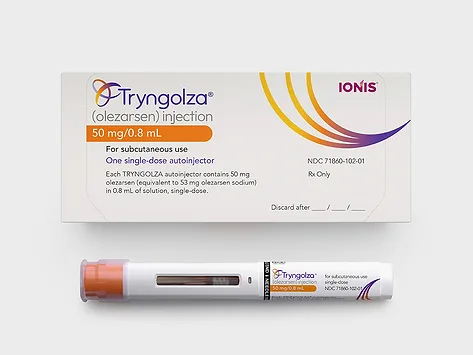
As expected, and following impressive phase III data released last September, Ionis Pharmaceuticals Inc. won U.S. FDA approval of Tryngolza (olezarsen) for adults with severe hypertriglyceridemia, unlocking a larger indication and one that held both priority review and breakthrough therapy designations.
Retinitis pigmentosa (RP) is an inherited retinal dystrophy that causes loss of vision. Pathogenic variants in proteins involved in RNA splicing are the second most common cause of autosomal dominant RP, with mutations in PRPF31 being the most prevalent. Additionally, mutations in spliceosomal small nuclear RNAs (snRNAs) U4 and U6 have recently been linked to RP.