
CD&D Contributing Editor
MUNICH, Germany The medical device market in Europe has historically been the backdrop for introduction of the latest new technologies, as well as one of the most important geographic segments of the global market. The cardiovascular device segment in Europe is no exception, often serving as the arena in which new products are first introduced to the global market.
The sector is highlighted annually by the congress of the European Society of Cardiology (ESC, Sophia Antipolis, France), held here in early September with record attendance. Among the major topics addressed at the congress were new developments in stents and percutaneous intervention, cardiac rhythm therapy, and management of patients with chronic cardiovascular disease.
As shown in Table 1 on the next page, Europe accounts for a significant proportion of the global burden of cardiovascular disease, with the number of affected individuals in the various cardiovascular disease segments typically exceeding the U.S. Incidence rates for cardiovascular disease in Europe (as indicated by hospital discharge rates for cardiovascular disease) have generally been increasing over the past decade, with a slight decline in the Western European countries more than offset by significant increases in countries in Eastern Europe, including the countries comprising the Commonwealth of Independent States, a group of 12 of the 15 countries of the former USSR.
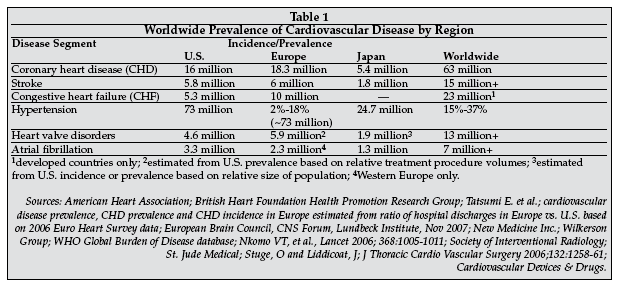
Utilization rates for cardiovascular disease therapeutic modalities such as coronary stents and implantable cardiac rhythm management devices are generally lower in Europe than in the U.S., and average selling prices for devices such as drug-eluting coronary stents are also lower, so the cardiovascular device market is smaller in Europe than in the U.S. Nevertheless, Europe represents the second-largest geographic market worldwide, and one that is receptive to new technologies and advanced therapies.
New elements in DES debate
The utilization of drug-eluting stents in Europe, as well as in the U.S., has been a topic of debate since data was presented at the 2006 ESC congress in Barcelona that raised questions about long-term safety of the devices due to an excessive rate of late stent thrombosis. At the 2008 congress, longer-term follow-up data from a number of studies was presented that shows no significant difference in safety between bare metal and drug-eluting stents, and some studies showed a benefit for DES. Ran Kornowski, MD, of Rabin Medical Center (Petach Tikva, Israel), described a single-center study comparing DES to bare-metal stents in 4,700 patients treated between April 2004 and June 2007. Of the total, 2,719 patients received drug-eluting stents, and dual anti-platelet therapy was prescribed for three to 12 months. Follow-up ranged from nine months to four years.
Some 71% of the stents used were Cypher stents manufactured by Cordis/J&J (Miami Lakes, Florida), 15% were Taxus stents from Boston Scientific (Natick, Massachusetts), 11% were Endeavor stents manufactured by Medtronic (Minneapolis, Minnesota), and 3% were other types of drug-eluting stents. Drug-eluting stents were shown to be superior to bare-metal stents by all measures analyzed in the study, including target vessel revascularization and MACE, which was 15.8% vs. 23.1% for bare-metal stents.
There was a significant mortality benefit for DES, which was enhanced in diabetic patients. Overall mortality in the study was 35% lower for the DES group. A possible explanation for the mortality difference was the more complete revascularization strategy applied for DES patients. The study had no industry funding.
An extensive analysis of other trials and registries, the latter including data on 80,000 patients with a follow-up of one to four years, comparing DES to bare-metal stents was presented by Patrick Serruys, MD, PhD, of Erasmus Medical Center (Rotterdam, the Netherlands) at the ESC congress. The analysis also showed that long-term outcome data demonstrate that drug-eluting stents are equivalent to or better than bare metal stents in essentially all respects, even in STEMI patients for which some cardiologists continue to recommend limited use.
Drug-eluting stents were clearly superior with respect to the need for re-intervention, even for STEMI patients where the probability of re-PCI was 5% for DES compared to 13.5% for BMS. Outcome data from Serruys' own practice in Rotterdam on 7,217 PCI patients at four-year follow-up also favors use of DES in most patient groups. Rates for target vessel revascularization are lower for DES except for treatment of left main disease, bypass grafts, and bifurcations.
A final factor that had initially favored use of bare-metal stents in Europe was cost. In 2001, bare-metal stents cost around e1,400 whereas DES were priced from e1,500 to e2,700. However, as a result of the entry of a number of additional DES suppliers in the market in Europe over the past few years, the price differential has now fallen to below e400 in almost all countries in Europe, with DES prices now ranging between e800 and e1,000 depending on the country.
The other competing modalities for stents in Europe are bypass surgery and medical therapy. Results from a major study that assessed the safety and efficacy of stents versus bypass surgery, the SYNTAX (SYNergy between percutaneous coronary intervention with a TAXus and cardiac surgery) trial, was presented at the ESC congress by co-principal investigators Serruys and Friedrich Mohr, MD, of the University of Liepzig (Leipzig, Germany).
The study was unique in that it included both a randomized arm as well as a registry arm. The patients enrolled in the trial were a high-risk group with three-vessel disease and/or left main disease, a group that historically has been considered primarily candidates for CABG. All patients were initially evaluated jointly by a cardiac surgeon and an interventional cardiologist. If both physicians agreed that the patient could be completely revascularized either with PCI or CABG, the patient was randomized to one of the two procedure arms. Otherwise, patients were entered into a registry and given the treatment recommended by the physician team.
A total of 3,075 patients were included in the study. At 12 months, there was no statistically significant difference in death, stroke and myocardial infarction between the CABG and PCI groups, although the rate for stroke was significantly lower at 0.6% in the PCI group compared to 2.2% in the CABG group. Overall MACE rates, however, favored the CABG group, primarily because of a significantly lower rate of revascularization in that group of 5.9% versus 13.7% for the PCI group.
Although the trial showed that PCI is inferior to CABG in patients with complex lesions, the only adverse consequence of undergoing PCI is a higher risk of a repeat procedure. Conversely, patients who opt for CABG are at higher risk for stroke, mainly because they typically must wait longer before undergoing their procedure. Mohr noted that the revascularization rates for PCI and CABG have been trending closer for the past three decades, with the difference dropping from about 30% in the 1980s to 17% in the late 1990s and now to 7% in the late 2000s. The gap is likely to narrow further in the future, due to continued improvements in PCI techniques and, perhaps most importantly, advances in adjunctive therapy.
A similar outcome was reported for use of drug-eluting stents vs. CABG in diabetic patients in the CARDia (Coronary Artery Revascularization in Diabetes) trial. The trial included 510 diabetic patients with multi-vessel disease enrolled at 24 centers in the UK and Ireland who were treated either with CABG or PCI. Some 71% of the PCI procedures employed Cordis Cypher stents.
As in the SYNTAX trial, there was no significant difference between the two treatment groups except for a higher (7.3%) rate of revascularization in the PCI group compared to 2% in the CABG group. The study was not conclusive because enrollment did not reach the prescribed goal, making the trial's statistical power inadequate. Akhil Kapur, MD, of London Chest Hospital, nevertheless stated in an ESC press conference that the results show that PCI may be considered a reasonable strategy in diabetic patients with multi-vessel disease. The results were significantly better than for the previous BARI trial, which was the last to assess PCI vs. CABG in diabetic patients according to Kapur, probably because of improvements in adjunctive therapy.
Summarizing the latest results of clinical studies of drug-eluting stents at an ESC press conference, Carlos Di Mario, MD, of Royal Brompton Hospital (London), concluded that there is no difference in safety, as measured by rates of death and myocardial infarction, between DES and bare metal stents. The most probable explanation is that, while there is an excess of late stent thrombosis events with DES which in more than two-thirds of cases are associated with death or MI, there is an equal and offsetting incidence of events associated with the higher rates of restenosis and reintervention with bare metal stents.
As shown in Table 2, cardiologists in Europe reacted to the safety issues raised for drug-eluting stents in September 2007 by reducing their utilization of the devices. Since about 1 million PCI procedures are performed in Europe annually, 80% of which use stents, the data in Table 2 on DES utilization indicates that the number of drug-eluting stents implanted annually in Europe dropped by about 28,000 from late 2005/early 2006 to mid-2007.
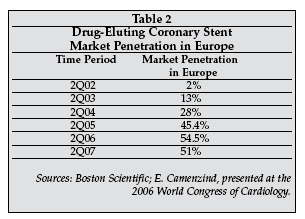
Utilization rates for DES are believed to have remained relatively constant over the past year in Europe, but may begin to increase now that there is evidence that safety is not compromised compared to bare metal stents, particularly in light of the significant drop in prices for DES. Likewise, the market for drug-eluting stents may begin to grow, albeit slowly, as prices stabilize and utilization begins to expand. The global DES market dropped from $5.4 billion to $4 billion between 2006 and 2007, a 26% decline.
Next-generation stents show promise
Although drug-eluting stents appear to have earned a reprieve with respect to safety, manufacturers are keenly aware that reduction of late thrombosis, as well as of hypersensitivity reactions reported with first-generation DES, is a high priority for the next generation of devices. As discussed by Renu Virmani, MD, of CVPath (Gaithersburg, Maryland), at a satellite symposium held prior to the ESC congress, there is evidence for persistence of fibrin out to 18 months in first-generation DES, specifically the Cypher stent from Cordis and the Taxus stent from Boston Scientific, as well as incomplete endothelialization for both devices. Furthermore, in patients who experience stent thrombosis, there are more uncovered stent struts.
Virmani suggested that late thrombosis may be a problem in myocardial infarction patients who have been treated with DES, since such patients typically have some thrombus already present when the stent is implanted, which could further exacerbate malapposition of the stent and lead to thrombosis.
However, with next-generation stents such as the Xience V everolimus-eluting stent from Abbott Vascular (Abbott Park, Illinois) and the Endeavor from Medtronic, endothelial coverage of the stent is significantly improved, at least in animal studies. In addition, the level of inflammation of the vessel wall for Xience V is only one-third that for Cypher at long-term follow-up, and inflammatory reactions, possibly due to the nature of the drug-eluting polymers used in first-generation DES, are believed to play a role in late stent thrombosis.
Other characteristics of second-generation stents such as Xience V include a lower dose of anti-restenosis drug (88 ug vs. 150 ug for Cypher), resulting in a reduced retardation of endothelial tissue growth; and complete release of the drug over a period of 120 days. Virmani also has found that expression of molecular markers related to lack of endothelial cell proliferation is lower for Xience V compared to Cypher and Taxus. She concluded that the evidence to date indicates that second-generation drug-eluting stents such as Xience V should be safer and more biocompatible than first-generation devices.
Eberhard Grube, MD, of HELIOS Heart Center (Siegburg, Germany), discussed the latest results of the SPIRIT V registry of patients receiving the Xience V stent. 2,700 patients are included in the registry, of which 2,663 have been analyzed by Grube. SPIRIT V represents real-world experience with the Xience V, since most patients have high complexity lesions (82% are Type B2 or C) and a high percentage (30%) are diabetic.
Initial 30-day results from the registry show a low rate of target lesion revascularization of 0.1% (0.3% on an intent-to-treat basis), and low rates of acute and subacute thrombosis (0.15% and 0.26% respectively). The MACE rate for the study was 2.6%, and procedural success was 98%. Grube said the results confirm the ease of use of the Xience V, as well as safety and efficacy, at least in the short term.
Neville Kukreja, MD, of Erasmus Medical Center (Rotterdam, the Netherlands), discussed the results of the X-SEARCH registry at the ESC satellite symposium, which includes 649 patients treated with the Xience V in Rotterdam. At six month follow-up, the target vessel revascularization rate was 3.1%.
The patients represented real-world experience, since 90% had Type B2 or C lesions, and 39% were STEMI patients. The results were compared with previous Rotterdam registry data for the Cypher and Taxus stents, and no significant differences were observed in safety or efficacy, although Kukreja said the Xience V may be a more effective stent than Taxus.
Results from the LEADERS (Limus Eluted from a Durable vs. Erodable stent coating) trial, which is evaluating the Biomatrix Flex coronary drug-eluting stent from Biosensors International (Singapore), were discussed at the ESC congress by Stephan Windecker, MD, of Bern University Hospital (Bern, Switzerland). The Biomatrix Flex incorporates a bioabsorbable polymer applied only to the abluminal surface of the stent and loaded with biolimus A9, a drug that has similar properties to sirolimus used in the Cypher stent.
The trial assessed performance of the Biomatrix Flex stent versus the Cypher stent in 1,707 patients. At nine-month follow-up, composite death, MI and target vessel revascularization was 10.5% for Cypher vs. 9.2% for Biomatrix. In-stent stenosis was lower for the Biomatrix stent at 20.9% compared to 23.3% for Cypher. The study demonstrated that the Biomatrix stent is non-inferior to Cypher from both a clinical and an angiographic perspective. The bioabsorbable polymer coating may help reduce inflammation in the vessel wall as is observed with durable polymer coatings, but longer-term data will be needed to evaluate its effect on late stent thrombosis.
Serruys described results of initial studies with one of the first third-generation drug-eluting stents, a bioabsorbable everolimus-eluting stent under development by Abbott Vascular. Bioabsorbable stents can potentially provide some significant advantages over today's permanent metal implants, such as reduction in the time period for which dual anti-platelet therapy is needed, elimination of late stent thrombosis, facilitation of treatment of in-stent restenosis, and avoidance of long-term blockage of side branch vessels. In addition, bioabsorbable stents could help to preserve bypass surgery as a future treatment option in patients who receive multiple stents, and would avoid the interference with CT and MR imaging procedures created by existing metal stents.
Bioabsorbable stents could be particularly valuable for applications in the peripheral arteries, where strut fracture has continued to plague use of metal stents, as well as in pediatric applications where the use of metal stents is problematic because they fail to grow along with the artery. However, cardiologists do not want to compromise on radial strength and vessel support with a bioabsorbable stent, and also want deliverability and ease of use to be equivalent to metal stents.
Efforts to develop bioabsorbable stents have so far met with limited success mainly because the stent fails to provide adequate support for the vessel over an adequate period of time, as exemplified by the first version of the Absorbable Metal Stent (AMS) from Biotronik (Berlin, Germany). Biotronik is now developing a new version that will offer a slower biodegradation profile.
A second company developing a bioresorbable coronary stent, REVA Medical (San Diego), commenced first-in-man trials in June 2007 (the RESORB trial). The REVA stent is comprised of a tyrosine-derived polycarbonate material that has strength, flexibility, recoil and X-ray visibility equivalent to that of metal. A paclitaxel-eluting version is also in development. REVA has established a broad strategic relationship with Boston Scientific.
The Abbott Vascular bioabsorbable stent is constructed of poly-L-lactide and elutes the anti-restenosis drug everolimus. The latest version of the Abbott stent is now being evaluated in the ABSORB trial. Six-month results from the trial, which has enrolled a total of 30 patients, were published in The Lancet in March. As described by Serruys, late loss at six months for the Abbott bioabsorbable stent based on IVUS and angiographic analysis of 24 patients is 0.44 mm, intermediate between that for the Xience V of 0.1 mm and the Abbott ML Vision bare metal stent of 0.87 mm.
The reported MACE rate at six months and at one year was 3.4%, and no subacute or late stent thrombosis has been observed. The neointimal hyperplasia area for the bioabsorbable stent at six months was 0.5 mm2 compared to 0.3 mm2 for the Xience V, indicating that the device is effective in inhibiting neointimal tissue growth. The latest data from the ABSORB trial, as discussed by Serruys at the ESC congress, shows evidence for absorption of the stent via IVUS as well as OCT, with disappearance of structures related to the struts, and all stents have remained patent at two years.
Importantly, there is evidence for restoration of vasomotion in the stented region, and the vessels respond to administration of vasodilating drugs. No inflammation is evident in the stented region at two-year follow-up, and there is evidence for coverage of the necrotic core with endothelial tissue and in one case a reduction in size of the core. Serruys said he expects pivotal trials with the Abbott bioabsorbable stent to be complete by 2010.
Another new development in percutaneous intervention described at the ESC congress may improve procedural outcomes particularly for patients having complex lesions. As discussed by Alexander Ijsselmuiden, MD, PhD, of OLVG Hospital (Amsterdam, the Netherlands), in a symposium on emerging technologies in stenting, use of magnetic guidance of PCI procedures with the Niobe Magnetic Navigation System from Stereotaxis (St. Louis) results in a significant reduction in procedure time, facilitates treatment of complex lesions, results in less entry of side branches, and a lower rate of vessel perforation. The system uses two 0.8 Tesla magnets controlled by computer software to remotely manipulate the tip of an interventional guidewire.
The guidewire used in the study was the Titan, a conventional guidewire with a 2 mm-3 mm magnet attached to the tip, also from Stereotaxis. In a randomized trial conducted from January through May 2007, results from 47 procedures performed with the Niobe system were compared to 45 procedures performed using conventional manual guidance. In spite of the presence of more complex lesions in the magnetic guidance group, there was no difference in procedural success rate and procedure time was significantly reduced, from 41 to 30 minutes, with the use of magnetic guidance. Fluoroscopy time was reduced to less than half (7.5 vs. 16.1 minutes), and the use of contrast was reduced from 180 to 122 ml, resulting in an improvement in safety for magnetic guidance.
Cost is the primary drawback of magnetic guidance, since the price of the Niobe system is e1.4 million. However, the shorter procedure time and reduced use of contrast results in a reduction in cost excluding the cost of the magnetic guidance system. Ijsselmuiden said that 1,000 patients would need to be treated to offset the cost of purchase of the guidance system, so it may prove cost-effective in high-volume centers. Patients with Type C lesions were the most likely to benefit from magnetic guidance due to a reduction in perforations, reduced radiation exposure, and lower use of contrast agents.
A separate study using the Niobe system at three centers in Germany, discussed by Rudiger Blindt, MD, of University Hospital Aachen in Germany, at an ESC press conference reached similar conclusions, and found that some lesions which could not be treated with conventional PCI could be treated when magnetic guidance was employed.
The use of embolic protection devices to improve PCI outcomes in the treatment of saphenous vein grafts was addressed in the AMEthyst study, discussed by Srihari Naidu, MD, of Winthrop University Hospital (Mineola, New York). The AMEthyst trial evaluated 800 patients and compared the Interceptor Plus embolic protection device from Medtronic to the Medtronic Guardwire and the Boston Scientific FilterWire.
While the Interceptor Plus produced an equivalent rate of MACE (8% vs. 7% for controls), Naidu said that the results demonstrate the need for improved protection devices, since the MACE rate remains high compared to that for interventions in other lesion types. At present, according to Naidu, embolic protection devices are used in only 25% to 30% of saphenous vein graft interventions, and the average MACE rate overall is 7.8%.
Evolving role for CRT in Europe
Cardiac rhythm therapy, and in particular its role in heart failure treatment, was another important topic at the ESC congress. The global market for cardiac rhythm therapy devices reached $10 billion in 2007, an increase of 5% over 2006. As shown in Table 3, CRT for low-power rhythm control devices such as pacemakers is utilized more widely in Western Europe than in the U.S., whereas high-power CRT device therapy is much less widely used in Europe compared to the U.S.

Considerable effort is being devoted to improving patient selection for CRT. In Germany, although 25,000 ICDs are implanted every year at a cost of e40,000 each, there are still 100,000 sudden cardiac deaths annually, indicating that not all patients who could benefit from an ICD are receiving one. In addition, a number of patients who have implants never receive a shock, so there is a significant waste of health care resources due to the inability to accurately identify those individuals who will benefit. A number of non-invasive imaging techniques are being evaluated, mostly based on ultrasound, to improve the ability to select patients for ICD implants.
Another approach was described at the ESC congress by BMDSys (Jena, Germany) which involves non-invasive mapping of the heart's electrical impulses to detect patterns associated with an underlying heart rhythm disorder. The company's Apollo CXS system is unique in that it uses highly sensitive superconducting magnetic field detectors to measure the patterns generated by the heart's electrical activity. An array of 55 detectors allows 3-D mapping of the complete heart in two minutes. The system analyzes fragmentation in the heart waveforms which is indicative of a rhythm disturbance.
Unlike ECG monitoring methods used to detect arrhythmias, the BMDSys technology does not need to capture an arrhythmia event in order to make a diagnosis. The system can be used both for static testing as well as stress testing. BMDSys has just introduced the Apollo CXS in Europe, with one system already placed and a second placement in progress. The Apollo CXS is priced at approximately e1 million, similar to the price of an MRI scanner. Reimbursement for the magnetic field imaging (MFI) exam has not yet been established in Europe, but will probably be around e250. The company has estimated that each instrument placed in Germany could produce e1.3 million in healthcare cost savings.
New cardiac rhythm therapy devices were introduced at the ESC congress by Boston Scientific and Medtronic. Boston Scientific introduced the Cognis CRT-D and Teligen ICD, both of which provide high energy as well as increased longevity. Battery life has been extended to seven to eight years, while pulse energy has been increased to 41 joules. The new battery employed in the devices combines technology used previously in Boston Scientific's pacing and ICD implants.
Medtronic introduced the EnRhythm MRI SureScan pacemaker, which is pending CE mark approval. The EnRhythm is an MRI-safe device, and will enable the growing number of individuals with pacemaker implants to undergo MRI scans without risking damage to their device. Other pacemakers are subject to extensive vibration when exposed to the magnetic fields typically encountered in an MRI scanner, which can easily damage device components.
Medtronic estimates that 50% to 75% of all patients with pacemakers will be denied an MRI scan during their lifetime due to the incompatibility of current-generation pacemakers with MR scanners. About 1 million patients receive pacemaker implants worldwide each year. Medtronic began a clinical trial to obtain FDA approval of the EnRhythm MRI SureScan.
A new development in cardiac ablation was described by Luc Jordaens, MD, of Erasmus Medical Center. Jordaens has evaluated the use of robotic navigation systems in electrophysiology to improve the guidance of catheter ablation procedures in the heart. With existing ablation techniques, success rates are quite low, at 50% for ablation of atrial fibrillation. Complication rates range from 1.5% to 5.1%, a significant issue since procedures are often performed in younger, healthy patients.
Jordaens has assessed two different technologies for their ability to improve the effectiveness and safety of catheter ablation, the Sensei robotic catheter manipulation system from Hansen Medical (Mountain View, California) and the Niobe magnetic catheter guidance system from Stereotaxis. The Sensei system, while able to guide transseptal puncture and access to the pulmonary veins, does not reduce the force applied by the catheter to the heart tissue compared to conventional catheter ablation. As a result, two of 40 patients treated by Jordaens using robotic navigation had pericardial tamponade.
In contrast, the Niobe systems' magnetically guided catheters are much less stiff, and create less trauma, since forces applied to the heart tissue are dramatically reduced. In addition, the ablation lesions created via magnetic guidance are much cleaner and more precise. Jordaens has found that ablation can be performed even during arrhythmia. The system also enables automatic mapping of the ablation pattern, and allows procedures to be streamlined, reducing cath lab time and radiation exposure.
The greater stability of the catheter tip that can be achieved with magnetic guidance may give more durable ablations, according to Jordaens. To further improve the efficacy of catheter ablation, Jordaens has switched from electrical ablation to cryoablation. Cryoablation devices, such as the Freezor and Arctic Front catheters available from CryoCath Technologies (Montreal), are increasingly becoming the preferred modality for ablation to treat cardiac arrhythmia in Europe.