AC Immune SA has landed a potential $2.2 billion deal for its anti-amyloid beta Alzheimer’s disease vaccine, ACI-24.060, with Takeda Pharmaceutical Co. Ltd., under which it will get $100 million up front and is eligible to receive an option exercise fee, plus potential development, commercial and sales-based milestones of up to $2.1 billion.
The activation of the NLRP3 inflammasome exacerbates neuronal dysfunction in several neurological diseases such as Alzheimer’s and Parkinson’s diseases, as well as multiple sclerosis. Targeting NLRP3 is an approach to overcome brain inflammation, among others.
Several neurodegenerative disorders have TAR DNA-binding protein 43 (TDP-43) inclusions as a pathological hallmark; thus, the development of PET tracers able to detect TDP-43 aggregates is essential to advance the diagnosis and treatment monitoring in diseases such as frontotemporal dementia, amyotrophic lateral sclerosis and others.
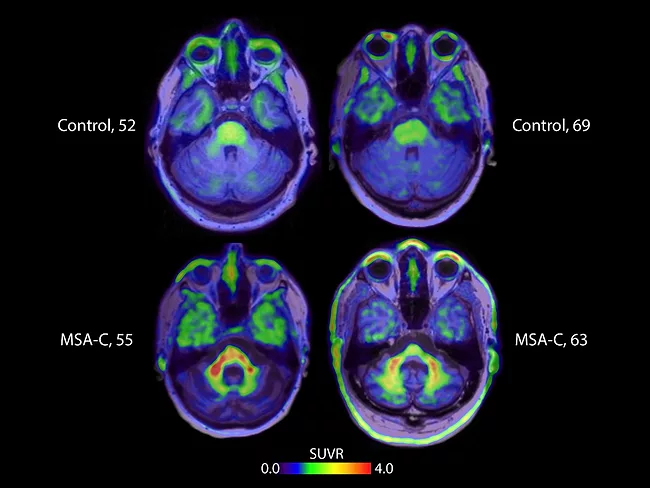
AC Immune SA has patented 4h-imidazo[1,5-b]pyrazole derivatives and labeled compounds targeting α-synuclein (SNCA). They are reported to be useful for diagnosis of multiple system atrophy, Parkinson’s dementia, Lewy body dementia, Alzheimer’s and Parkinson’s disease, among others.
Alzheimer’s experts have suggested that future research may involve combination therapies after yet another trial failure involving a drug targeting amyloid – in this case Roche Holding AG’s crenezumab. Originally discovered by Swiss biotech AC Immune SA, of Lausanne, crenezumab failed to slow or prevent cognitive decline in people with a certain mutation that causes early onset in a closely watched trial.
At the AD/PD 2022 international conference on Alzheimer’s and Parkinson’s Diseases, AC Immune SA presented images showing its positron emission tomography (PET) tracer detecting pathological alpha-synuclein (a-syn) in human subjects’ brains. The abnormal accumulation of a-syn, a natively unfolded and soluble presynaptic protein, is a neuropathological feature of neurodegenerative disorders.
Investors were thrilled when Roche Holding AG subsidiary Genentech Inc. and AC Immune SA reported top-line results from the Lauriet trial on Aug. 31, giving a positive jolt to AC Immune’s stock on the day of the announcement. At the Clinical Trials in Alzheimer’s Disease 2021 meeting, the reaction of the medical community was more skeptical.
DUBLIN – AC Immune SA and partner Genentech reported Aug. 31 that their Tau-targeting antibody, semorinemab, brought about a dramatic 43.6% reduction in cognitive decline vs. baseline in a phase II trial in patients with mild to moderate Alzheimer’s disease. The effect was statistically significant (p<0.0025) and is clinically meaningful. Indeed, it represents the biggest single treatment effect ever reported in a clinical trial in this population of Alzheimer’s patients and sets the stage for an extensive phase III program that could set the agenda for Alzheimer’s research for the foreseeable future.
Nearly five months after its tau-directed antibody, semorinemab, failed to demonstrate efficacy in a phase II trial in Alzheimer’s disease, AC Immune SA is back with positive data on a different approach with its anti-phospho-tau vaccine candidate, ACI-35.030.