With medical researchers across the globe adjusting to the far-reaching impacts of COVID-19, commercial and academic trialists are taking action to protect essential studies. Regulators, too, are now joining the effort in a more concerted way, with the FDA issuing new guidance for industry, investigators and institutional review boards on conducting clinical trials during the pandemic.
DBV Technologies SA officials took pains to reassure investors that data wanted by the FDA with regard to the BLA for Viaskin Peanut allergy therapy are already in hand and need only be turned over to the agency, but that didn’t stop shares (NASDAQ:DBVT) from sliding 55.7%, or $2.93, to close March 17 at $2.33.
“For those of us who believe in a free market, it is really important that the market works well,” FDA Commissioner Stephen Hahn said March 9 at a public workshop on ensuring a U.S. biologic marketplace that includes sustainable biosimilar and interchangeable competition.
With deeming day a little more than a month away, the FDA is taking final steps to ease the transition of simple proteins approved as new drug applications (NDAs) to biologic license applications (BLAs). The March 23 change will open drugs such as insulin and various hormones to new competition, likely bringing in the next wave of biosimilars. And this time, interchangeability could be riding the crest.
A half-day open meeting intended to examine “how the public perceives and values pharmaceutical quality,” convened by the Robert J. Margolis Center for Health Policy at Duke University in cooperation with the FDA, included a rundown of the agency’s oversight program, results of surveys to measure viewpoints of patients and providers – and tart commentary from a two-member “reactant panel.”
A half-day open meeting intended to examine “how the public perceives and values pharmaceutical quality,” convened by the Robert J. Margolis Center for Health Policy at Duke University in cooperation with the FDA, included a rundown of the agency’s oversight program, results of surveys to measure viewpoints of patients and providers – and tart commentary from a two-member “reactant panel.”
With four gene therapies already approved and more than 900 in development, the FDA has finalized six guidances and issued a draft guidance to clarify the rules of the road for developing and manufacturing the treatments.
As the industry looks forward to 2020 at the 38th Annual J.P. Morgan Healthcare Conference next week, BioWorld is looking backward to those we lost in the past year.
For the first time since Congress opened the door to biosimilars in 2010, the FDA approved nearly as many biosimilars in 2019 as it did new biologics. As the first decade of biosimilars came to a close, the agency’s Center for Drug Evaluation and Research (CDER) approved 10 biosimilars referencing seven blockbuster biologics, bringing the total number of approved biosimilars to 26.
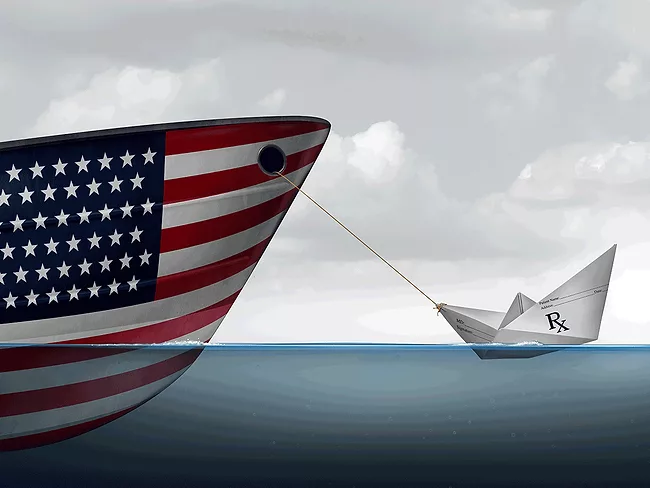
The FDA took concrete steps Wednesday in mapping out import routes for prescription drugs by issuing a notice of proposed rulemaking and a draft guidance. If finalized, the proposed rule, for the first time, would implement a 20-year-old provision of the Federal Food, Drug and Cosmetics Act that gives the Health and Human Services (HHS) secretary the authority to authorize the import of certain small molecule drugs from Canada. However, the proposal is getting pushback from Canada.