In a bid to build public confidence and demonstrate its transparency in determinations about potential COVID-19 vaccines, the FDA will convene its Vaccine Advisory Committee for a virtual meeting Oct. 22 to discuss the general development of the vaccines for the U.S. market.
The U.S. FDA has given the green light to a new type of treatment to help smokers quit, clearing the way for the first time the use of deep transcranial magnetic stimulation (Deep TMS) for short-term smoking cessation in adults.
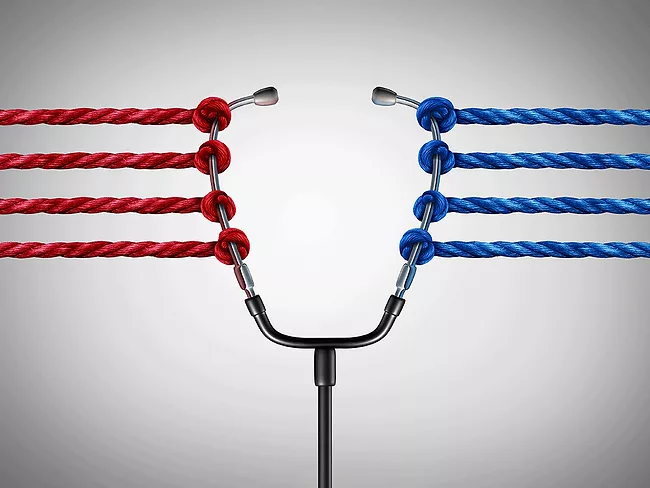
The truth that every action has a reaction is being proven again in the public square of the U.S. as the shrill, endless clamor of politicians hoping to score against their opponents via health care issues or accomplishments threatens to undermine confidence in the FDA, the products it approves and even the guidance offered by the Centers for Disease Control and Protection (CDC). In the past, politicians from both parties blamed “greedy” biopharma companies and self-appointed social influencers for patients refusing to fill prescriptions, get tested or be immunized. Now they have themselves to blame.
Recovering from a complete response letter (CRL) in 2018, Trevena Inc. resubmitted its NDA for oliceridine, branded Olinvyk. On Aug. 7, the drug received agency approval for managing moderate to severe acute pain in adults when the pain is severe enough to require an I.V. opioid and for patients whose alternative treatments are inadequate. The FDA has now approved a total of 34 new molecular entities (NMEs) so far this year. That total is well ahead of the 18 NMEs that were approved at this time in 2019 even though the FDA suggested back in May that it might have trouble meeting PDUFA dates due to the resources it needed to devote to the COVID-19 pandemic.
In a time when the FDA needs its best and brightest people onboard, nearly half the senior leadership at the agency will be eligible for retirement by Sept. 30.
Although PDUFA VI still has two years of life left to it, PDUFA VII is already in the birthing process, with the use of real-world data (RWD), AI, and a coming surge of novel cell and gene therapies looking to be prominent features of the next five-year user fee agreement. Politics likely will play a role as well.
In its first fully virtual markup session, the House Energy and Commerce Committee Wednesday set aside politics to approve a bill that would make the U.S. Strategic National Stockpile (SNS) a better emergency resource – at least for the next few years.
At a session of the American Association for Cancer Research Virtual Annual Meeting II, multiple FDA regulators gave presentations on various topics to help drug companies understand the ever-evolving oncology regulation.
The bad news is, yes, the U.S. is in for a second wave of COVID-19, which is expected to hit during the upcoming flu season. The good news is the nation is much better prepared for the next wave, the NIH’s Anthony Fauci told a House Energy and Commerce Committee Tuesday.
In releasing its annual report card for drug manufacturing inspections in which the per-country/region grading curve peaked at 77% and bottomed at 68%, the FDA said, “All of these scores indicate an acceptable level of compliance to CGMPs [current good manufacturing practices] on average.”