Moonlight Therapeutics Inc.’s IND application for MOON-101 has been cleared by the FDA, paving the way for a first clinical trial in adults and children with peanut allergy.
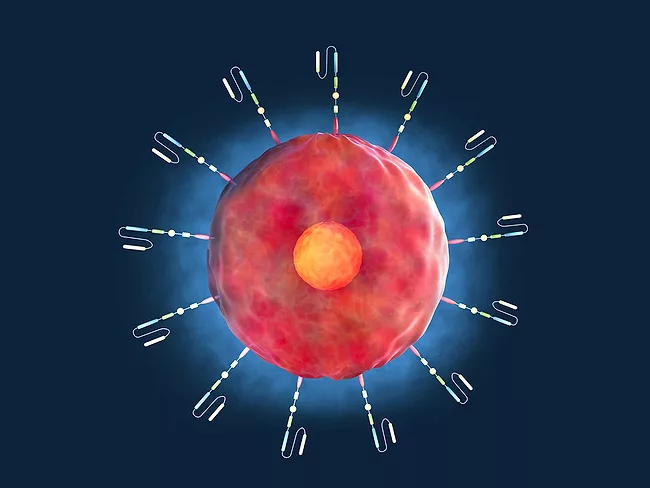
As the many challenges facing cell therapies are being addressed, the CAR T field continues to evolve beyond its original design of T cells engineered to target hematological malignancies. During the 32nd Annual Congress of the European Society of Gene and Cell Therapy (ESGCT), held in Seville Oct. 7-10, several studies showed how this technology is being redefined as programmable and adaptable immune cells with expanded functional versatility.
Athernal Bio Ltd. has launched, supported by £3.5 million (US$4.7 million) in funding and with a focus on the development of targeted immunotherapies for early intervention in high-risk clonal hematopoiesis, a cancer precursor condition which can lead to acute myeloid leukemia (AML) and other hematological cancers.
Pop Biotechnologies Inc. has been awarded a $2.46 million grant by the National Institutes of Health (NIH) to pursue development of a ‘mosaic’ active immunotherapy against Alzheimer’s disease.
Checkpoint inhibitors have transformed cancer therapy by enhancing immune responses against tumors. However, their effectiveness is limited, as many patients do not respond due to the absence of a pre-existing immunity against the cancer cells. Addressing this gap requires new immunotherapies that can promote cancer-cell antigen recognition and engage multiple immune pathways to effectively reprogram the tumor microenvironment and stimulate a robust antitumor response.
Antibodies that bind to sugars on the surface of cancer cells, rather than to proteins, have not yielded satisfactory results so far due to their low binding affinity. However, scientists at the University of California, Irvine (UCI) have developed therapeutic proteins that recognize so-called tumor-associated carbohydrate antigens (TACAs) using lectins with a robust structure resembling velcro. This design is highly specific and eliminates only tumor cells, regardless of cancer type, while sparing healthy tissues.
HCW Biologics Inc. has outlined its development of second-generation, pembrolizumab-based immunotherapeutics against solid tumors, particularly for pancreatic and ovarian cancer, using its proprietary T-cell Receptor β Chain constant region (TRBC) product discovery and development platform technology.
Sino Biopharmaceutical Ltd. agreed to fully acquire Lanova Medicines Ltd. by buying an additional 95.09% stake in Lanova at a valuation of up to $950.92 million. Considering Lanova’s estimated cash and deposit of $450 million, Hong Kong-headquartered Sino agreed to pay $500.9 million to Lanova on the date of the transaction, set to close within 30 days of all conditions being satisfied, or July 31, 2025.
Sino Biopharmaceutical Ltd. agreed to fully acquire Lanova Medicines Ltd. by buying an additional 95.09% stake in Lanova at a valuation of up to $950.92 million. Considering Lanova’s estimated cash and deposit of $450 million, Hong Kong-headquartered Sino agreed to pay $500.9 million to Lanova on the date of the transaction, set to close within 30 days of all conditions being satisfied, or July 31, 2025.