Researchers based at the City University of New York (CUNY) have designed a deep learning artificial intelligence (AI) model that can improve preclinical predictions of drug responses in humans. As outlined in the Oct. 17, 2022, online issue of Nature Machine Intelligence, the researchers believe their model – a context-aware deconfounding autoencoder (CODE-AE) – can help improve the quality of early drug response prediction and help reduce subsequent clinical trial failures.
Synaptive Medical Inc. and Panaxium SAS have inked a deal to bring high-resolution, real-time, artificial intelligence (AI)-assisted cortical mapping to neurosurgeons. Under the collaboration, Synaptive’s Modus V robotic exoscope technology will be integrated with Panaxium’s ultra-flexible iontronic electrocorticography (ECoG) platform.
In an expansion that will surely have other companies wondering why they didn’t move on the opportunity first, Icad Inc. partnered with Solis Mammography to identify cardiovascular risk based on incidental information commonly found in mammograms—and generally ignored.
Rsip Vision Ltd. has debuted a new tool for making 3D reconstructions of the ureter. The vendor-neutral tool, which uses artificial intelligence (AI) and deep-learning algorithms to make 3D reconstructions, is available to third-party medical device companies using three-arm imaging and viewer solutions.
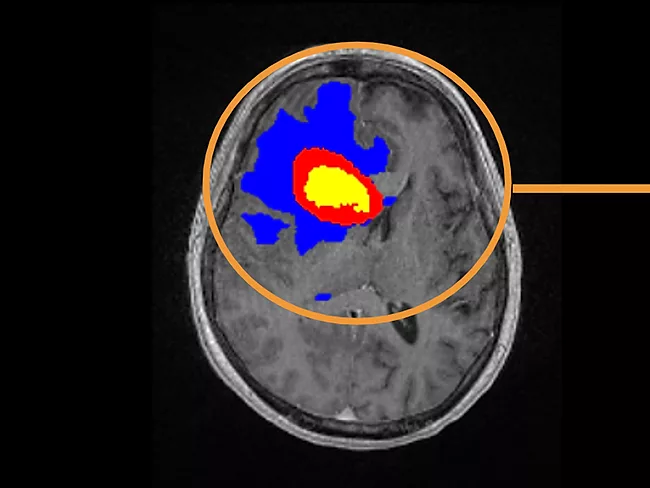
Brain MRIs can reveal a great deal about brain tumors, but tracking response to treatment, clearly delineating edges and identifying other critical information remain problematic. Neosoma Inc.’s recently granted FDA 510(k) clearance may simplify treatment of the most challenging of these tumors, high-grade gliomas. The Neosoma High-Grade Glioma (HGG) neuro-oncology software device uses artificial intelligence to provide detailed measurements and 3D analysis that enable greater precision in procedures and better monitoring.
The Biden administration has released a blueprint for an artificial intelligence bill of rights, which is accompanied by an acknowledgement that these algorithms can be crucial in guiding treatment of cancer patients.
It’s been 20 years since Andrew Hopkins, founder and CEO of artificial intelligence drug research firm Exscientia plc, co-authored the seminal paper “The Druggable Genome,” which laid the foundations for the company and gave insights about how to make research more efficient and less costly. Now Hopkins’ colleagues at Exscientia have taken stock of progress in a new paper, “The druggable genome: Twenty years later,” that summarizes advances in the field and evolution in thinking over the past two decades.
At first glance, Cellarity Inc. might appear as one more company harnessing the computational power of AI and machine learning to boost drug discovery efforts. A closer look, however, reveals a different approach, one that looks at cells and cellular behavior to address disease rather than the traditional method of seeking out molecular targets.
The most conspicuous part of the data problem for artificial intelligence (AI) medical software is the bias problem, but the U.S. Government Accountability Office (GAO) says there are policy solutions despite the data ownership/monetization problem.