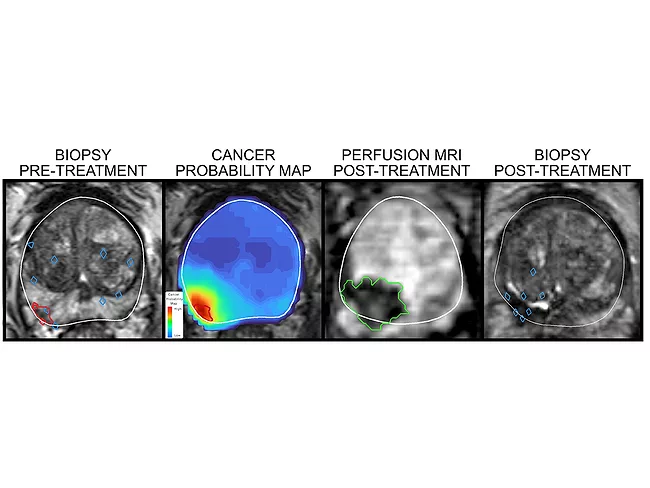
Avenda Health Inc. secured FDA 510(k) clearance for its Iquest platform, which uses artificial intelligence to map the location of a tumor within the prostate. The visualization created provides better assessment of the extent of the malignancy and improves selection of treatments. Avenda raised $10 million in August to support development of Iquest, which guides the company’s Focalpoint laser ablation system.
Vitadx SA is preparing to close a new $8.3 million funding round, to ramp European distribution of its automated software platform for early detection of bladder cancer. The system is based on morphology analysis of cells in a urine sample on a digital cytology slide. “Our Visiocyt technology allows urologists to adjust patient pathways and thereby limit the number of invasive procedures necessary to confirm their diagnosis with people already presenting symptoms,” Allan Rodriguez, CEO and co-founder of Vitadx, told BioWorld.
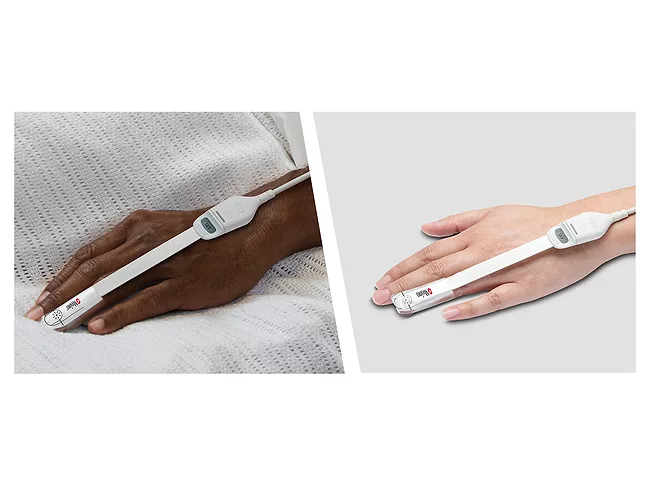
Masimo Corp.’s pulse oximetry technology avoids the dangerous under-recognition of low oxygen levels in people of color that plagues many pulse oximeters on the market, a peer-reviewed study in the Journal of Clinical Monitoring and Computing found. By integrating four additional signal processing engines to the standard algorithm, the Masimo Signal Extraction Technology (SET) system provides equally clinically accurate readings for patients of all skin tones even with movement and at low perfusion.
After getting its 510(k) application rejected by the U.S. FDA for its AI-enabled Salix coronary anatomy software (SCA), Australian medical technology company, Artrya Ltd. scored regulatory approvals in the UK and in the EU.
The U.S. FDA has given the green light to Aeye Health Inc. for its autonomous diagnostic screening system for diabetic retinopathy. The Aeye Diagnostic Screening (Aeye-DS) uses artificial intelligence (AI) to diagnose the eye condition from retinal images captured by a fundus, or retinal, camera.
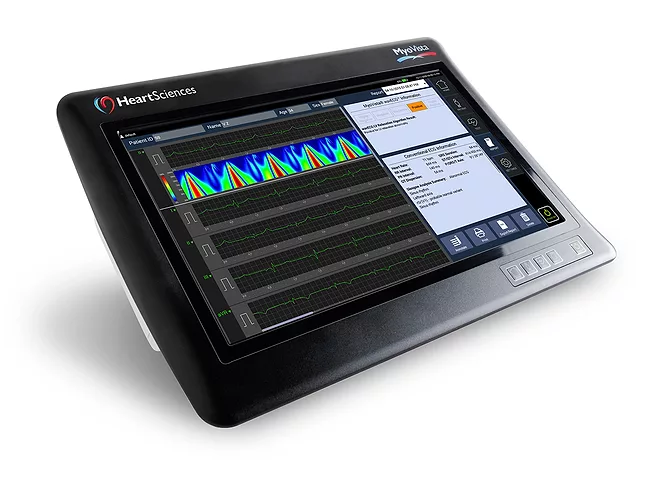
Heart Test Laboratories Inc., doing business as Heartsciences, said an independent study shows its Myovista electrocardiogram (ECG) machine learning model could be a cost-effective way to predict and stratify cardiac risk.
Innovative medical devices are the norm for reviewers at the U.S. FDA’s Center for Devices and Radiological Health (CDRH), but regulatory innovation is a tougher climb. In response, CDRH director Jeff Shuren said at this year’s Medtech Conference in Boston that the agency is eyeing a voluntary alternative pathway (VAP) for novel digital technologies, although this concept is unlikely to see the regulatory light of day other than as a pilot program at any point in the next year or two, given the need for statutory authorization.
Endpoint solutions company Clario Inc. has published a roadmap on how artificial intelligence (AI) can be used to improve the experience of patients participating in decentralized clinical trials (DCTs).
Researchers based at the City University of New York (CUNY) have designed a deep learning artificial intelligence (AI) model that can improve preclinical predictions of drug responses in humans. As outlined in the Oct. 17, 2022, online issue of Nature Machine Intelligence, the researchers believe their model – a context-aware deconfounding autoencoder (CODE-AE) – can help improve the quality of early drug response prediction and help reduce subsequent clinical trial failures.
Sinaptica Therapeutics Inc. received a U.S. FDA breakthrough device designation for its electromagnetic therapy for Alzheimer’s disease. Sinaptistim-AD combines neurostimulation, brain wave monitoring and artificial intelligence (AI) to address the cognitive and functional decline in patients with the neurological disorder.