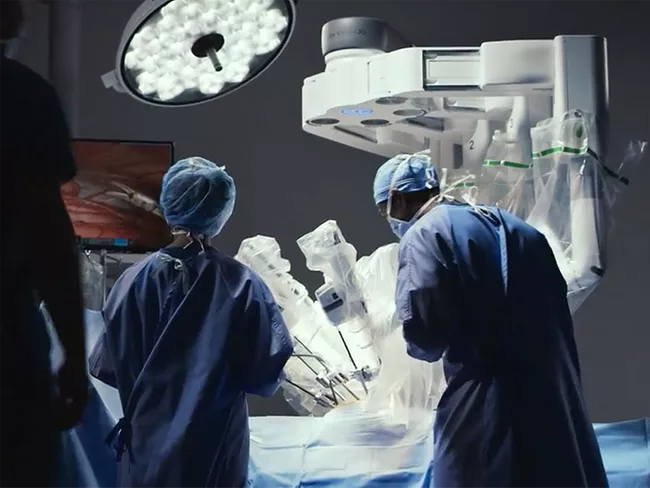
Robotic-assisted surgical procedures have fallen off steeply as the ongoing global pandemic has unfolded, but the real impact on Intuitive Surgical Inc. will come as its hospital customers may have to limit orders for expensive equipment upgrades as they struggle to manage unprecedented financial burdens. The U.S. accounts for about 70% of its robotic surgery procedures, but by the last few weeks in March, that activity had been curtailed by roughly two-thirds.
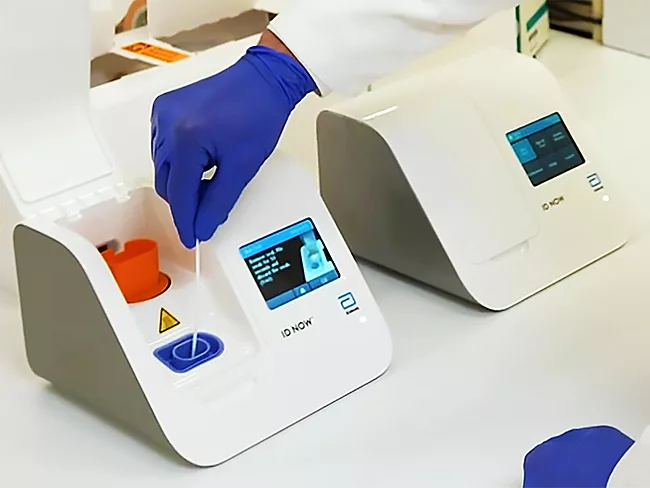
Despite challenges associated with the ongoing COVID-19 pandemic, Abbott Laboratories saw its first-quarter revenue beating expectations, coming in at $7.73 billion vs. an expected $7.44 billion. Cowen’s Josh Jennings highlighted this result, adding in a note that while there are challenges for nondiabetes medical devices and core diagnostics, areas including diabetes, nutrition, the established pharmaceuticals division and COVID-19 testing shined.
Johnson & Johnson (J&J) managed to beat analyst earnings estimates due to unexpectedly strong first-quarter results in its consumer health and pharmaceutical businesses. But while those saw revenues climb in the double digits, its medical devices business declined by almost 5% due to deferred procedures. Wall Street rewarded the New Brunswick, N.J.-based company by driving its shares (NYSE:JNJ) up more than 5%. That’s even though the company also lowered its 2020 guidance.
Amid the COVID-19 pandemic, Genmark Diagnostics Inc., of Carlsbad, Calif., has offered a preliminary look at its first-quarter results. And it is forecasting hopeful news, increasing its full-year guidance to a range of $112 million to $122 million. That's up from a previous prediction of $100 million to $110 million.
Citing the rapidly changing situation related to COVID-19, Watford, U.K.-based Smith+Nephew plc said it is withdrawing its 2020 outlook. It highlighted COVID-19’s spread beyond China, as well as the slow pace of recovery for elective procedures in that country.
Despite seeing good growth in 2019, with net sales jumping to almost $2.4 million vs. $993,000 over the previous year, Electrocore Inc. has suspended its guidance due to uncertainty over COVID-19. The company previously said full-year revenue should be in the range of $7 million to $9 million.
Sientra Inc., of Santa Barbara, Calif., reported gains in both its breast products and Miradry segments during its fourth-quarter earnings call after the close of the market March 11. For his part, CEO Jeff Nugent noted that the company had experienced record total net sales in the fourth quarter of $23.2 million, representing growth of 22% year-on-year. However, the company provided full-year 2020 guidance for 12% to 17% growth, which William Blair’s Margaret Kaczor said was below her organization’s 22% estimate, “though the shortfall is largely a result of negative impacts from COVID-19.”
San Clemente, Calif.-based Glaukos Corp. reported 22% net sales growth to $65.8 million in the final quarter of 2019, up from $54.1 million in the same period a year ago. However, it also warned that increasing competition in the microinvasive glaucoma surgery (MIGS) space could dampen 2020 growth in its U.S. glaucoma business. Speaking with analysts on a fourth-quarter earnings call, CEO Thomas Burns said good conversion rates and growing surgeon interest in its next-generation trabecular bypass device, Istent Inject, may not be enough to counter the headwind.
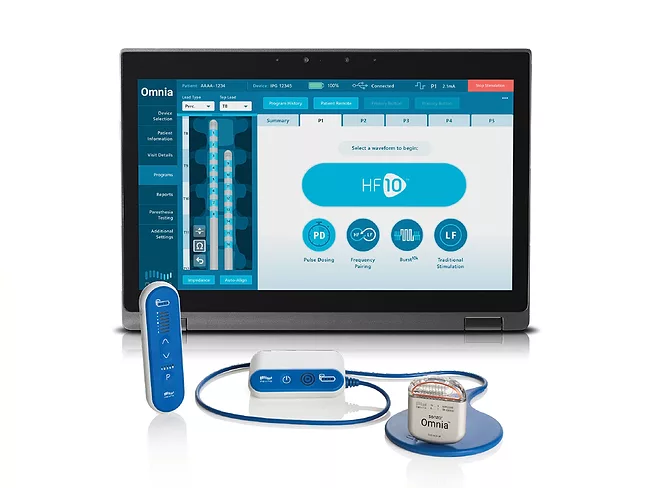
Nevro Corp.’s stock was up following encouraging results detailed during its fourth-quarter earnings call. Management predicted a positive 2020, highlighting the potential of the U.S. spinal cord stimulation (SCS) market. Keith Grossman, chair, CEO and president of the company, noted that the SCS market slowed last year as a result of stocking issues – a challenge that affected both it and its competitors.
Medtronic plc, of Dublin, blamed dampened demand for heart devices ahead of new product launches for its third-quarter revenue miss. Fiscal 2020 Q3 revenue totaled $7.72 billion, below Wall Street’s estimate of $7.81 billion, for organic sales growth of 2.6% vs. consensus and guidance of 4% or higher.