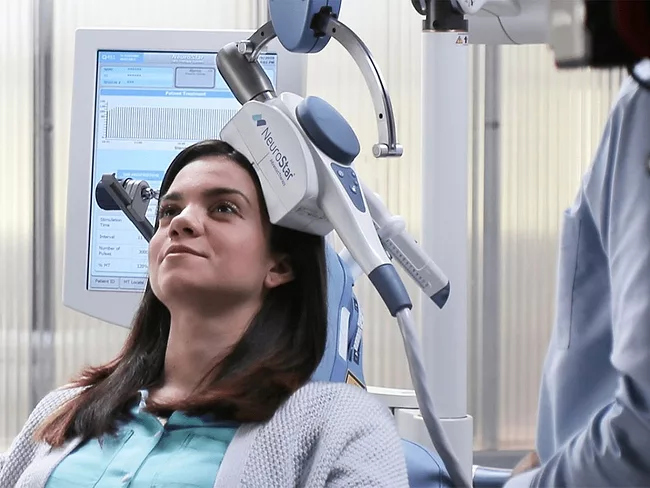
The U.S. FDA granted Neuronetics Inc. clearance for use of its Neurostar advanced therapy as an adjunctive treatment of major depressive disorder in patients aged 15 to 21, making it the first transcranial magnetic stimulation treatment (TMS) cleared for this age group, the company said.
Precision psychiatry got some love at two quite different meetings this week, the European Congress of Neuropsychopharmacology’s New Frontiers meeting and BioEurope Spring. The New Frontiers Meeting, an annual two-day meeting dedicated to cutting-edge issues in brain disease research, focused on big-picture and scientific – at times almost philosophical – questions of how to get to a classification scheme for brain disorders that aligns with the underlying biology.
To Steve Hyman, the manual that clinicians currently use to diagnose mental disorders is an active obstacle to getting a scientific understanding of those disorders. Hyman, who is director of the Stanley Center for Psychiatric Research at the Broad Institute, MIT and Harvard, and a former director of the National Institute of Mental Health (NIMH), listed multiple weaknesses of the American Psychiatric Association’s Diagnostic and Statistical Manual of Mental Disorders (DSM), whose diagnoses, he said, are “arbitrary, rigid, life-stage and context-insensitive,” as well as blind to the fact that mental disorders exist along a continuum.
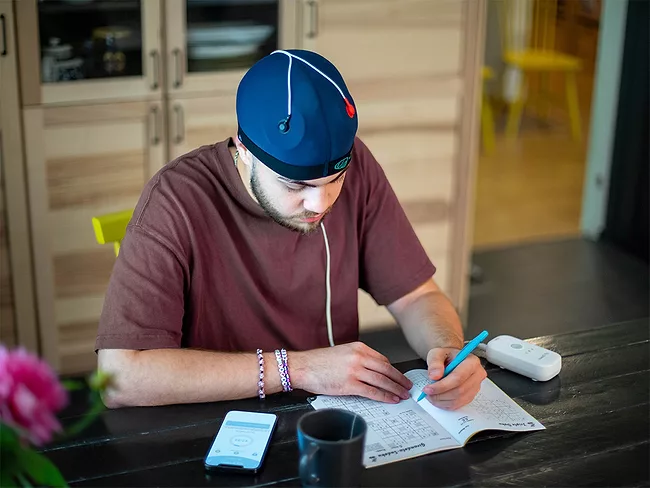
Sooma Oy recently raised €5 million (US$5.4 million) in funding to help the company expand access to its transcranial direct current stimulation device which allows patients to treat their depression at home. “This is a significant milestone for us that enables us to help more patients globally and help us develop the company to serve the unmet need,” Tuomas Neuvonen, Sooma's co-founder and CEO, told BioWorld.
Enveric Biosciences Inc. has announced the discovery of multiple, promising novel compounds sourced using the company’s Psybrary platform and proprietary computational chemistry and artificial intelligence (AI) drug-discovery system (Psyai).
Cannabinoid CB2 receptor and serotonin 5-HT1A receptor agonists have emerged as therapeutic options for their antidepressive and anxiolytic properties, apart from being linked to synergistic antinociceptive activity when used in combination in animal tests.
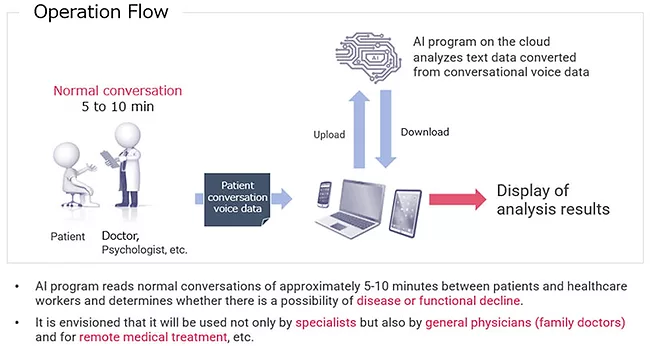
Shionogi & Co. Ltd. is partnering with Fronteo Inc. to develop artificial intelligence (AI)-based diagnostic tools to diagnose mental and neurological disorders more accurately.
In a first, the U.S. FDA accepted an artificial intelligence (AI)/machine learning-model into its Innovative Science and Technology Approaches for New Drugs (ISTAND) pilot program for drug development. The program will support use of Deliberate AI Inc.’s anxiety and depression assessment tool, called the AI-generated Clinical Outcome Assessment, as a qualified drug development tool.
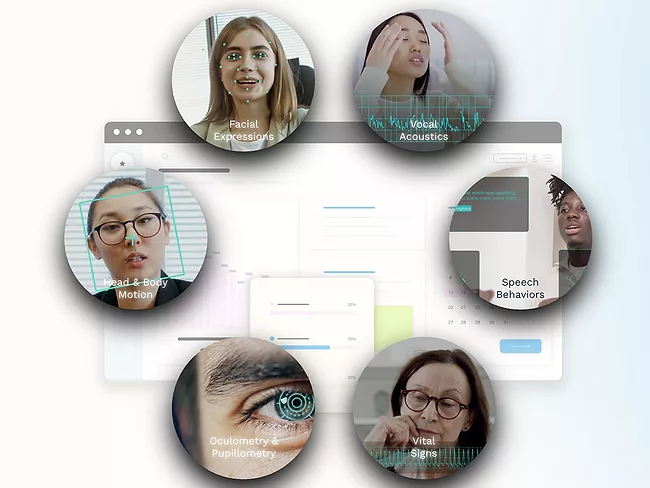
In a first, the U.S. FDA accepted an artificial intelligence (AI)/machine learning-model into its Innovative Science and Technology Approaches for New Drugs (ISTAND) pilot program for drug development. The program will support use of Deliberate AI Inc.’s anxiety and depression assessment tool, called the AI-generated Clinical Outcome Assessment (AI-COA), as a qualified drug development tool.
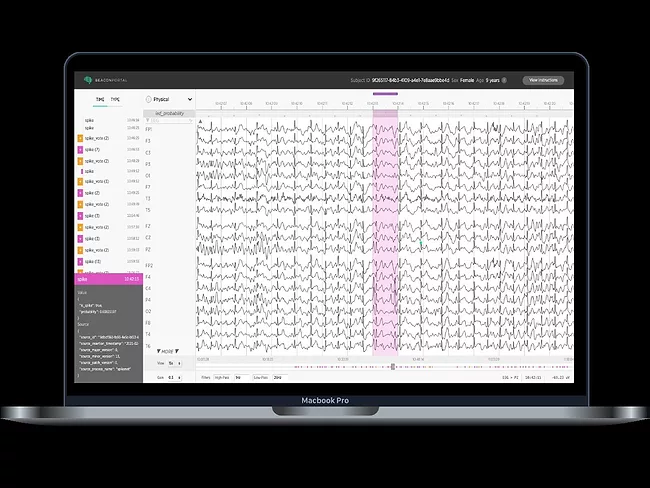
A partnership between Gate Neurosciences Inc. and Beacon Biosignals Inc. promises to advance the field of precision psychiatry by using electroencephalogram (EEG) biomarkers to diagnose depression and rapidly assess response to medications. The collaboration will first use Beacon’s U.S. FDA-cleared Dreem 3S headband device and neurobiomarker platform to conduct EEGs in participants in Gate’s phase II trial of zelquistinel, a small-molecule NMDA receptor modulator under development as an antidepressant.