Researchers from Shanghai Institute of Materia Medica of the Chinese Academy of Sciences and China Pharmaceutical University presented the discovery of novel orally bioavailable inhibitors of transient receptor potential canonical channels 4 and 5 (TRPC4/5), being developed for the treatment of depression and anxiety.
At the four-day KIMES 2025 exhibition, more than 35,000 products and prototypes were on display. In the clamor, BioWorld engaged with three promising neurological disease-focused companies – Readycure Inc., Neurive Co. Ltd. and Vuno Inc. – that showcased innovative technology for conditions like Alzheimer’s disease and tinnitus at the Seoul-based event.
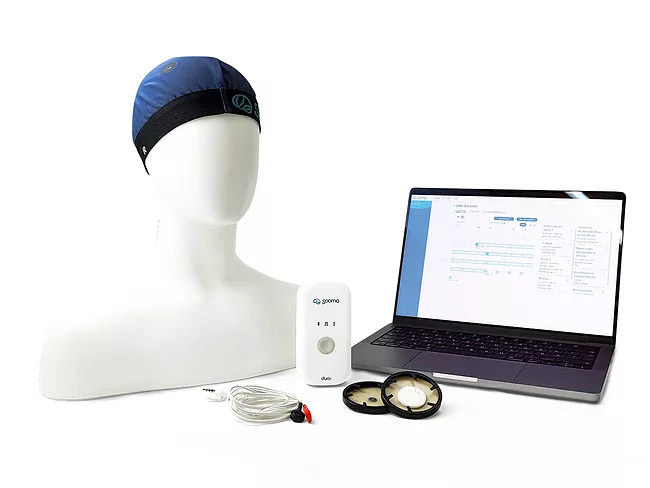
Sooma Oy secured U.S. FDA investigational device exemption approval to initiate a pivotal study of its transcranial direct current stimulation medical device in people with major depressive disorder. The study will examine the efficacy of the non-invasive Sooma 2Gen device in improving MDD as an at-home treatment.
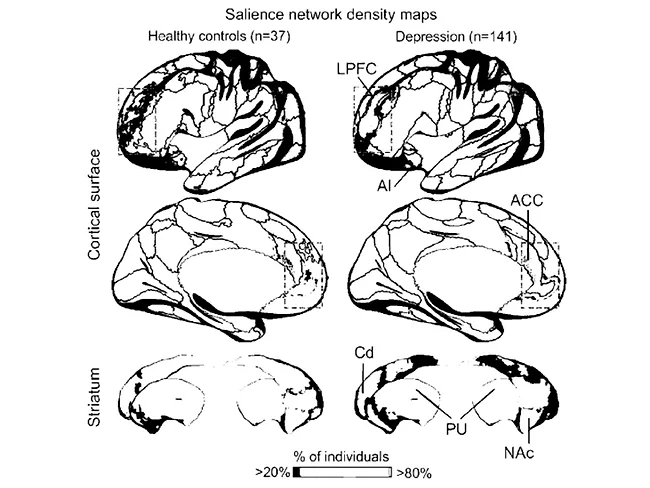
Researchers from Weill Cornell University filed for protection of discoveries made from investigations into the mechanisms underlying depression, which revealed that a specific brain network is significantly larger in individuals affected by depression.
Major strides for the company on two fronts – psychedelic therapies and treatment-resistant depression (TRD) – came in the form of Dublin-based GH Research plc’s phase IIb data with GH-001, an inhalable mebufotenin (5-MeO-DMT) activator of serotonin 5-HT2A and 5-HT1A receptors that met not only its primary endpoint but all secondary goals in the TRD experiment. Shares of GH (NASDAQ:GHRS) closed Feb. 3 at $17.99, up $7.39, or 69.7%, on word that the fast-acting, short-duration compound led to a significant reduction from baseline of -15.2 points in Montgomery-Åsberg Depression Rating Scale total score on the eighth day of treatment compared with +0.3 points in the placebo group (a difference of -15.5 points, p<0.0001).
Recent Engrail Therapeutics Inc. patents describe new deuterated nemonapride analogues potentially useful for the treatment of depression and schizophrenia.
The activation of the adenosine A2A receptor, which is mediated by the inhibition of adenosine A1 receptor, has been associated with depression-like behavior and anhedonia. High levels of cortisol, increased oxidative stress and antioxidant enzyme reduction are also contributors to the pathophysiology of depression.
Major depressive disorder (MDD) is a leading cause of disability worldwide and unfortunately no treatment without side effects is available. Previous reports have found unbalanced glutamate-glutamine cycle in the medial prefrontal cortex of mice with depression, which led to the interest in glutamine synthetase as a potential therapeutic target for treating MDD, since this enzyme is a regulator of this cycle.
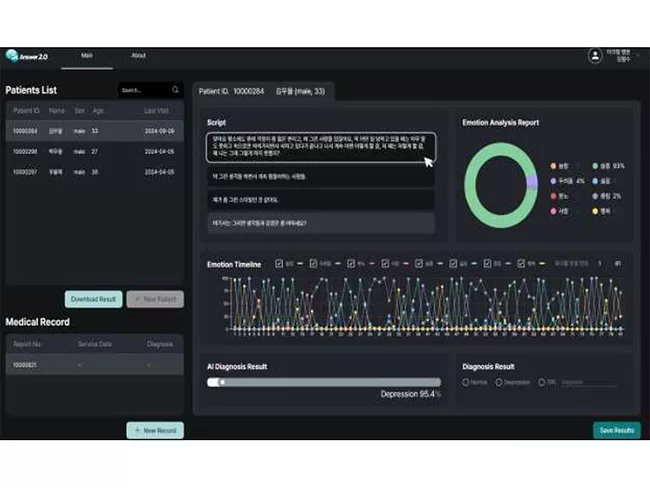
South Korea’s Ministry of Food and Drug Safety cleared Acryl Inc.’s Acryl-D01 as the country’s first AI-based digital therapeutic software solution to aid depression screening and diagnosis on Dec. 20. Approved as a class II software as a medical device, Acryl-D01 utilizes a patient’s medical records to quantify and analyze the individual’s emotional response and assess the probability of having clinical depression based on the data.
Researchers from Engrail Therapeutics Inc. recently described the pharmacological characterization of ENX-105, a new class of molecule that combines 5-HT1A/2A receptor agonism with D2/3 receptor antagonism, to be used for its antianhedonic and antipsychotic effects.