Although esketamine, the S-isomer of ketamine, has been approved for treatment-resistant depression, limitations such as dissociative and sedative effects or poor oral bioavailability restrict its use to parenteral dosing and supervised administration.
After flying high in 2022, digital therapeutics (DTx) companies crashed to Earth in 2023 and scrambled to identify a path to profitability, or at least continued viability.
Enveric Biosciences Inc. has named EB-003 as its lead drug candidate from the company’s next-generation EVM301 series. EB-003 was selected based on data analyses suggesting the molecule’s potential to be a first-in-class approach to addressing difficult-to-treat mental health disorders by promoting neuroplasticity without inducing hallucinations.
Researchers from Engrail Therapeutics Inc. presented preclinical data for the novel D2/3 receptor antagonist ENX-104, being developed for the treatment of depression.
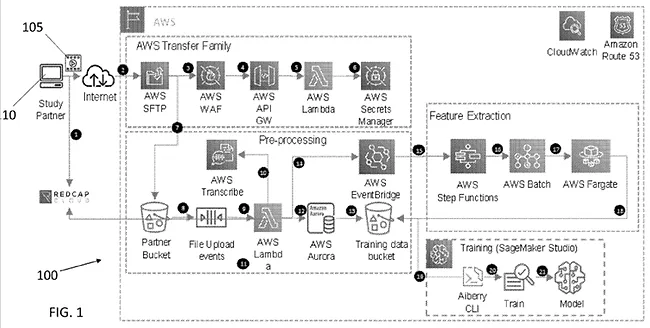
Patent applications from Bellevue, Wash.-based Aiberry Inc. describe further aspects of its artificial intelligence (AI)-powered mental health screening platform that is designed to improve efficiency and save time for healthcare providers.
Psychiatric indications, such as depression, schizophrenia and bipolar disorder, share a common feature of elevated expression of pro-inflammatory markers in the periphery and/or central nervous system. Based on this, it is believed that combined immuno- and neuromodulatory activities of phosphodiesterase 4 (PDE4) inhibitors may represent a promising new therapeutic strategy for various psychiatric indications.
Researchers from Anhui University presented the discovery and preclinical evaluation of novel negative allosteric modulators (NAMs) of the metabotropic glutamate mGlu5 receptor.
Enveric Biosciences Inc. has identified three novel compounds from its EVM301 series with the potential to offer a first-in-class approach to address difficult-to-treat mental health disorders by promoting neuroplasticity without inducing hallucinations.
Neuronetics Inc. gained expanded approval in Japan for its transcranial magnetic stimulation (TMS) system to treat major depressive disorder called the Neurostar TMS, helping the Malvern, Pa.-based company increase its footprint in Asia.
Mira Pharmaceuticals Inc. has entered into a licensing agreement with Miralogx LLC for exclusive rights in the U.S., Canada and Mexico to develop and commercialize Ketamir-2, a novel oral ketamine analogue for depressive disorder treatments.