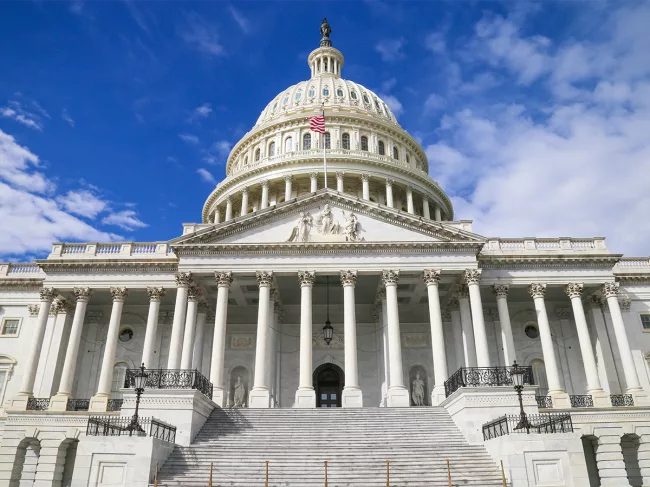
The U.S. House is expected to vote late Nov. 12 on an amended continuing resolution (CR) to end the historic 43-day partial government shutdown. Already passed by the Senate, the CR would fully reopen the government and fund it through Jan. 30. President Donald Trump has said he will sign the CR, which ensures federal employees furloughed during the shutdown will receive back pay and will not be terminated.
Caught between the start of fiscal 2026 and a congressional funding standoff that shut down much of the U.S. federal government Oct. 1, the FDA will not be able to collect 2026 user fees until Congress agrees on a continuing resolution or a 2026 appropriations bill.
Despite down-to-the-wire negotiations, the odds are that parts of the U.S. government will shut down at midnight Sept. 30, as Senate Democrats refused to support a seven-week, clean continuing resolution already passed by the House to keep the government funded while Congress hammers out fiscal 2026 spending bills.
The struggle to avoid a partial U.S. government shutdown at midnight Sept. 30 is getting a lot of attention, as the stakes increase every day of the political standoff. Meanwhile, Sept. 30 also could be the end of the 43-year-old Small Business Innovation Research (SBIR) program, which has been a funding boon for biotech and med-tech startups, if Congress can’t come together on a reauthorization bill.
A committee of the House of Representatives advanced a bill that if passed will give eligible breakthrough medical devices four years of Medicare coverage.
The debate around the U.S. 340B prescription drug discount program is once again heating up in court and in Congress. A day after the American Hospital Association called on the FTC and Department of Justice to investigate alleged antitrust issues with the rebate models a few drug companies have proposed, some members of Congress raised concerns Sept. 9 about how providers are abusing the program. Meanwhile, a U.S. appellate court heard arguments that same day on whether states can speak in the silence of the federal law that created the program more than 30 years ago.
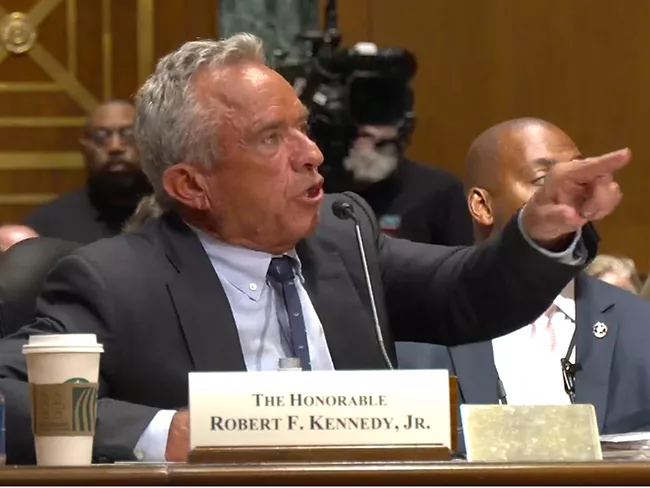
Sparks flew both ways Sept. 4 as Democratic senators pushed for Robert Kennedy to resign as secretary of the U.S. Department of Health and Human Services (HHS) during a Senate Finance Committee hearing ostensibly held to discuss the Trump administration’s 2026 health care agenda. But with Kennedy the only witness, the hearing focused on Kennedy’s perceived failings as HHS secretary. “The United States is in the midst of a health care calamity,” Ranking Member Ron Wyden, D-Ore., said in his opening comments, which were laden with personal attacks.
The Sept. 3 congressional hearing on AI in health care raised questions about whether the U.S. FDA enjoys the statutory authorities it needs to properly regulate this class of products, but witnesses at the hearing said a lack of trust in AI is a substantial roadblock to adoption.
The news that Vinay Prasad has stepped down as CBER director at the U.S. FDA had some biotech stocks literally jumping in joy as the market opened July 30. Meanwhile, Prasad’s decisions regarding vaccine development, as well as actions by Makary and HHS Secretary Robert Kennedy, are coming under fire.
Once again, U.S. legislative reforms to rein in pharmacy benefit manager (PBM) business practices missed a ride to finally becoming law. This time, they were kicked out of the Trump administration’s budget reconciliation bill that was signed into law July 4. House Resolution 1, as first passed in the lower chamber, included a few PBM reforms, but they were deleted from the Senate version that ultimately became law because the parliamentarian ruled they didn’t meet the restrictions placed on reconciliation measures.