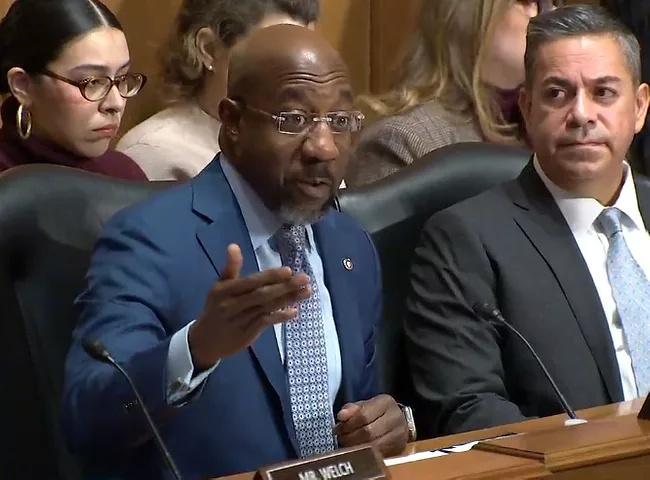
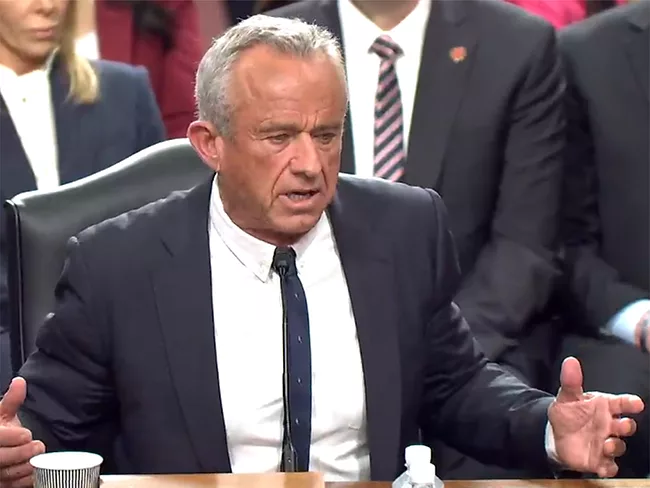
“We’ve lost 1,000 person-years of expertise in a few weeks,” former U.S. FDA Commissioner David Kessler said in an April 9 House Oversight and Government Reform hearing as he discussed the impact of the termination of 3,500 FDA employees the previous week, on top of the 1,000 who were let go or offered retirement in February.
The April 8 Senate hearing on the Trump administration’s tariffs generated some heated debate, although U.S. Trade Representative Jamieson Greer parried some of the criticism by pointing to the yawing trade deficit.
Getting the Ensuring Pathways to Innovative Cures (EPIC) Act through the U.S. Congress to do away with the “pill penalty” in the Medicare drug price negotiations could require an epic effort, given the current politically fueled atmosphere on the Hill. With the Inflation Reduction Act (IRA), which created the negotiations, considered a signature achievement of the Biden administration, the negotiations have become, for many lawmakers, almost a sacred cow that can’t be touched. If anything, some of them want to expand the negotiations to more drugs and to the commercial market.
Several drugs already selected for Medicare price negotiations, including Novo Nordisk A/S’ mega-blockbuster diabetes/weight-loss franchise, could see up to a three-year reprieve if a bipartisan bill recently introduced in the U.S. House and Senate becomes law.
The U.S. Congress is turning its attention, once again, to bipartisan pharmacy benefit manager (PBM) reforms, after efforts to rein in PBM practices died with the 118th Congress. With an eye on finally getting them passed, the House Energy and Commerce Committee kicked off the process with a Feb. 26 hearing that was supposed to be focused on the reform legislation the committee approved last year and follow-on legislation to rein in harmful PBM practices.
The Biosecure Act may have died with the 118th U.S. Congress, but efforts to stop U.S. government funding of R&D in China are alive and well. Rep. Claudia Tenney, R-N.Y., introduced the Stop Funding our Adversaries Act in the House Feb. 7 to prohibit direct and indirect federal funding of research in China or entities owned by China.
The Biosecure Act may have died with the 118th U.S. Congress, but efforts to stop U.S. government funding of R&D in China are alive and well. Rep. Claudia Tenney, R-N.Y., introduced the Stop Funding our Adversaries Act in the House Feb. 7 to prohibit direct and indirect federal funding of research in China or entities owned by China.
Robert F. Kennedy Jr. moved a step closer Feb. 4 to becoming the next secretary of the U.S. Department of Health and Human Services (HHS). The Senate Finance Committee voted 14-13 along party lines to send Kennedy’s nomination to the Senate floor for confirmation. While “no” votes were expected from the 13 Democrats serving on the committee, a big question mark had hung over which way Sen. Bill Cassidy, R-La., would vote, given the comments he made at two committee hearings on the nomination. In the end, Cassidy voted along with his 13 Republican colleagues, offering no comment on his vote at the meeting.
Whether Robert F. Kennedy Jr. (RFK) advances in his quest to become the top health care voice in the Trump administration could come down to one vote – that of Sen. Bill Cassidy. The Louisiana doctor is one of 14 Republican members of the Senate Finance Committee, which is scheduled to vote Feb. 4 on whether to send Kennedy’s nomination as Health and Human Services secretary to the full Senate for confirmation. If all 13 Democrats on the committee vote against it, one no vote from a Republican could stop the process.
In a U.S. Senate Finance Committee confirmation hearing marked by shouted protests, outbursts of applause and tense exchanges on several issues, including ones beyond the reach of the Department of Health and Human Services (HHS), Robert F. Kennedy Jr. (RFK) tried to present himself as someone who follows the science, not a conspiracy theorist or anti-vaxxer.