Artificial intelligence (AI)-powered drug discovery startup Protai Bio Ltd. raised $12 million in additional seed funding, bringing the total amount to $20 million that will see the company build out an oncology drug discovery pipeline derived from its AI proteomics platform.
In its first trial designed to evaluate boron neutron capture therapy (BNCT) in the treatment of advanced refractory malignant tumors, Neuboron Medtech Ltd. has performed 14 irradiations on a dozen patients.
Medical robotics startup Noah Medical Inc. is conducting a first-in-human clinical trial to assess the safety and feasibility of its Galaxy system to improve lung cancer diagnosis. The device received U.S. FDA clearance on March 1 for use in bronchoscopic visualization and accessing patient airways for diagnostic and therapeutic purposes.
Biotechnology startup Reveal Genomics SL said that a study, published in Nature Communication, found its machine learning-based technology applied to circulating tumor DNA (ctDNA) is able to predict drug response and survival outcome in patients with metastatic breast cancer treated with endocrine therapy and CDK4/6 inhibitors.
Startup Metsystem ApS received €500,000 (US$529,080) from Denmark’s Bioinnovation Institute (BII) that will allow the company to conduct trials to validate its personalized prognosis platform for cancer metastasis. An organ-specific assessment of the metastasis potential of a patient’s primary tumor would enable clinicians to better balance the trade-off between providing the potentially life-extending benefit of preventative chemotherapy to those at higher risk and avoiding the adverse effects from chemotherapy in those who are unlikely to need it.
Precision oncology startup Prana Thoracic Inc. closed a $3 million series A financing round aimed at advancing its minimally invasive lung tissue excision device for early treatment of lung cancer. The series A funds and a prior $3 million award from the Cancer Prevention & Research Institute of Texas are earmarked for product development and to support first-in-human clinical studies.
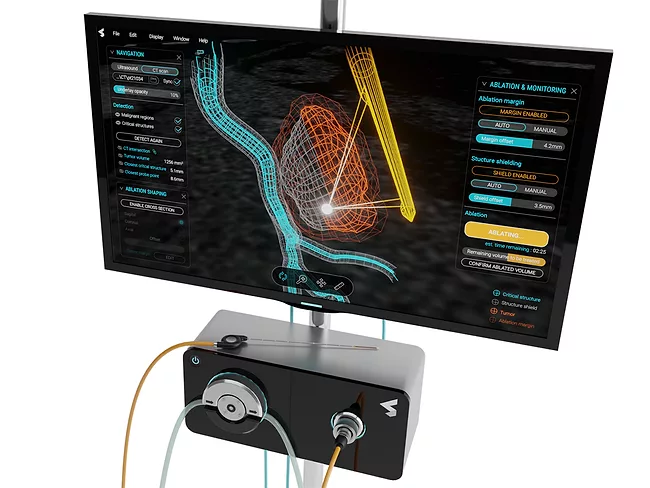
Current Surgical Inc. secured $3.2 million in a seed funding round to support development of its surgical needle platform to precisely destroy unresectable tumors. True Ventures led the round with participation from 1517 Fund and Scifounders.
Esophageal cancer is often referred to as the “silent killer” because few people show any symptoms until after the cancer has spread. If localized, five-year survival rate is 46%, but that drops to just 5% when malignancy has reached distant parts of the body.