When combined with chemotherapy, the PD-1 inhibitor antibody toripalimab reduced the risk of death by 37% over chemotherapy alone when used first line in patients with recurrent or metastatic nasopharyngeal carcinoma, Coherus Biosciences Inc. revealed at this year’s American Society of Clinical Oncology meeting (ASCO).
The U.S. FDA has issued a final guidance for non-clinical performance testing for tissue containment bags used during power morcellation procedures, and the FDA had recommended in 2020 containment bags always be used during morcellation procedures. Despite the FDA’s advisory, a survey of surgeons published last year suggested that most of these procedures are not done with these containment systems, possibly because the rate of procedure-related complications is considerably higher when containment is used.
Freenome Inc. has acquired U.K.-based immunodiagnostics developer Oncimmune Ltd. for £13 million (US$16 million), in a move that bolsters Freenome’s frontline early cancer detection efforts. While Freenome has been largely focused on getting the U.S. FDA’s nod for its colorectal cancer test, Oncimmune already has a CE-IVD marked EarlyCDT Lung blood test, an autoantibody platform and an R&D pipeline of over seven cancer detection signals.
Exact Sciences Corp.’s long-term analysis of results from the Detecting cancers Earlier Through Elective mutation-based blood Collection and Testing (DETECT-A) study found that all patients diagnosed and treated for stage I or II cancers identified through its blood-based multi-cancer early detection (MCED) test remained cancer-free more than four years after diagnosis. Half of all the participants with cancer detected remained alive at four years, notable because most of the detected cancers had no recommended screening tests or standards. The results will be presented at the American Society of Clinical Oncology meeting June 2-6.
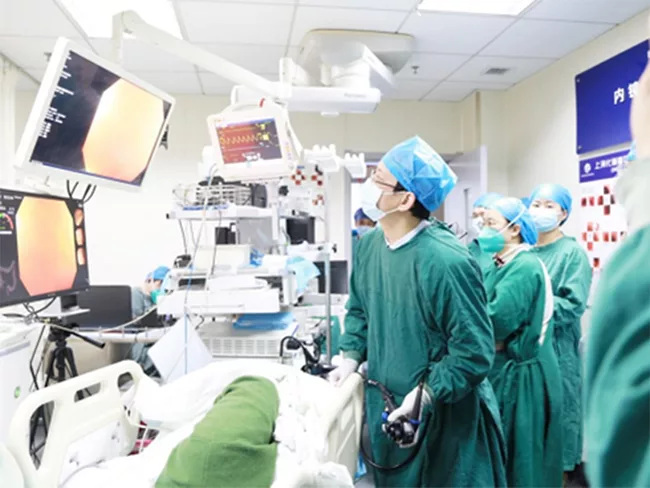
Wuhan Endoangel Medical Technology Co. Ltd.’s artificial intelligence (AI)-assisted real-time quality control and auxiliary diagnosis system for lower gastrointestinal endoscopy has been approved by China’s NMPA.
Olympus Europa SE & Co. KG is launching three Endoclot products, two hemostatic agents and a submucosal injection agent, in the Europe, Middle East and Africa (EMEA) region. This new portfolio was developed by Santa Clara, Calif.-based Endoclot Plus Inc., which expanded its distribution with Olympus from the U.S. to EMEA in December 2022. “The addition of their solutions to our portfolio allows Olympus to contribute to safe treatment in gastrointestinal procedures. We aim to improve patient outcomes and hereby elevate the standard of care,” said Stefanie Kaufung, EMEA business unit manager gastrointestinal endotherapy at Olympus.
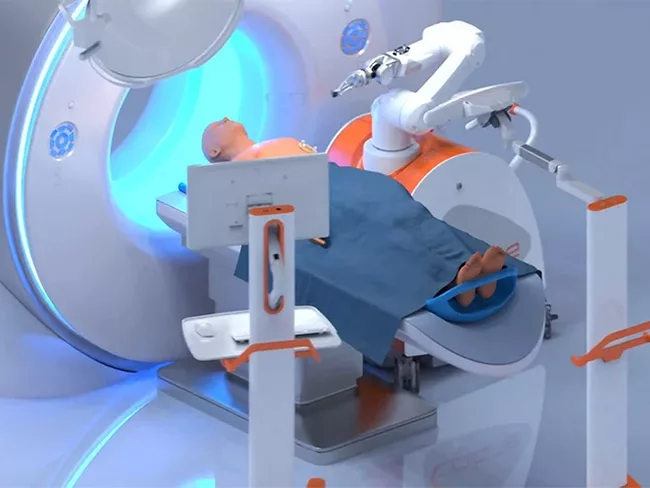
Quantum Surgical SAS has obtained an extension to the FDA authorization covering its Epione robot, which can now treat abdominal cancers. “This decision now allows physicians to treat all abdominal tumors at an early stage and will ramp implementation of our Epione robotics solution in the U.S.,” said Bertin Nahum, CEO and co-founder of Quantum Surgical. Marketed in Europe and the U.S., the Epione robot has already been used to treat more than 150 patients with liver or kidney cancer.
Nearly a year and a half after Francis Collins stepped down as director of the U.S. NIH, President Joe Biden announced May 15 his intent to nominate Monica Bertagnolli as the next NIH director.
Veracyte Inc. reported that its Prosigna breast cancer assay significantly reduced the use of chemotherapy in patients with high-risk, early-stage disease at the European Society for Medical Oncology 2023 in Berlin this week. The findings came from the EMIT study, a prospective, multi-year, population-based study in women in Norway that is assessing the impact of the Prosigna test on treatment decisions and outcomes.
In February, Viewray Inc. said it expected to post 25% to 40% revenue growth this year. By April, the company said delays in installations would cut growth to 0% to 15% and it announced it was pursuing strategic alternatives with Goldman Sachs. Less than a month later, on May 10, the company withdrew its guidance entirely citing “the current market conditions and ongoing strategic process.”