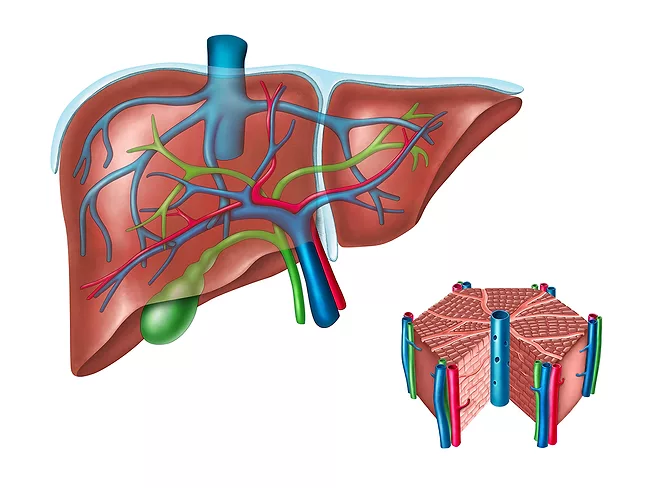
Researchers from Universitatsklinikum Heidelberg presented data from a study that investigated the role of strawberry notch homolog 1 (SBNO1) in the development of hepatocellular carcinoma (HCC) and cholangiocarcinoma (CCA).
A disintegrin and metalloprotease domain-like protein decysin-1 (ADAMDEC1) is a multifunctional transmembrane glycoprotein that has been shown to promote metastasis and development of various tumor types by degrading the extracellular matrix. Scientists at Nankai University and affiliated organizations aimed to assess the regulatory mechanisms of ADAMDEC1 in the highly aggressive cancer cholangiocarcinoma (CCA).
Elevar Therapeutics Inc. will license Relay Therapeutics Inc.’s “NDA-ready” bile duct cancer therapy, lirafugratinib (RLY-4008), through a potential $500 million deal as Elevar, an HLB Co. Ltd. subsidiary, seeks to diversify its oncology portfolio following the U.S. FDA rejection of its liver cancer drug candidate in May.
Cholangiocarcinoma accounts for about 3% of all gastric tumors. Mutant KRAS is the most prevalent oncogene in cholangiocarcinoma, suggesting a potential role for KRAS inhibitors as a therapeutic approach.
Following a cumbersome process, the U.S. FDA is withdrawing its accelerated approval for Truseltiq (infigratinib) as a second-line treatment for patients with unresectable locally advanced or metastatic cholangiocarcinoma harboring an FGFR2 fusion or rearrangement as detected by an FDA-approved test.
A rare pediatric disease designation for its achondroplasia treatment and a subsequent $200 million private placement boosted shares of Tyra Biosciences Inc. on Feb. 2 by 29.3%.
Starpharma Holdings Ltd.’s DEP docetaxel phase II trial met its primary endpoints, demonstrating antitumor activity in multiple advanced, metastatic cancers, including pancreatic, gastro-esophageal, non-small-cell lung cancer and cholangiocarcinoma.
Starpharma Holdings Ltd.’s DEP docetaxel phase II trial met its primary endpoints, demonstrating antitumor activity in multiple advanced, metastatic cancers, including pancreatic, gastro-esophageal, non-small-cell lung cancer and cholangiocarcinoma.
Japan’s Ministry of Health, Labour and Welfare approved Taiho Pharmaceutical Co. Ltd.’s Lytgobi (futibatinib) for unresectable biliary tract cancer harboring fibroblast growth factor receptor 2 (FGFR2) gene fusions that has progressed after chemotherapy.