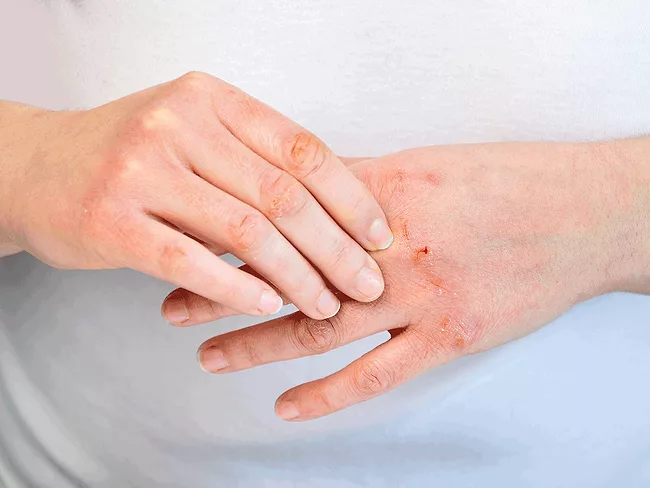
Connect Biopharma Holding Ltd.’s IL-4Rα binding candidate, CBP-201, yielded positive data in a pivotal trial in patients with moderate to severe atopic dermatitis in China, positioning the company to engage with Chinese regulators in the next several months to discuss a potential NDA filing.
Atopic dermatitis is the most common inflammatory skin disorder with a complex etiology. On the other hand, autophagy is an essential process by which cells break down undesired components to maintain their homeostasis.
E-nitiate Biopharmaceuticals Co. Ltd. has raised ¥100 million (US$14.4 million) in a series A round to speed up the clinical trials of its lead assets, QY-201 and QY-101, and expand the pipeline. “Our strategy is to focus on the ‘blue ocean’ of the dermatosis market,” said Shi Jun, chief medical officer at E-nitiate Biopharma. “The first step is to enter China’s autoimmune skin diseases market.”
E-nitiate Biopharmaceuticals Co. Ltd. has raised ¥100 million (US$14.4 million) in a series A round to speed up the clinical trials of its lead assets, QY-201 and QY-101, and expand the pipeline. “Our strategy is to focus on the ‘blue ocean’ of the dermatosis market,” said Shi Jun, chief medical officer at E-nitiate Biopharma. “The first step is to enter China’s autoimmune skin diseases market.”
Researchers from Shaperon Inc. presented positive preclinical data for their clinical-stage candidate, sodium taurodeoxycholate (HY-209), demonstrating its therapeutic potential for atopic dermatitis.
Ducentis Biotherapeutics Ltd. has been acquired by Arcutis Biotherapeutics Inc. for up to $400 million, representing a landmark moment for seed investor Lifearc Ventures, which aims to kick-start promising biotechs in the U.K. while giving any investment returns to its parent medical charity.
Arcutis Biotherapeutics Inc. has entered into an agreement to acquire Ducentis Biotherapeutics Inc., a preclinical-stage biotechnology company focused on developing novel therapies for inflammation and autoimmune diseases.
Sidekick Health AB expanded its partnership with Pfizer Inc., adding an atopic dermatitis offering to its integrated digital therapeutics solution. The app will roll out first in the U.K., followed by Belgium, Norway, Netherlands, Sweden, France, Ireland and Japan this year.
Evotec AG and Almirall SA have entered a multitarget drug discovery alliance focused on severe skin disease, from which Evotec could earn up to €230 million (US$243.5 million) in per-program milestones. It is also receiving an undisclosed up-front payment, research funding and, should any products reach the market, it would also bank sales royalties in the high-single-digit percentage range.
Connect Biopharma Holdings Ltd. pointed to positive secondary endpoint data and a numerical trend on the primary endpoint in favor of its S1P receptor modulator, CBP-307, in ulcerative colitis, but those results weren’t enough to keep the stock (NASDAQ:CNTB) from falling by more than 57% to close at 82 cents, as investors focused on the primary endpoint miss and the company’s decision to partner the program going forward.