Medtronic plc revealed plans to spin off its underperforming diabetes unit as a separate public company during its fourth quarter 2025 earnings call May 21. The company expects to complete the separation within 18 months.
South Korean government and biopharmaceutical industry representatives urged American policymakers May 7 to refrain from imposing tariffs on pharmaceutical imports, and to spare allies if pharma tariffs are deemed necessary. Both Korea’s Ministry of Health and Welfare on May 4 and the Korea Biotechnology Industry Organization on May 6 submitted comments to the U.S. Department of Commerce in response to its ongoing investigation of pharmaceutical imports.
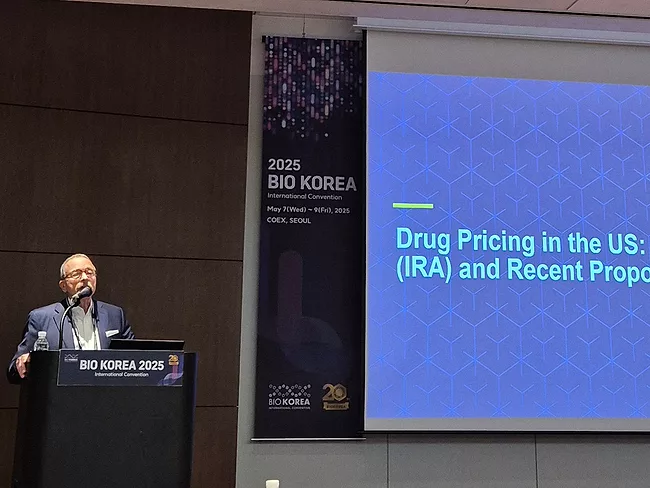
Ongoing policy issues in the U.S., including the Inflation Reduction Act and recent proposals under President Donald Trump’s administration, have wide ranging implications for the global biopharmaceutical industry, speakers at Bio Korea 2025 said May 8, including a heightened need for all biotechs to draft regulatory strategies.
Korean pharmaceutical stocks rose across the board May 13, a day after U.S. President Donald Trump signed off on the most favored nation executive order, a drug pricing policy expected to benefit biosimilar makers in the U.S., according to Celltrion Inc.
A number of biopharma and med-tech companies are committing to expand manufacturing and other facilities in the U.S. Some shifts could be driven by the tariffs imposed by President Trump in 2025, signaling a strategic move to mitigate costs and ensure continued growth
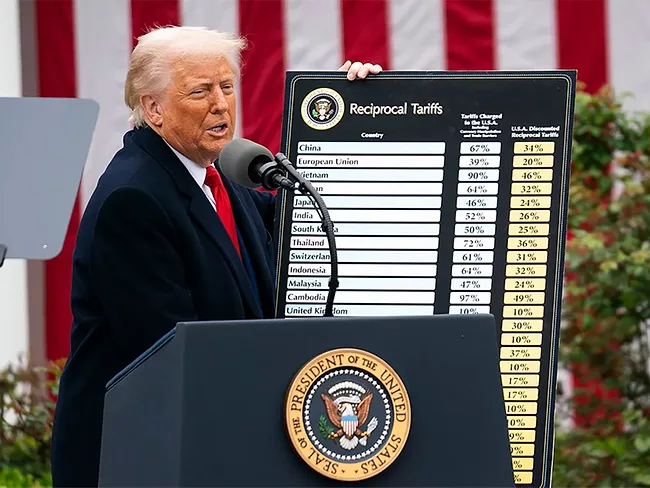
The long-term status of the trade dispute with China remains unclear, but a 90-day reduction in stratospheric tariffs imposed by the U.S. and China on their respective products provides breathing room for the med-tech companies predicting the hardest hit from the original levels.
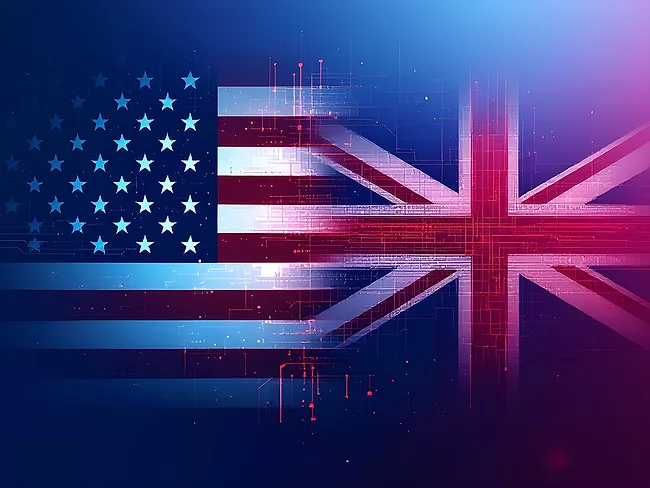
The U.K. became the first country to reach agreement with the U.S. over threatened tariffs in an “economic prosperity deal” that leaves the pharma industry hanging on for the outcome of the U.S. section 232 probe into the implications of pharmaceutical imports for America’s national security.
As biopharma companies continue to roll out their first-quarter earnings, Trump administration tariffs remain at the top of investors’ minds. While executives offer their various strategies to appease concerns, the uncertainty prevails, making it difficult to clearly satisfy all of the questions.
Despite the uncertain macro environment created by the threat of reciprocal tariffs on goods into the U.S., some investors are still upbeat about the med tech sector. Even with changes at the HHS and disruption to product approvals throughout the FDA, venture capital investors remain cautiously optimistic.
Ongoing policy issues in the U.S., including the Inflation Reduction Act and recent proposals under President Donald Trump’s administration, have wide ranging implications for the global biopharmaceutical industry, speakers at Bio Korea 2025 said May 8, including a heightened need for all biotechs to draft regulatory strategies.