E1A binding protein (EP300) and CREB binding protein (CBP) are two closely related histone acetyltransferases (HATs), the mutations in which are related to several cancers. In the current study, researchers from Daiichi Sankyo Co. Ltd. aimed to develop orally available small molecule EP300/CBP HAT inhibitors with antitumor activity.
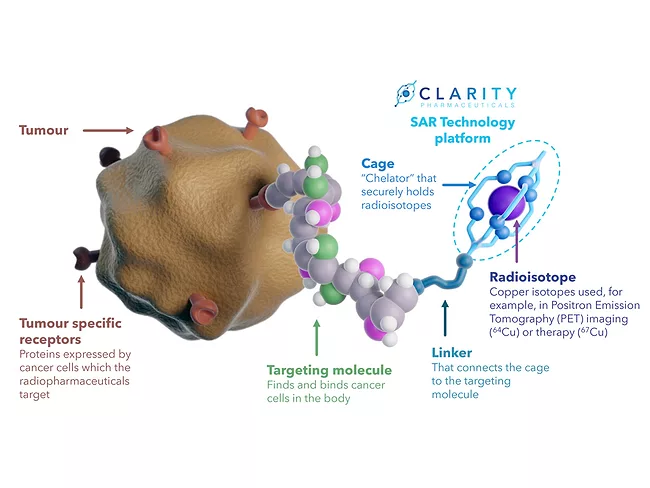
Clarity Pharmaceuticals Ltd. raised AU$121 million (US$79.29 million) through a private placement that will fund the company’s radiopharma pipeline comprising targeted copper therapies out to early 2026.
Validating Fusion Pharmaceuticals Inc.’s radiopharmaceutical technology and manufacturing capabilities, Astrazeneca plc offered to buy the firm for $2 billion up front in cash, plus a contingent value right that could raise the total deal value by another $400 million.
In a move to build up its dominance in the radiopharma market, Telix Pharmaceuticals Ltd. said it plans to acquire radioisotope production technology firm Artms Inc. and its advanced cyclotron-based isotope production platform, manufacturing plant and stockpile of ultra-pure rare metals.
Global interest in radiopharmaceuticals is soaring, and the global radiopharma market is expected to grow 10% over the next decade to $13.67 billion by 2032, according to a new report by Precedence Research.
Researchers at Provincial Health Services Authority (PHSA) and University of British Columbia have identified radiolabeled compounds targeting glutamate carboxypeptidase II (NAALADase; NAAG peptidase, FOLH1; PSMA) acting as positron-emission tomography (PET) imaging agents with low uptake in salivary glands and kidneys reported to be useful for the diagnosis of prostate cancer.
PARP inhibitors such as olaparib are used for the treatment of metastatic castration-resistant prostate cancer (mCRPC) harboring homologous recombination deficiency (HRD), but a proportion of these patients do not respond to therapy or eventually develop resistance.
Strong early data of Janux Therapeutics Inc.’s tumor-activated T-cell engager compounds JANX-007 and JANX-008 sent the San Diego-based company’s shares surging by 229%, indicating enthusiasm for their best-in-class potential and the possibility of tapping into multibillion-dollar prostate cancer and solid tumor markets.
Global interest in radiopharmaceuticals is soaring, and the global radiopharma market is expected to grow 10% over the next decade to $13.67 billion by 2032, according to a new report by Precedence Research.