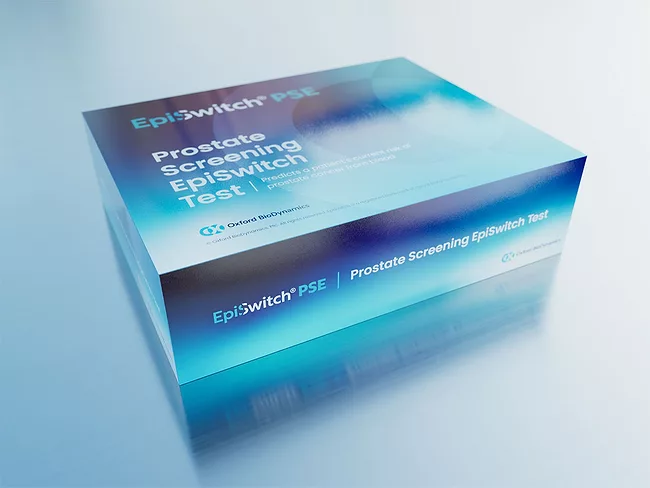
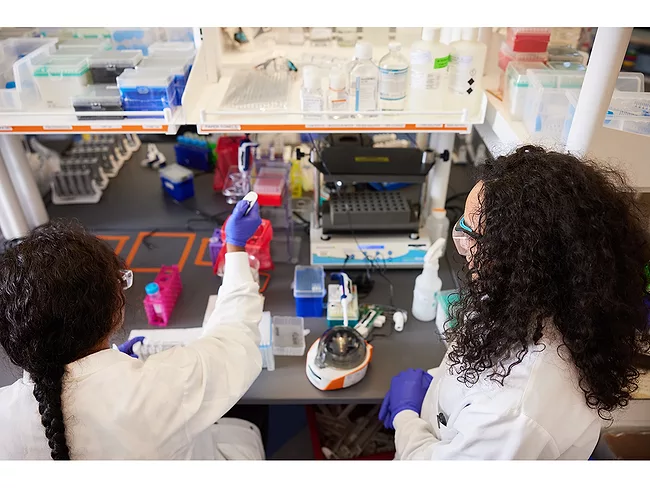
The receipt of a reimbursement code for the Episwitch Prostate Screening (PSE) test developed by Oxford Biodynamics plc, following its recent launch, is good news for men frustrated with the inaccuracies in prostate-specific antigen (PSA) tests and the lack of alternatives, Jon Burrows, CEO of Oxford Biodynamics told BioWorld.
In a positive sign for its future success, Harbinger Health Inc. closed a $140 million series B fundraising round, bringing total funds raised since its founding in 2020 to $190 million. The new funds will be used to support completion of the company’s CORE-HH 10,000 participant study of its blood-based multicancer early detection (MCED) test. The company expects to complete enrollment in CORE-HH, a three-part case control, adaptive study with development, validation and longitudinal cohorts in 2024.
Researchers from Uppsala University and Tomsk Polytechnic University have detailed the discovery and preclinical evaluation of [177Lu]BQ-7876, a novel prostate-specific membrane antigen (PSMA)-targeting therapeutic for the treatment of prostate cancer.
Researchers from China Pharmaceutical University and Nanjing First Hospital synthesized and optimized a novel series of thiohydantoin based compounds leading to the discovery of candidate [I] as the lead androgen receptor (AR) antagonist (IC50=1.46 µM).
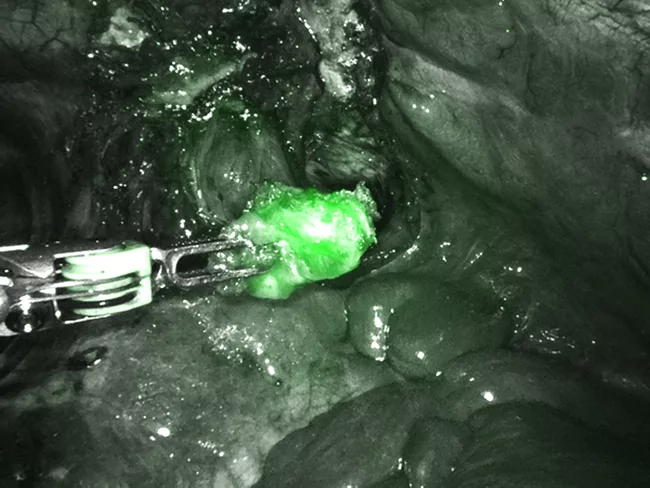
A fluorescent imaging agent developed by Vergent Bioscience Inc. enables visualization of elusive and previously undetected tumors, a phase II study presented last week at the 2023 World Conference on Lung Cancer (WCL23) demonstrated. The ability of the tumor-targeting agent, Vgt-309, to illuminate tumors could help surgeons more precisely locate tumors, better ensure clean margins and guide care decisions. In 10% of cases, the agent revealed unknown tumors in lymph nodes, which could affect which nodes are biopsied as well as when or whether a systemic therapy is recommended.
Radiopharm Theranostics Ltd. has entered into an expanded agreement with Terthera BV under which Terthera will supply Radiopharm with Terbium-161 (Tb-161). The Tb-161 isotope will be linked to a proprietary monoclonal antibody to form RAD-402, a radiotherapeutic that is being developed by Radiopharm to target KLK3 expression.
Jyong Biotech Ltd. filed for an IPO that could raise as much as $40 million to advance a pipeline that includes several prospects for urinary system disorders, including one that has reached the NDA stage in the U.S.
Jyong Biotech Ltd. filed for an IPO that could raise as much as $40 million to advance a pipeline that includes several prospects for urinary system disorders, including one that has reached the NDA stage in the U.S. Based in New Taipei City, Taiwan, Jyong was founded in 2002. The lead compound is MCS-2 for benign prostatic hyperplasia with lower urinary tract symptoms.