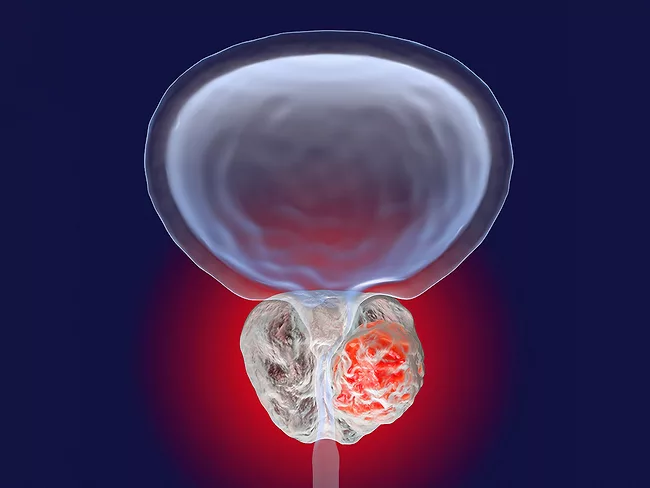
Results from a meta-analysis of magnetic resonance imaging (MRI)-guided adaptive radiation for prostate cancer by radiation oncologists from the Dana Farber Cancer Institute demonstrated the treatment reduces complications while comparing well to standard approaches. The study was published in Cancer.
Fuzionaire Diagnostics Inc. has changed its name to Fuzionaire Theranostics Inc. to better reflect the company’s pipeline of paired fluorine-18 PET diagnostics and radioligand therapies to find and treat cancer.
Teleflex Inc.’s agreement to acquire Palette Life Sciences AB for up to $650 million to boost its urology portfolio continues the company’s strategy of acquiring assets that are accretive to its growth rate. Palette has developed a number of urology products, key among them the Barrigel, a non-animal stabilized hyaluronic acid (NASHA) spacer that reduces radiation delivered to the rectum during prostate cancer radiation therapy. With radiation treatment trends increasing, the market for Barrigel is expected to grow.
ArteraAI Inc. released data from a study it said validates the first-ever artificial intelligence (AI)-derived biomarker predicting the benefit of androgen deprivation therapy (ADT) for stripping prostate cancer of the testosterone it requires to grow.
Researchers from Peking University (PKU) recently presented the discovery and preclinical evaluation of a novel small-molecule inhibitor of pan-αv integrin, C19-9-21, being developed for the treatment of prostate cancer.
National Institute of Pharmaceutical R&D Co. Ltd. has divulged heterocyclic compounds acting as RAC-α serine/threonine-protein kinase (AKT1; PKB α), AKT2 (PKB β) and AKT3 (PKB γ) inhibitors reported to be useful for the treatment of cancer.
Researchers from Duke University presented the discovery and preclinical evaluation of [211At]YF-2, a next-generation prostate-specific membrane antigen (PSMA)-targeted radiopharmaceutical.
Chia Tai Tianqing Pharmaceutical Group Co. Ltd. has identified EGFR (HER1; erbB1) wild-type and/or mutant inhibitors reported to be useful for the treatment of cancer, particularly non-small-cell lung cancer (NSCLC).
Telix Pharmaceuticals Ltd. will acquire Lightpoint Medical Ltd. in a $35 million deal that will expand its urology pipeline and bring in house a new surgery-focused unit. Under the terms of the deal, Telix of Melbourne, Australia, will pay Lightpoint $20 million up front and a further $15 million on achievement of certain development milestones. The up-front payment will be paid in equity, and the additional milestones will be payable in cash or equity, at Telix’s election.
Telix Pharmaceuticals Ltd. will acquire Lightpoint Medical Ltd. in a $35 million deal that will expand its urology pipeline and bring in house a new surgery-focused unit. Under the terms of the deal, Telix of Melbourne, Australia, will pay Lightpoint $20 million up front and a further $15 million on achievement of certain development milestones. The up-front payment will be paid in equity, and the additional milestones will be payable in cash or equity, at Telix’s election.