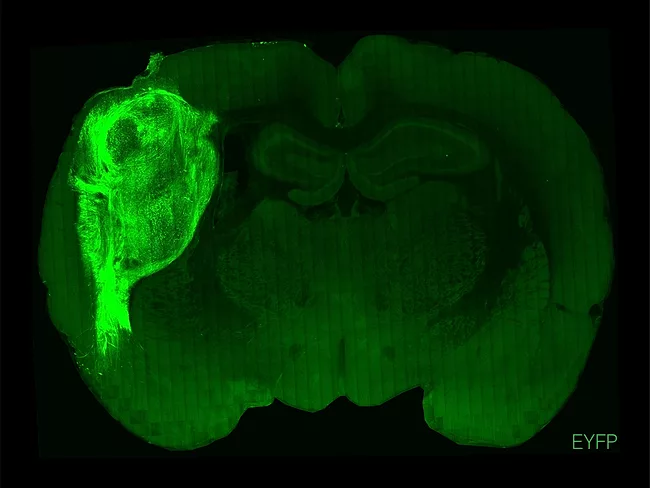
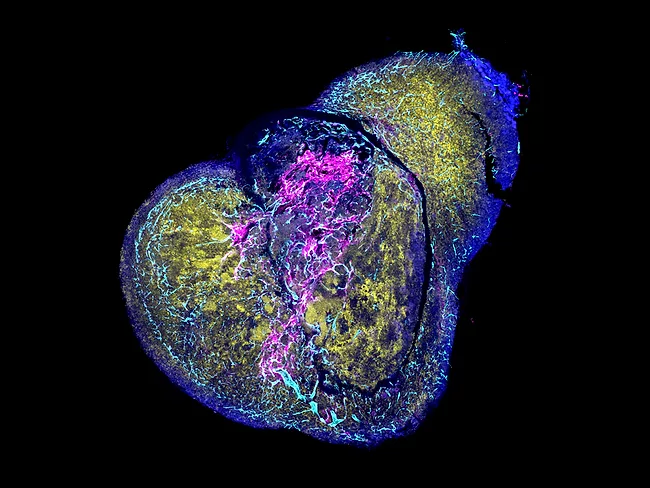
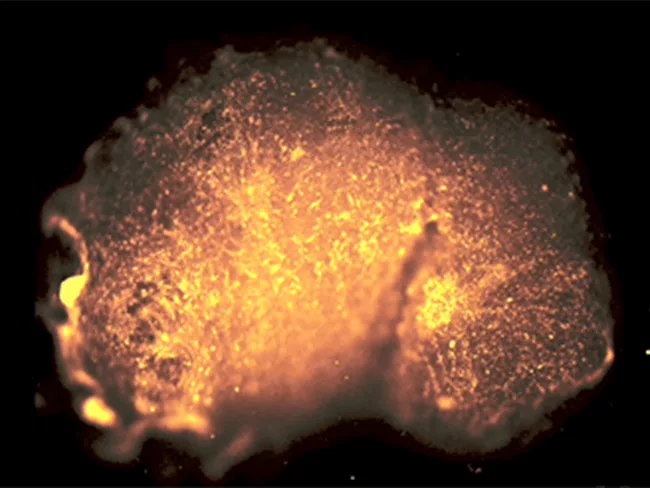
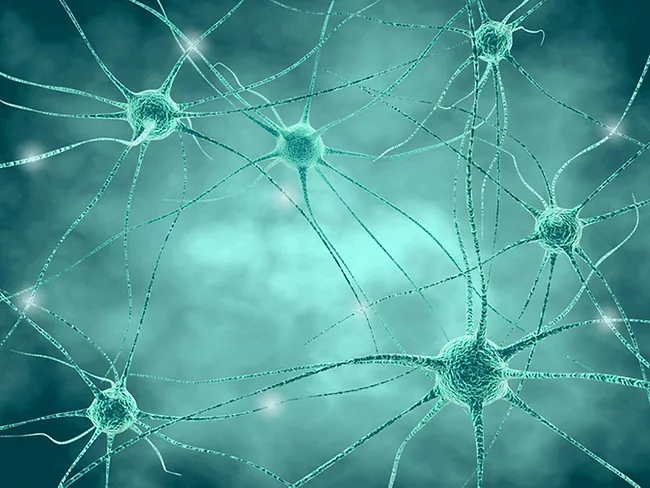
Human brain organoids transplanted into rats could be used as an in vivo model for the study of neuropsychiatric diseases. Researchers at Stanford University managed to mature human organoid neurons in the somatosensory cortex of the animal's brain and incorporate them into its neural circuitry.The integration improved the morphological and physiological properties of the transplanted neurons. Compared to those of organoids in a Petri dish, human cells preserved their own identity, and they modified the rat's learned behavior through stimulation and reward experiments.
Investigators from the University of Copenhagen, Denmark have developed a cell line engineered to express bone morphogenetic protein 2 (BMP-2) and key extracellular matrix genes and critical factors that regulate and support human hematopoiesis. The findings were reported in the Oct. 12, 2022, issue of Science Translational Medicine. One of the clinical applications that the research team is interested in involves exploiting the MSOD-B hOss as a tumor model for bone colonization in the context of various cancers.
Human brain organoids transplanted into rats could be used as an in vivo model for the study of neuropsychiatric diseases. Researchers at Stanford University managed to mature human organoid neurons in the somatosensory cortex of the animal's brain and incorporate them into its neural circuitry.The integration improved the morphological and physiological properties of the transplanted neurons. Compared to those of organoids in a Petri dish, human cells preserved their own identity, and they modified the rat's learned behavior through stimulation and reward experiments.
Brain disorders have not yet profited from advances in precision medicine to the same extent that other disorders have. With the advent of magnetic resonance imaging and other technologies, watching the brain at work has made great strides in recent decades. But those data have often been shoehorned into the categories of the Diagnostic and Statistical Manual of Mental Disorders. Researchers are working to bring diagnostic categories in line with a modern understanding the brain.
Although targeted therapies are prescribed on the basis of a patient's molecular makeup, they do not work every time. And in those instances where they do work, they basically stop working every time. In response, researchers have developed a number of systems whose goal it is to predict which drugs will be effective for an individual patients.
Separate research groups have reported new insights into the process of neurogenesis during development and adulthood, respectively. Their papers appeared in the July 6, 2021, online issue of Cell Reports.
LONDON – New guidelines for stem cell research open the door to extending the legal limit on human embryo research beyond the current 14-day maximum set down 40 years ago.
LONDON – New guidelines for stem cell research open the door to extending the legal limit on human embryo research beyond the current 14-day maximum set down 40 years ago. In revised guidelines, the International Society for Stem Cell Research (ISSCR) has moved research on human embryos from category 3, which explicitly bans their study in culture post 14 days in any circumstances, to category 2B, in which research post 14 days would be permissible if there is a clear scientific rationale – and after a thorough specialized review.
LONDON – The alchemy of induced pluripotent cells has broken another barrier, delivering a model of the earliest preimplantation stages of human development, when fertilized eggs form a blastocyst.