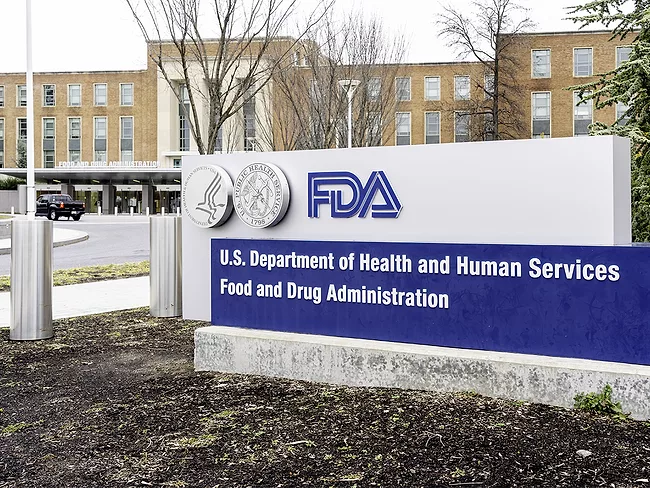
Michelle Tarver, director of the FDA’s Center for Devices and Radiological Health (CDRH), covered several programmatic areas in a May 1 trade association meeting, such as the CDRH early alert program.
The U.S. FDA’s January 2025 draft guidance for AI-enabled device software functions has not fared well in terms of industry response. Two major trade associations argue that the draft is at least somewhat redundant with existing agency guidance.
Medicare Advantage plans have drawn criticism for deviating somewhat from Medicare coverage policies, a question CMS took up in a recent draft rule. In comments to the docket, the Medical Device Manufacturers Association said it sees a need to throw a lasso around such practices, alleging that they may result in beneficiaries receiving more limited coverage than they would in fee-for-service care.
The FDA’s August 2024 draft guidance for predetermined change control plans (PCCPs) for all device types has provoked some misgivings among industry, with both the Medical Device Manufacturers Association and the Advanced Medical Technology Association blasting the draft’s limitations on the scope of the changes that could be included in a PCCP.
Medicare coverage of digital mental health therapies has traditionally been lacking, but the final Medicare physician fee schedule for 2025 added three new codes to deal with the coverage gap.
Edwards Lifesciences Corp. made a splash recently with the U.S. FDA approval of the Evoque tricuspid valve replacement device, but is also pressing Centers for Medicare and Medicaid Services to provide a coverage framework for this class of devices.
The draft Medicare physician fee schedule for calendar year 2025 provoked a strong backlash from physician societies due to a net cut in physician pay. Device makers have their own concerns, including the latest in a series of controversies over coverage of skin substitutes.
The U.S. CMS believes it has a quandary on its hands with regard to transitional pass-through payment for renal denervation devices, but the Medical Device Manufacturers Association urged the agency to provide separate payment mechanisms for these devices as seen in the inpatient final rule.
Speculation about potentially wider meaning among developers of psychedelic drugs was reignited after the complete response letter (CRL) from the U.S. FDA to Lykos Therapeutics Inc. for midomafetaminecapsules, which the company wants to use in combination with psychological intervention to treat post-traumatic stress disorder (PTSD). CEO Amy Emerson called the FDA move “deeply disappointing,” adding that San Jose, Calif.-based Lykos plans to request a meeting with the FDA to ask for reconsideration.
The proposal to overhaul the use of terminal disclaimers in U.S. patent filings won over no fans among former directors of the U.S. Patent and Trademark Office, but device and drug makers, too, are concerned about the proposal.