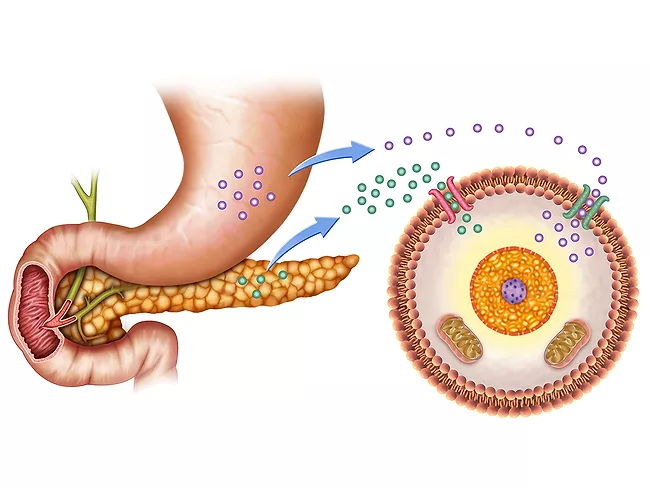
Bio-path Holdings Inc. has conducted preclinical studies of BP-1001-A, a drug product modification of prexigebersen, confirming its effectiveness in affecting insulin signaling for the potential treatment of obesity and related metabolic diseases in type 2 diabetes patients.
Released from a clinical hold by the U.S. FDA in late September, Biomea Fusion Inc.’s menin inhibitor, icovamenib, has charged ahead to produce positive top-line data from a phase II study in type 2 diabetes (T2D). The data, however, didn’t stop the stock from dropping to near its lowest level of the past 12 months.
Work at the Institute of Materia Medica of Beijing has led to the discovery and preclinical characterization of novel fructose-1,6-bisphosphatase (FBPase) inhibitors as potential therapeutic candidates for the treatment of type 2 diabetes.
A U.K. study has uncovered distinctive genetic drivers of type 2 diabetes in South Asians that lead to faster development of complications, the need for earlier insulin replacement therapy and a weaker response to some widely prescribed drugs. That points to the need to refine care pathways. But in addition, the research provides a potent illustration of how the under-representation in genomics databases of people who are not of white European origin can skew results and be a source of discrimination.
Wall Street began comparing and contrasting what’s available after Amgen Inc. rolled out phase II data with weight loss candidate Maritide – a disclosure that led shares of the biotech heavyweight (NASDAQ:AMGN) to close Nov. 26 at $280.01, down $13.99.
Apollo Therapeutics Group Ltd. and Sunshine Lake Pharma Co. Ltd. inked a potential $938 million licensing deal for APL-18881 (HEC-88473), Sunshine’s dual fibroblast growth factor 21 (FGF21)/glucagon-like peptide-1 (GLP-1) receptor agonist currently in a phase II study for type 2 diabetes.
Apollo Therapeutics Group Ltd. and Sunshine Lake Pharma Co. Ltd. inked a potential $938 million licensing deal for APL-18881 (HEC-88473), Sunshine’s dual fibroblast growth factor 21 (FGF21)/glucagon-like peptide-1 (GLP-1) receptor agonist currently in a phase II study for type 2 diabetes.
Nearly $3.8 billion was earned by Novo Nordisk A/S and Eli Lilly and Co. in the third quarter for their glucagon-like peptide-1 (GLP-1) drugs to treat obesity. Novo’s GLP-1 drug, Wegovy (semaglutide), approved by the U.S. FDA in June 2021, had sales of DKK17.3 billion (US$2.5 billion), while Lilly’s Zepbound (tirzepatide), which is a GLP-1 and glucose-dependent insulinotropic polypeptide dual agonist FDA-approved in November 2023, posted sales of $1.26 billion for the quarter.