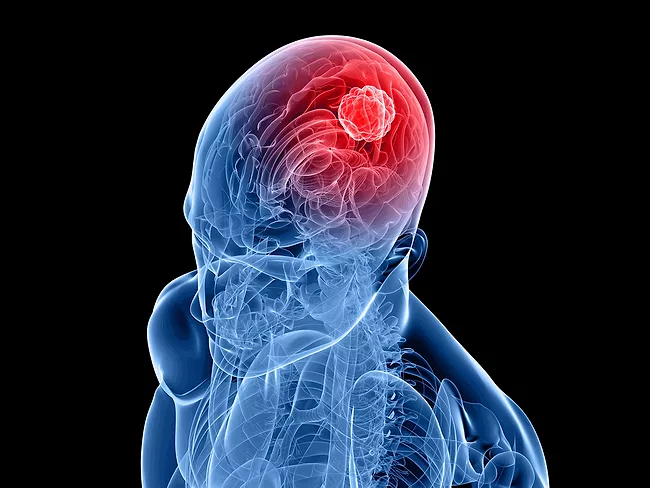
Tumor heterogeneity is recognized as an important way in which tumors are able to grow, invade surrounding tissue, metastasize and develop resistance to therapies. But linking specific states to the overall biology of tumors has been a challenge.
The U.S. FDA has granted Alpheus Medical Inc. orphan drug and fast track designations for a therapeutic platform that could improve outcomes for patients suffering from recurrent glioblastoma (GBM), the most common primary brain cancer and among the hardest to treat.
The U.S. FDA has given Sonalasense Inc. a green light to conduct two clinical trials in life-threatening brain tumors using sonodynamic therapy (SDT) and SONALA-001, an intravenous proprietary formulation of 5-aminolevulinic acid, or ALA. The studies – in diffuse intrinsic pontine glioma (DIPG) and recurrent glioblastoma (rGBM) – mark the first time SDT will have been used in clinical trials.
Canbridge Pharmaceuticals Inc. has raised HK$604 million ($77.4 million) with a listing on the Hong Kong stock exchange, selling about 56.3 million shares (1228.HK) at HK$12.18 per share. The shares fell to HK$8.90 at the close of trading Dec. 10. Almost half the funds will support advancement of Canbridge’s lead candidate, CAN-008, a glycosylated CD95-Fc fusion protein in phase II testing for glioblastoma, while another quarter will support other major pipeline programs.
Canbridge Pharmaceuticals Inc. has raised HK$604 million ($77.4 million) with a listing on the Hong Kong stock exchange, selling about 56.3 million shares (1228.HK) at HK$12.18 per share. The shares fell to HK$8.90 at the close of trading Dec. 10. Almost half the funds will support advancement of Canbridge’s lead candidate, CAN-008, a glycosylated CD95-Fc fusion protein in phase II testing for glioblastoma, while another quarter will support other major pipeline programs.
Researchers working at Lerner Research Institute, Cleveland Clinic reported in the November 8, 2021, issue of NatureCancer that an inhibitor of the beta-amyloid producing enzyme, BACE1, could reprogram tumor-promoting M2 macrophages to exert M1 tumor-suppressing activities in animal models of glioblastoma multiforme.
Alpha Tau Ltd. has secured a second breakthrough device designation for its Alpha Dart radiation treatment for solid cancer tumors. The FDA has granted the Jerusalem-based company’s technology a designation for the treatment of patients with recurrent glioblastoma multiforme (GBM), an aggressive malignant brain tumor. GBM has an average five-year survival rate of less than 10% and is the most common malignant tumor of the brain or central nervous system. According to the designation, the Alpha Dart system can be used to treat recurrent GBM as an adjunct to standard medical therapies or as a standalone therapy after standard medical therapies have been exhausted.
Vigencell Inc., a company focused on immune cell therapy, raised ₩99.4 (US$85.17 million) through an IPO on South Korea’s Kosdaq board and plans to use the funds to drive its R&D and company operations. “We particularly want to increase the competitiveness of our pipeline by advancing our technology and clinical development,” Vigencell CEO Tai-Gyu Kim told BioWorld. “We will also expand our discovery of new candidates and R&D in general, as well as updating our facilities and hiring researchers.”
New top-line data from Kintara Therapeutics Inc.’s phase II study of its lead candidate, VAL-083, in recurrent glioblastoma multiforme were incrementally better than data released in April, and that’s just fine with CEO Saiid Zarrabian. “Normally, in my experience, top-line data usually regresses a little,” Zarrabian told BioWorld. “The fact that it improved could be a reflection of the small size of the study, but it adds a little more interest to top-line data.”