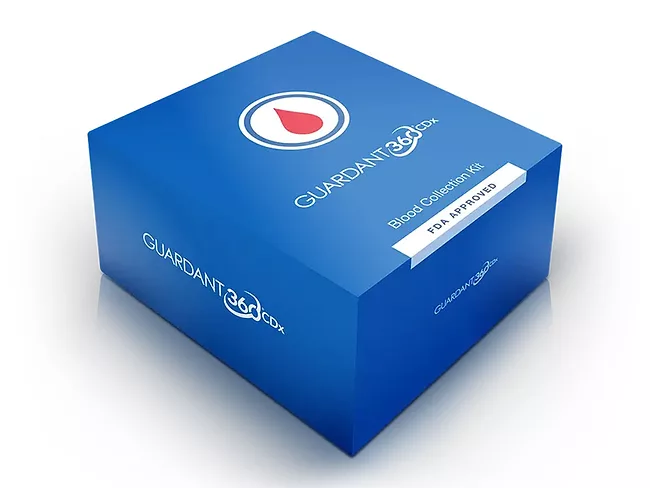
The evolution of cancer diagnostics continues with the FDA’s May 20 approval of Guardant Health Inc.’s Guardant360 Liquid cDx. The new blood-based comprehensive genomic test assesses a 100-times wider genomic footprint than the previously approved Guardant360 cDx to deliver comprehensive tumor profiling results, according to the company. It noted that the seven companion diagnostic indications already approved for the older test will transfer to the new one.
Roche Holding AG has agreed to acquire Pathai Inc. for up to $1.05 billion in a bid to strengthen its position in digital pathology and enhance its biopharma services. The move builds on a partnership established between the two companies in 2021, and expanded in 2024, to include the development of AI-enabled companion diagnostic algorithms.
Mursla Bio Ltd. recently entered a partnership with an unnamed large pharmaceutical company to use its AI Precision Medicine platform to help with drug development and ultimately develop companion diagnostics. The collaboration uses Mursla’s platform ability to isolate and analyze extracellular vesicles from a simple blood sample, to provide biologically labelled, multiomics data to improve patient stratification, monitor treatment and develop companion diagnostics.
A new oral HER2-directed breast cancer therapy from Bayer AG, and its companion diagnostic from Thermo Fisher Scientific Inc., have been approved by the U.S. FDA. Hyrnuo (sevabertinib), a reversible tyrosine kinase inhibitor, was greenlit by the agency for adults with locally advanced or metastatic non-squamous advanced HER2-mutant non-small-cell lung cancer.
Companies in the life sciences must tread carefully when it comes to the Anti-Kickback Statute, but a recent advisory opinion by the Office of Inspector General lends little clarity on the point.
The U.S. FDA granted fast track designation to Telix Pharmaceutical Ltd.’s TLX101-CDx for glioma imaging as the firm prepares to file its NDA in the first half of 2024, a Telix spokesperson told BioWorld.
The U.S. FDA has announced the next stage in its program to down-classify a series of in vitro diagnostics (IVDs) from class III to class II, a change that would significantly ease the premarket requirements for these test types. Much of the emphasis here is on companion diagnostic (CDx) tests, a category of products that is the focus of a separate FDA imperative, but there are those who view this down-classification regime as little more than a meager attempt to paste over a massive impending regulatory overhang.
The U.S. FDA has commenced with a pilot program for companion diagnostics (CDx) for oncology therapies, which fulfills in part a 2014 agency guidance on the use of CDx. The FDA expects to enroll only nine reference drugs and the associated companion test, but the pilot program is part of the FDA’s controversial attempt to deal with lab-developed tests (LDTs), specifically those tests that are used to determine whether a patient is likely to respond to a particular oncology treatment.
The U.S. FDA reported a pilot program for validation of lab-developed tests (LDTs) used as companion diagnostics, a move that seems an implicit recognition that test kits as CDx products are not the darlings of test developers. The program arrives as the agency is considering rulemaking for regulation of LDTs, however, a combination of developments that promises to roil the already strained relationship between the FDA and clinical labs.
Test developers who are seeking coverage by public and private payers often resort to clinical practice guidelines as support for their pleas for coverage, but payers aren’t always persuaded by these guidelines. Lon Castle of Evicore Health told test makers that while these guidelines are often helpful, many of them are well ahead of the evidence, and that test developers would do well to check the data behind the guidelines before reciting them to payers.