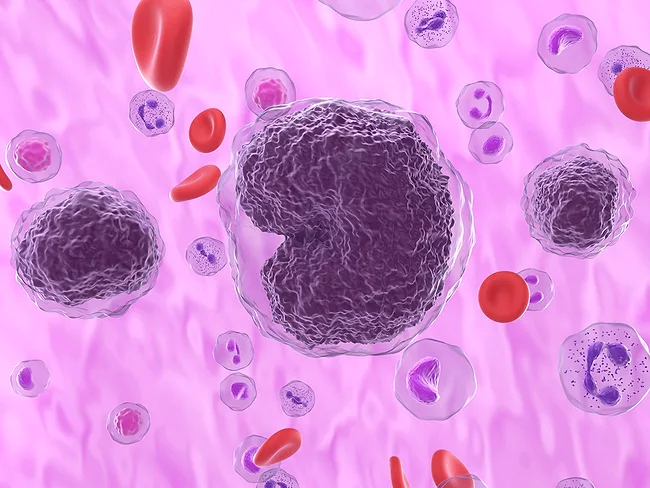
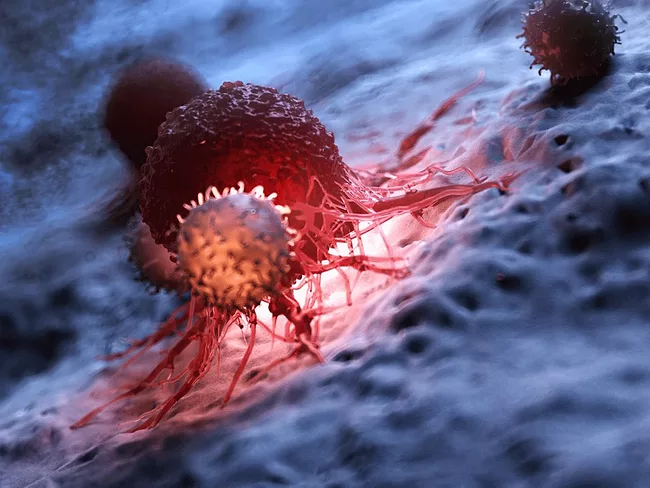
Bruton tyrosine kinase (BTK) enzyme inhibitors used to treat B-cell cancers, including chronic lymphocytic leukemia (CLL) and non-Hodgkin lymphoma, also produce resistance by causing mutations in the protein. Now, a study on the BTK degrader NX-2127 showed the compound could be effective in eliminating BTK regardless of its mutations.
KRAS-mutated tumors were once untreatable. In fact, KRAS was something of a poster child for so-called undruggability. Several laboratories are investigating strategies to address other mutations and uses beyond non-small cell lung cancer (NSCLC) and colorectal cancer. If you can't bind KRAS to block it, use a glue or combine multiple weapons. This is the idea behind two new approaches that target cancers caused by this proto-oncogene.
KRAS-mutated tumors were once untreatable. In fact, KRAS was something of a poster child for so-called undruggability. Several laboratories are investigating strategies to address other mutations and uses beyond non-small cell lung cancer (NSCLC) and colorectal cancer. If you can't bind KRAS to block it, use a glue or combine multiple weapons. This is the idea behind two new approaches that target cancers caused by this proto-oncogene.
Coimmune Inc. has obtained a license to target delta-like ligand 3 (DLL3) with IL-18 armored chimeric antigen receptor (CAR) technology. The company exercised an option to obtain an exclusive license in the DLL3-targeted, allogeneic CAR-cytokine induced killer (CAR-CIK) cell therapy field to IL-18 armored CAR technology under an agreement with Memorial Sloan Kettering Cancer Center (MSK).
Part of the reason for CAR T cells’ astonishing success in B-cell cancers is that B cells are astonishingly easy to replace. CAR T cells are specific, yes. But they are not specific to tumor cells. They are specific to their target antigens. In the case of Yescarta (axicabtagene ciloleucel, Gilead Sciences Inc.) and Kymriah (tisagenlecleucel, Novartis AG), the first two clinically approved T cells, that target is CD19, which is expressed on B-cell precursors. And when it is successful, the treatment leaves patients without any B cells at all.
Researchers at Dana-Farber Cancer Institute Inc., Memorial Hospital for Cancer and Allied Diseases, Memorial Sloan Kettering Cancer Center and Stevens Institute of Technology have divulged proteolysis targeting chimeras (PROTACs) comprising an E3 ubiquitin ligase-binding moiety linked to cyclin-dependent kinase 4 (CDK4) and/or 6 (CDK6)-targeting moiety through a linker.
By using a statin to preferentially increase the expression of HER2 on tumor cells, researchers at Memorial Sloan Kettering were able to sensitize gastric cancers to a HER2-targeted radioligand in animal models of gastric cancer. Lovastatin aided the radioligand via two distinct mechanisms. First, it increased the availability of HER2 on the cell surface, allowing greater binding. It also had radioprotective effects on normal cells, reducing the toxicity of higher doses of radiation.
Coimmune Inc. has exercised its option to obtain an exclusive license to IL-18 armored chimeric antigen receptor (CAR) technology under a prior agreement with Memorial Sloan Kettering Cancer Center (MSK). The company plans to couple the technology with allogeneic cytokine induced killer (CIK) cells to launch the clinical development of CMN-008 (armored CAR-CIK cells), with CD19 as the initial target in B-cell malignancies.
Previous studies have implicated OBSCN in breast tumorigenesis and have also demonstrated that low OBSCN levels correlate with significantly reduced overall and relapse-free survival in breast cancer patients. In a recent study, researchers from Memorial Sloan Kettering Cancer Center aimed to investigate the mechanisms involved in the regulation of OBSCN.
Researchers from Memorial Sloan Kettering Cancer Center and affiliated organizations presented data from a study that aimed to investigate the immunomodulatory functions of lysine-specific demethylase 1 (LSD1) in regulating MHC-I antigen presentation pathway (APP) and resistance to immunotherapy in patients with small-cell lung cancer (SCLC).