Choosing blastocysts for transfer based on size could give prospective parents a much better chance of success in welcoming a new member to the family, a study published in the Nature portfolio journal Scientific Reports demonstrates.
Israel’s venture capital firm Pitango has raised $175 million for a new fund focused on backing entrepreneurs leveraging data science, artificial intelligence (AI), medical devices and novel biology to transform health care. Pitango Healthtech II is the firm’s second fund dedicated to health care and will see investment go into 15 companies ranging from those at the seed stage to those wanting commercial stage investment.
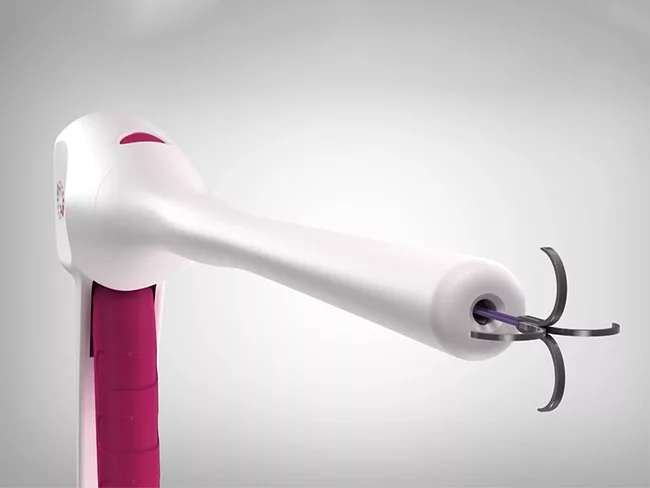
Four months after raising $55 million, Magenta Medical Ltd. reported the completion of enrollment to a U.S. FDA-approved early feasibility study with the Elevate percutaneous left ventricular assist device (pLVAD).
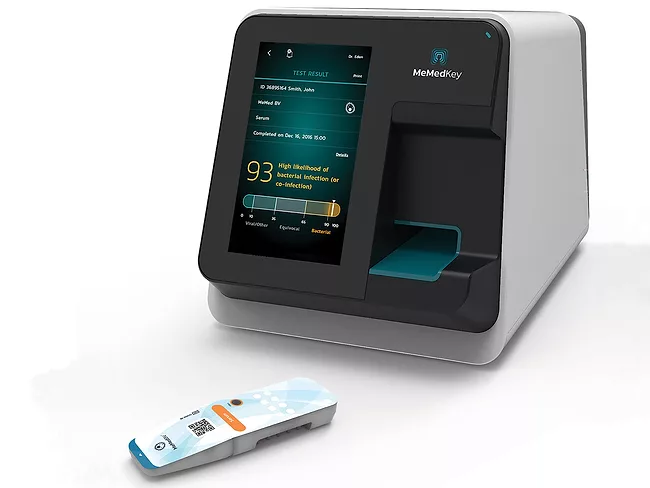
In a pivotal milestone for Memed Ltd., the U.S. FDA cleared its Memed BV test on whole blood samples, which will help health care providers distinguish between bacterial and viral infections. The test, which yields results in as little as 15 minutes, can reduce the risk of unnecessary prescriptions which is a key driver of antibiotic resistance.
The €5.5 million (US$6 million) Escala Medical Ltd. recently received from the European Innovation Council will help the company expand its operations as it looks to officially launch its Apyx device in the U.S. later this year, CEO and founder Edit Goldberg told BioWorld. Already FDA-cleared, Apyx offers incision-free pelvic organ prolapse (POP) treatment to the women suffering from the often painful and debilitating condition.
Israeli venture capital fund, Shoni Health Ventures, launched a new fund focused on startups specializing in digital health and medical devices. Recognizing that innovative solutions with the potential to improve global health may go unrealized as health tech startups struggle to attract early-stage investors, the fund is focused on investing in companies at the pre-seed and seed-stage.
Aidoc Medical Ltd. has just presented a study using its AI tool in the Netherlands Cancers Institute for detection and worklist prioritization to diagnose incidental pulmonary embolism at routine contrast-enhanced chest CT. The results published in Radiology: Cardiothoracic Imaging show a reduction by 15% of the missed rate of incidental pulmonary embolism and by more than 98% of the notification time for positive incidental pulmonary embolism. “Our AI system gives a response related to the interpretation, quantification and workflow management,” Elad Walach, co-founder and CEO of Aidoc Medical, told BioWorld. Due to the growing volume of radiology examinations, particularly in thoracic imaging, and the lack of supply radiologists, the delay between the CT examinations and their interpretation has increased significantly in many practices. This is particularly true for pulmonary embolism (PE).
Magenta Medical Ltd. has raised $55 million to fast-track the development of the world’s smallest left ventricular assist device (LVAD). The financing round was led by Orbimed Private Investment LLC. With the participation of existing investors, New Enterprise Associates, Pitango VC Ltd. and Alive MS Ltd. “We will use this funding, in particular, to advance the clinical programs in the U.S. towards our first FDA approval,” David Israeli, CEO of Magenta Medical, told BioWorld.
The Memed BV test, developed by Memed Diagnostics Ltd. to distinguish between bacterial and viral infections, offers an accurate diagnosis of the infection in children, and reduces the unnecessary prescription of antibiotics by physicians, according to a study published in the journal, PLOS One.
The U.S. FDA granted Graymatters Health Ltd. 510(k) clearance to market Prism for PTSD, a non-invasive, self-neuromodulation adjunct digital therapy for post-traumatic stress disorder (PTSD).