David Baker, director of the Institute for Protein Design at the University of Washington School of Medicine, is a pioneer in protein design. His contributions have been recognized with countless awards, and now, a place among the 2024 Clarivate Citation Laureates.
David Baker, director of the Institute for Protein Design at the University of Washington School of Medicine, is a pioneer in protein design. His contributions have been recognized with countless awards, and now, a place among the 2024 Clarivate Citation Laureates. Baker’s lab has developed several open-source software applications for nanotechnology and biomedicine. With these methods, scientists build new proteins that bind to drug targets and block them or activate cellular signals.
The National Institutes of Health (NIH) has established a pandemic preparedness research network to conduct research on high-priority pathogens most likely to threaten human health with the goal of developing effective vaccines and monoclonal antibodies.
Researchers from University of Washington presented the discovery of novel bumped kinase inhibitor (BKI) derived compound (BKIDC), BKIDC-1553, being developed for the treatment of prostate cancer.
Long-acting glucagon-like peptide-1 receptor (GLP-1R) agonists have shown efficacy in obesity treatment but, after discontinuation, a rapid recovery of weight is usually seen, likely due to orexigenic mechanisms involved in weight regain.
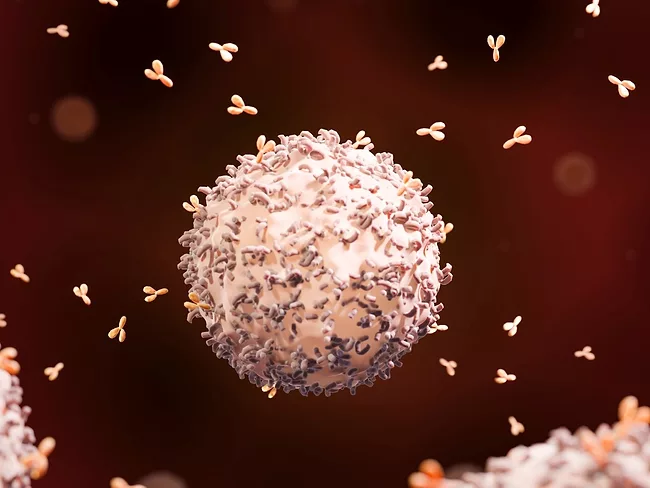
Scientists at the University of Washington have engineered human plasma B cells modified to express long-lasting bispecific antibodies that could be used to treat leukemia without requiring continuous dosing.
Scientists at the University of Washington have engineered human plasma B cells modified to express long-lasting bispecific antibodies that could be used to treat leukemia without requiring continuous dosing.
“We are trying to engineer plasma cells to make as a stable source for biologic drugs. One thing that is really unique about plasma cells is that they can live for a really long time … up to 10 years or even 100 years depending on the type of plasma cell that that you make,” Richard James, senior author of the study, principal investigator at Seattle Children’s Research Institute, and associate professor at the University of Washington, told BioWorld.
Researchers from the University of Washington are seeking patent protection for systems, apparatuses, and methods for treating acute ischemic stroke with electrical stimulation from electrocorticography electrodes that calm overactive neurons in the brain in the acute phase following ischemic stroke, thereby preserving neuronal tissue and neuroplasticity.
Ubidx Inc. has designed a diagnostic system comprised of a fluidic single-use disposable and a base. While the fluidic single-use disposable or cartridge is generally described as being suitable for testing a single sample, the base or hub may be used numerous times to perform numerous tests using numerous fluidic single-use disposables or cartridges.
It has been previously demonstrated that necrosis is associated with metastatic dissemination of cancer cells; however, how necrosis promotes tumor dissemination is not understood. In a recent study, researchers from Fred Hutchinson Cancer Center and University of Washington aimed to investigate the correlation between tumor dissemination and the formation of large contiguous zones of necrosis within the tumor core.