Investigators at Ileadbms Co. Ltd. have discovered a new cyclin-dependent kinase 12 (CDK12) and CDK13 inhibitor, IL6-110, which is being developed for the treatment of cancer.
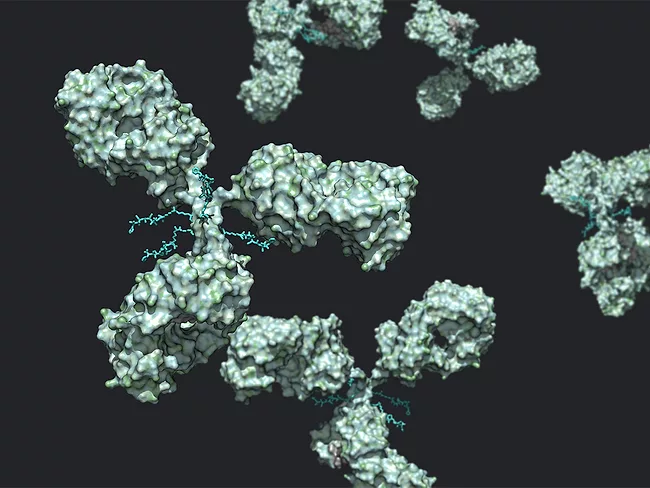
Biomunex Pharmaceuticals SAS has signed an exclusive license and exploitation agreement with Institut Curie for the development of a new class of antibodies.
Tumors in the stomach and pancreas are known to express claudin 18.2 (CLDN18.2) and the absence of expression in normal tissues makes it an attractive therapeutic target.
Hong Kong’s Hutchmed (China) Ltd. reported mixed phase III results of fruquintinib as a second-line combination therapy for advanced gastric cancer on Feb. 6, with the oral vascular endothelial growth factor receptor inhibitor hitting just one co-primary endpoint.
Shanghai Boyue Biotechnology Co. Ltd. has disclosed hepatocyte growth factor receptor (HGFR; MET) and tyrosine-protein kinase receptor UFO (AXL) inhibitors reported to be useful for the treatment of cancer.
Lantern Pharma Inc. has generated a new class of highly specific and highly potent antibody-drug conjugates (ADCs) with a cryptophycin drug-payload, in collaboration with Bielefeld University.
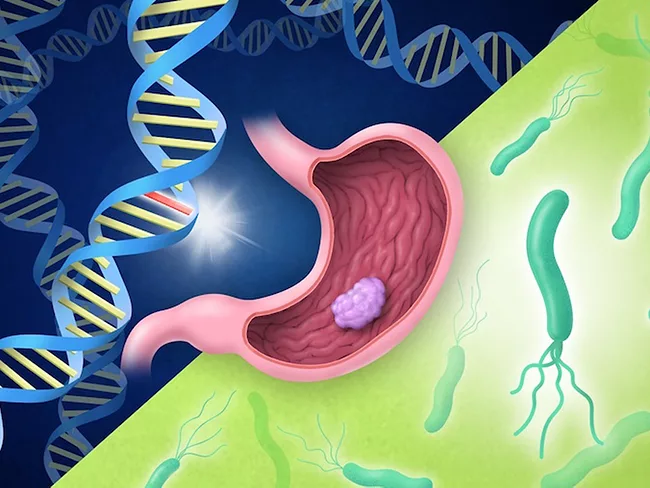
Infection with Helicobacter pylori is a risk factor for the development of gastric cancer. H. pylori initiates a chronic inflammatory response that can lead to the production of excessive radical oxygen species (ROS), which in turn can activate oncogenic signaling pathways leading to gastric cancer development. SUMOylation is a post-translational modification mechanism in cells in response to reactions to stress. A team at The First Affiliated Hospital of Nanchang University hence set out to study the role of SUMO-activating enzyme subunit 1 (SAE1) in gastric cancer, since it is a SUMO-activating effector protein.
Medigene AG has selected initial clinical indications for its lead candidate, MDG-1015, specifically gastric cancer, ovarian cancer, myxoid/round cell liposarcoma and synovial sarcoma.
Hong Kong’s Hutchmed (China) Ltd. reported mixed phase III results of fruquintinib as a second-line combination therapy for advanced gastric cancer on Feb. 6, with the oral vascular endothelial growth factor receptor inhibitor hitting just one co-primary endpoint.