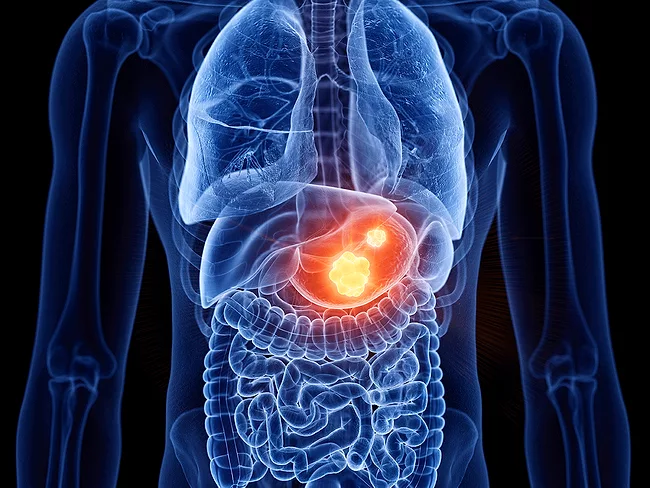
Peptidream Inc. has announced approval of a clinical research protocol for [64Cu]PD-29875, a Claudin 18.2-targeting 64Cu-labeled radiopharmaceutical, in patients with gastric cancer.
Hangzhou Zhongmei Huadong Pharmaceutical Co. Ltd. has disclosed antibody-drug conjugates consisting of antibodies covalently linked to a cytotoxic drug through a linker reported to be useful for the treatment of cancer.
Shanghai Qilu Pharmaceutical Research and Development Centre Ltd. has divulged cellular tumor antigen p53 (TP53) (Tyr220Cys mutant) stabilizers reported to be useful for the treatment of cancer.
Signet Therapeutics founder Haisheng Zhang is betting on organoids and AI to outsmart diffuse gastric cancer and the limits of traditional “clean” drug design.
Shanghai Phrontline Biopharma Co. Ltd. has described antibody-drug conjugates comprising an antibody or antigen-binding fragment targeting HER2 (erbB2) covalently linked to a cytotoxic drug through a linker reported to be useful for the treatment of cancer.
Signet Therapeutics founder Haisheng Zhang is betting on organoids and AI to outsmart diffuse gastric cancer and the limits of traditional “clean” drug design.
Signet Therapeutics founder Haisheng Zhang is betting on organoids and AI to outsmart diffuse gastric cancer and the limits of traditional “clean” drug design.
Changchung Genescience Pharmaceutical Co. Ltd., reported effects of the bispecific antibody-drug conjugate (ADC) of Gensci-143, is in metastatic castration-resistant prostate cancer (mCRPC) and other solid tumors.
Advanced gastric cancer continues to pose a significant medical challenge because of the scarcity of effective treatments and the frequent development of resistance to available drugs.