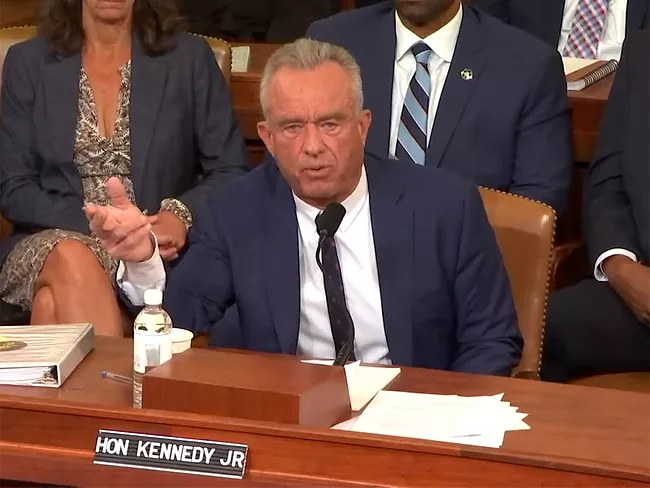
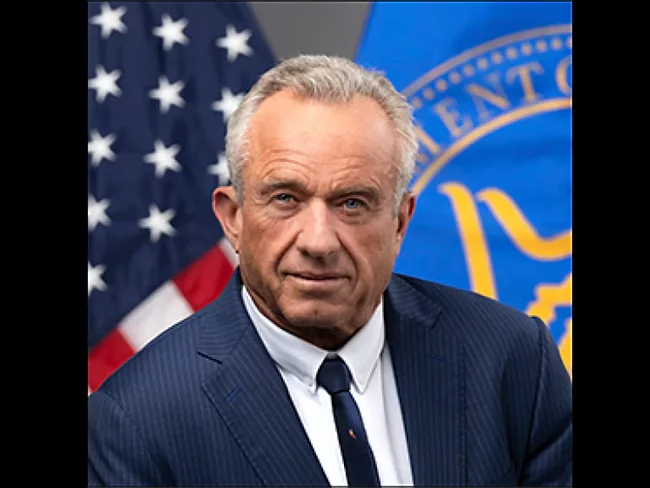
U.S. Health and Human Services (HHS) Secretary Robert Kennedy made his first stop April 16 on a congressional tour in support of President Donald Trump’s proposed fiscal 2027 budget, which would reduce discretional spending for HHS and its agencies by about 12%.
The U.S. House is expected to vote late Nov. 12 on an amended continuing resolution (CR) to end the historic 43-day partial government shutdown. Already passed by the Senate, the CR would fully reopen the government and fund it through Jan. 30. President Donald Trump has said he will sign the CR, which ensures federal employees furloughed during the shutdown will receive back pay and will not be terminated.
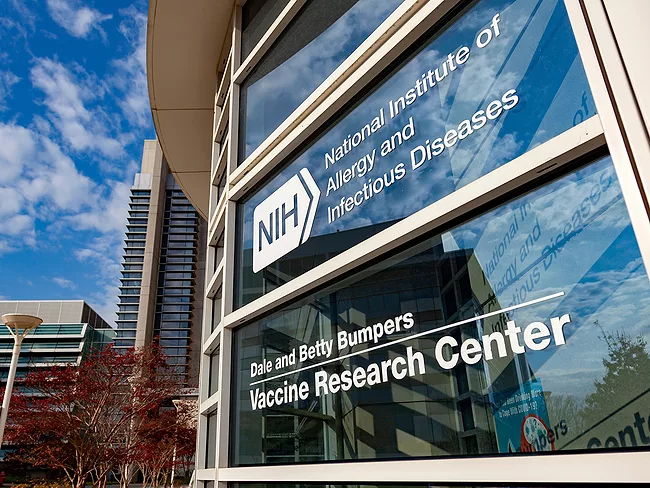
While U.S. government cost-cutting seems to be the Trump administration’s priority that consumes all others, some Republican senators are pushing back – at least when it comes to the NIH. Fourteen senators wrote to Russell Vought, head of the White House Office of Management and Budget, to voice their concerns about the administration’s slow disbursement rate of the NIH’s fiscal 2025 funds.
President Donald Trump signed House Resolution 1, the final version of which does not impose a moratorium on state legislation governing the use of AI. The bill does, however, restore the full deductibility of research and development expenses, which will be retroactive to 2022 for businesses that gross $31 million or less per year.
“I expressed deep concerns with your nomination, Secretary Kennedy, and somehow, unfortunately, you have exceeded my expectations in the worst possible ways,” U.S. Rep. Frank Pallone, D-N.J., told Health and Human Services (HHS) Secretary Robert Kennedy during a June 24 House subcommittee hearing.
If the April 30 hearing on biomedical research before the U.S. Senate Appropriations Committee is any indication, the Trump administration could face a big challenge if it tries to cut more than 40% of the NIH’s budget in fiscal 2026 as proposed and slap a 15% cap on indirect costs.
The next major shock wave to hit the U.S. biopharma and med-tech industries could be the fiscal 2026 federal budget. Nearly one-third of the discretionary budget for the Department of Health and Human Services (HHS) could be wiped out, according to the White House Office of Management and Budget’s “pre-decisional” budget proposal, or passback, for HHS.
On March 1, 2025, former NIH director Francis Collins’ announced that he had fully resigned from the NIH, where he continued to lead a laboratory after his resignation as director. Collins gave no reason for his resignation, but it comes just before this week’s confirmation hearings for Jay Bhattacharya, who is U.S. President Donald Trump’s nominee to lead the NIH and who Collins called a “fringe epidemiologist” during the COVID pandemic. It is a bitter irony that when Collins resigned as NIH director in 2021, then-President Joe Biden said that “countless researchers will aspire to follow in his footsteps.”
On March 1, 2025, former NIH director Francis Collins’ announced that he had fully resigned from the NIH, where he continued to lead a laboratory after his resignation as director. Collins gave no reason for his resignation, but it comes just before this week’s confirmation hearings for Jay Bhattacharya, who is U.S. President Donald Trump’s nominee to lead the NIH and who Collins called a “fringe epidemiologist” during the COVID pandemic. It is a bitter irony that when Collins resigned as NIH director in 2021, then-President Joe Biden said that “countless researchers will aspire to follow in his footsteps.”
With massive terminations, data removals, holds on U.S. government funding, cancellation of various programs and meetings, the potential for 25% tariffs on medical products and a multitude of court challenges and appeals, the dust is flying thick at the FDA, NIH and throughout the Department of Health and Human Services (HHS).