Moon Surgical SAS secured a new $55.4 million round of financing to strengthen the development and commercialization of its Maestro robotic system for laparoscopic surgery.
Robocath SAS is about to embark on a limited market release of its robotic platform, the R-One+, which will not only make performing coronary angioplasties easier and safer but will protect cardiologists from radiation, CEO Lucien Goffart told BioWorld in an interview. However, the launch comes on the heels of a decision by Siemens Healthineers Inc. to discontinue its robotic-assisted endovascular cardiology business as it did not meet the company’s “initial expectations.”
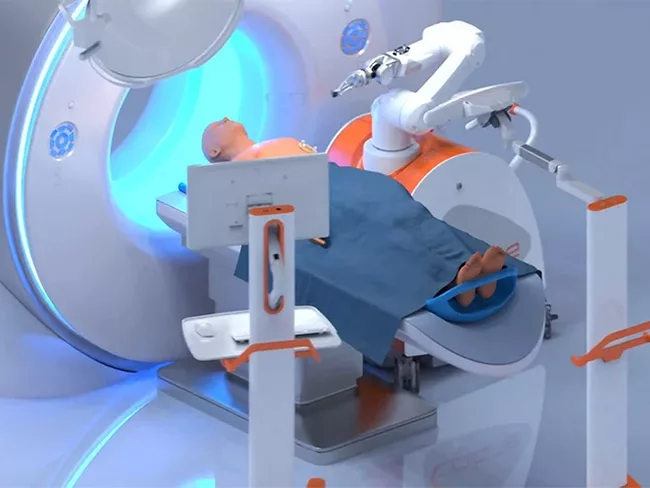
Quantum Surgical SAS has obtained an extension to the FDA authorization covering its Epione robot, which can now treat abdominal cancers. “This decision now allows physicians to treat all abdominal tumors at an early stage and will ramp implementation of our Epione robotics solution in the U.S.,” said Bertin Nahum, CEO and co-founder of Quantum Surgical. Marketed in Europe and the U.S., the Epione robot has already been used to treat more than 150 patients with liver or kidney cancer.
Meio Medical Inc.’s Titian, a surgical robot for navigation in cardiac electrophysiology, has been included in a Green Pathway for approval of medical devices in China, meaning it could get to market faster. Inclusion in the Green Pathway gives the medical device priority for reviewing and shortens the average registration time. Currently, Meio Medical is running a trial of Titian in multiple hospitals in China.
Beijing Surgerii Technology Co. Ltd. completed a series C3 round to support the development of its robotic system for single-port laparoscopic surgery.
Largely underserved pediatric surgery patients in the U.S. could benefit from a new digital laparoscopic surgery solution said its developer Asensus Surgical Inc. Granted a pediatric indication by the U.S. FDA for the Senhance system in late March, the company plans to enter a market that has been largely ignored because of the difficulty performing digital laparoscopic surgery on smaller body patients.
Vitestro Holding BV reported raising $12.7 million in series A financing round to develop the world’s first autonomous blood drawing device. This round was led by Sonder Capital Inc., alongside existing investors and new angel investors with experience in the clinical laboratory and med-tech industry. “Thanks to this fundraising, we are going to accelerate the product development, prepare EU marketing authorization, and initiate production,” Toon Overbeeke, CEO and co-founder of Vitestro, explains to BioWorld.
Medical robotics startup Noah Medical Inc. is conducting a first-in-human clinical trial to assess the safety and feasibility of its Galaxy system to improve lung cancer diagnosis. The device received U.S. FDA clearance on March 1 for use in bronchoscopic visualization and accessing patient airways for diagnostic and therapeutic purposes.
Siyi Intelligence Technology Co. Ltd. raised nearly $15 million in a series A funding round to speed up the development of its smart rehabilitation products and of its neurorehabilitation solutions and build a digital rehabilitation service platform.
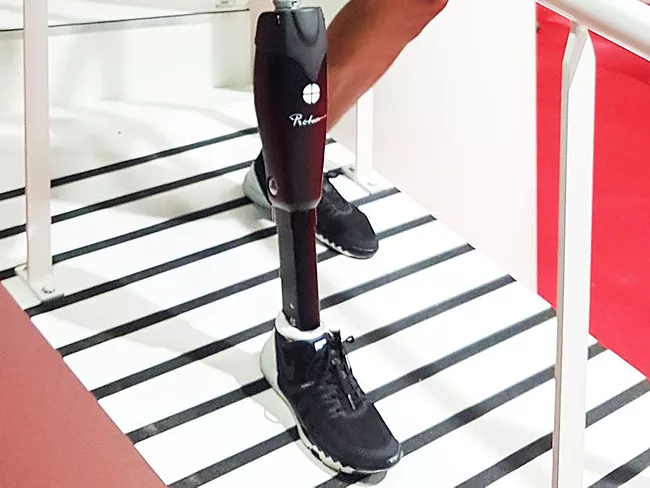
Proteor SAS is launching the Synsys bionic leg, a sensor-equipped microprocessor-controlled knee-ankle-foot prosthetic leg for above-the-knee amputees. This new generation prosthesis coordinates knee and ankle movements simultaneously as an extension of the hip, enabling smoother, more natural movement on a variety of surfaces.
.webp?height=488&t=1684962967&width=650 "Picture-1--A-Maestro-moon-surgical-(002).jpg")