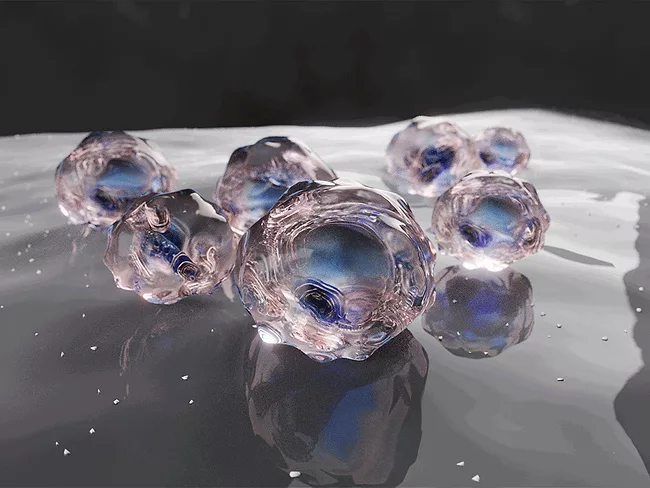
San Diego-based Kenai Therapeutics Inc. raised $82 million in a series A round to move its disease-modifying cell therapy for Parkinson’s disease into the clinic. The company, which leverages induced pluripotent stem cell (iPSC) technology, will advance its next-generation allogeneic neuron replacement cell therapies for neurological diseases, specifically completing a clinical proof-of-concept trial for its lead candidate, RNDP-001. The series A was co-led by Alaska Permanent Fund Corp., Cure Ventures and The Column Group, with participation from Euclidean Capital and Saisei Ventures. Proceeds will enable Kenai to submit an IND for RNDP-001 and bring it through the completion of phase I trials, which are expected to begin sometime in 2024.
San Diego-based Kenai Therapeutics Inc. raised $82 million in a series A round to move its disease-modifying cell therapy for Parkinson’s disease into the clinic. The company, which leverages induced pluripotent stem cell (iPSC) technology, will advance its next-generation allogeneic neuron replacement cell therapies for neurological diseases, specifically completing a clinical proof-of-concept trial for its lead candidate, RNDP-001.
Lift Biosciences Ltd. has announced successful proof-of-concept production of its patented cancer-killing alpha neutrophils from induced pluripotent stem cells (iPSCs). The proof of concept using In-Lift, the company’s second-generation platform which is derived from iPSCs, has shown that the alpha neutrophil type cells produced from iPSCs are able to be activated by chemokines released by tumors and that the cells actively destroy cancer cells.
IPSirius SAS, an early stage French immuno-oncology firm, hopes to obtain a clinical trial authorization from the U.K.’s Medicines and Healthcare Regulatory Products Agency next year, to enable it to move its novel therapeutic cancer vaccine into a first-in-human trial in patients with non-small-cell lung cancer.
IPSirius SAS, an early stage French immuno-oncology firm, hopes to obtain a clinical trial authorization from the U.K.’s Medicines and Healthcare Regulatory Products Agency next year, to enable it to move its novel therapeutic cancer vaccine into a first-in-human trial in patients with non-small-cell lung cancer.
Heartseed Inc. raised ¥2 billion (US$14.3 million) in a series D round to continue the phase I/II Lapis trial of its allogeneic induced pluripotent stem cell (iPSC)-derived cardiomyocytes for heart failure. The lead asset, HS-001, is an investigational cell therapy consisting of clusters of purified heart muscle cells (cardiomyocyte spheroids) derived from iPSCs that are designed to restore heart muscle and function in patients with advanced heart failure.
Researchers from Healios K.K. presented preclinical data for HLCN-061, a novel gene-engineered human induced pluripotent stem cell (iPSC)-derived NK cell product being developed for the treatment of solid tumors.
Heartseed Inc. raised ¥2 billion (US$14.3 million) in a series D round to continue the phase I/II Lapis trial of its allogeneic induced pluripotent stem cell (iPSC)-derived cardiomyocytes for heart failure. The lead asset, HS-001, is an investigational cell therapy consisting of clusters of purified heart muscle cells (cardiomyocyte spheroids) derived from iPSCs that are designed to restore heart muscle and function in patients with advanced heart failure.
An international team of researchers has created two bat stem cell lines that reveal an unusual number of viral sequences in bat cells compared with those of other mammals. Writing in an article posted online Feb. 21, 2023, in Cell, the scientists suggested that the unusual amount of viral genetic material found in the bat stem cells could explain why these mammals are largely unaffected by most viral infections, despite being able to transmit them.
An international team of researchers has created two bat stem cell lines that reveal an unusual number of viral sequences in bat cells compared with those of other mammals. Writing in an article posted online Feb. 21, 2023, in Cell, the scientists suggested that the unusual amount of viral genetic material found in the bat stem cells could explain why these mammals are largely unaffected by most viral infections, despite being able to transmit them.