Acurastem Inc. has been awarded $7.5 million in grant funding by the California Institute for Regenerative Medicine (CIRM) to support the advancement of lead clinical candidate AS-241 toward first-in-human testing.
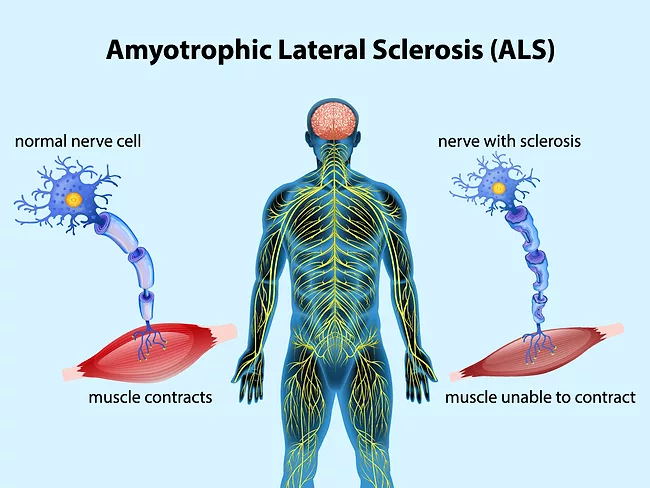
Amyotrophic lateral sclerosis (ALS) is a fatal neurodegenerative disease characterized by the progressive degeneration of motor neurons, leading to muscle wasting and paralysis, among others. Due to its high clinical heterogeneity, effective therapies are still not available.
Insitro Inc. has expanded its strategic collaboration with Bristol Myers Squibb Co. to advance a broadened portfolio of therapeutic programs for amyotrophic lateral sclerosis (ALS).
Keros Therapeutics Inc. has presented data regarding their activin receptor ligand trap, RKER-065, for the inhibition of the activin/myostatin signaling axis.
Acurastem Inc. has received a two-year research grant from Target ALS to advance therapeutics targeting SYF2, a recently identified regulator of TDP-43 function. TDP-43 dysfunction is a central biological hallmark of amyotrophic lateral sclerosis (ALS).
The exact genetic and epigenetic cause of the sporadic form of amyotrophic lateral sclerosis (ALS), which affects approximately 90% of patients, are largely unknown. Previous work found that mitochondrial dysfunction and metabolic dysregulation are crucial to ALS pathophysiology.
Newco Vesalic Ltd. has formed to take forward research indicating extracellular vesicles secreted by skeletal muscle cells carry toxic payloads that are key drivers of motor neuron diseases, including amyotrophic lateral sclerosis. The discovery of this process, which is largely external to the brain and the central nervous system, has opened up new targeting possibilities, and Vesalic is now working on in vivo studies to demonstrate preclinical proof of concept.
Newco Vesalic Ltd. has formed to take forward research indicating extracellular vesicles secreted by skeletal muscle cells carry toxic payloads that are key drivers of motor neuron diseases, including amyotrophic lateral sclerosis. The discovery of this process, which is largely external to the brain and the central nervous system, has opened up new targeting possibilities, and Vesalic is now working on in vivo studies to demonstrate preclinical proof of concept.
Vesalic has characterized a systemic metabolic dysfunction that creates a toxic exosome cargo in amyotrophic lateral sclerosis (ALS) patients, which is carried to the CNS, where it binds to and damages neurons, yielding a novel druggable target against the disease.
About 10% of amyotrophic lateral sclerosis (ALS) cases result from inherited genetic mutations, with about 20% of them attributed to mutations in the gene encoding the ubiquitous cytoplasmic copper/zinc superoxide dismutase 1 (SOD1).