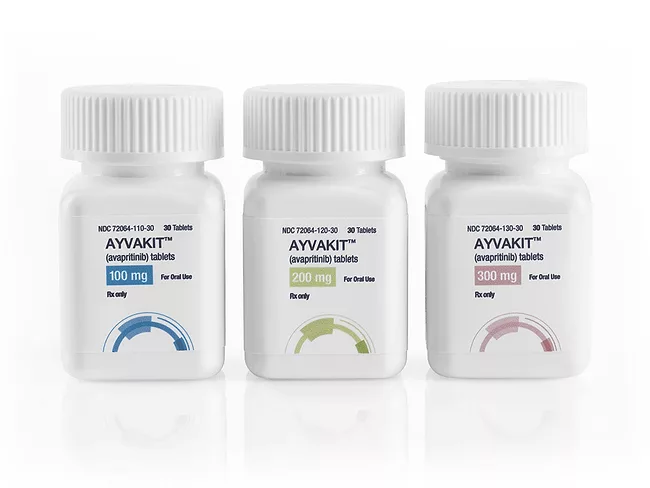
Blueprint Medicines Corp. shifted away from two early clinical therapies for EGFR-mutant non-small-cell lung cancer and dropped development and commercialization of lung and thyroid cancer drug Gavreto (pralsetinib) for areas outside of the U.S. and greater China, reducing its operating expenses, as it prepares for increasing Ayvakit sales and prioritizes development of other assets.
Wall Street’s measure of how Cogent Biosciences Inc.’s KIT D816V inhibitor bezuclastinib (often shortened to bezu) might fare in mastocytosis against U.S. FDA cleared Ayvakit (avapritinib), the tyrosine kinase inhibitor from Blueprint Medicine Corp., caused the former’s stock (NASDAQ:COGT) to tumble, closing Dec. 11 at $4.06, down $4.58, or 53%. Data from the ongoing phase II Summit trial testing bezu in non-advanced systemic mastocytosis rolled out during the American Society of Hematology (ASH) meeting in San Diego. Waltham, Mass.-based Cogent’s prospect turned up a rapid and continuing improvement in patient symptoms, with a 57% median best improvement on Mast Cell Quality-of-Life.
More than two months after Blueprint Medicines Corp. gained a broadened label for Ayvakit (avapritinib), the company is “really pleased to see the diversity of revenue this early in the launch across specialties and across both the academic and community settings,” said Philina Lee, chief commercial officer. The situation “bodes very well for a continued cadence of prescribing [into] the foreseeable future,” she said.
Blueprint Medicines Corp. scored a broader label from the U.S. FDA for Ayvakit (avapritinib), which became the first approved therapy to treat adults with indolent systemic mastocytosis (ISM).
“No good data goes unpunished in this market,” H.C. Wainwright analyst Andrew Fein wryly noted in an Aug. 17 research report highlighting Wall Street’s dismal response to Blueprint Medicines Corp.’s positive top-line readout of the registrational Pioneer study, in which KIT inhibitor Ayvakit (avapritinib) met the primary and all key secondary endpoints in patients with non-advanced systemic mastocytosis.
With data due later this summer from the phase II Pioneer trial testing Blueprint Medicines Corp.’s approved Ayvakit (avapritinib), many investor eyes are on the potential label expansion into indolent systemic mastocytosis – but the company has another potential ace in the hole with BLU-451, which targets EGFR exon 20 insertion mutations in non-small-cell lung cancer (NSCLC).
Blueprint Medicines Corp. CFO Mike Landsittel called his firm’s potential $1.25 billion financing deals with Sixth Street and Royalty Pharma “once in a lifetime” arrangements that came at the end of a competitive process in a formidable cash environment.
Blueprint Medicines Corp. gained the FDA’s nod for Ayvakit (avapritinib) to treat systemic mastocytosis (SM), adding another indication to the KIT inhibitor’s label. For the first time, patients have available a targeted therapy designed to block D816V mutant KIT, the central driver of the disease.
At the recent American Association for Cancer Research (AACR) meeting, Blueprint Medicines Corp. unveiled results from the registrational phase II Pathfinder study with Ayvakit (avapritinib) in systemic mastocytosis (SM), adding more promise to the KIT inhibitor class.
Personalized medicine, also referred to as precision or targeted medicine, continues to have a significant impact on the treatment of diseases, particularly cancer. Over the past decade or so there has been a dramatic surge in research and development investments in this field. According to the Washington-based Personalized Medicine Coalition, there are about 286 such medicines on the market currently, a number that has more than doubled from the 132 that were available in 2016, representing the largest four-year increase since the PMC began tracking personalized therapies back in 2008.