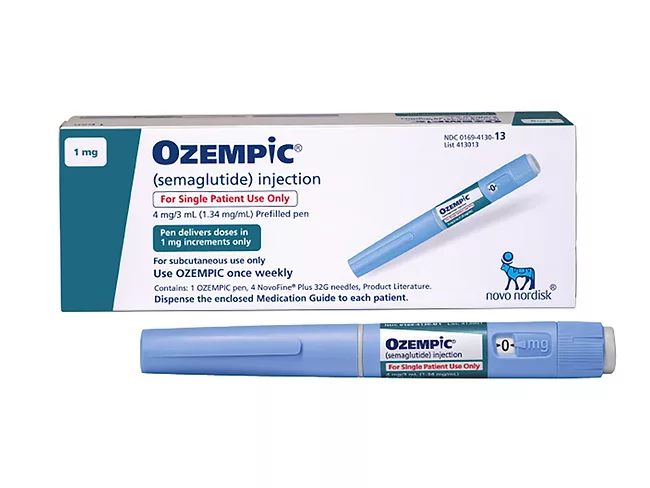
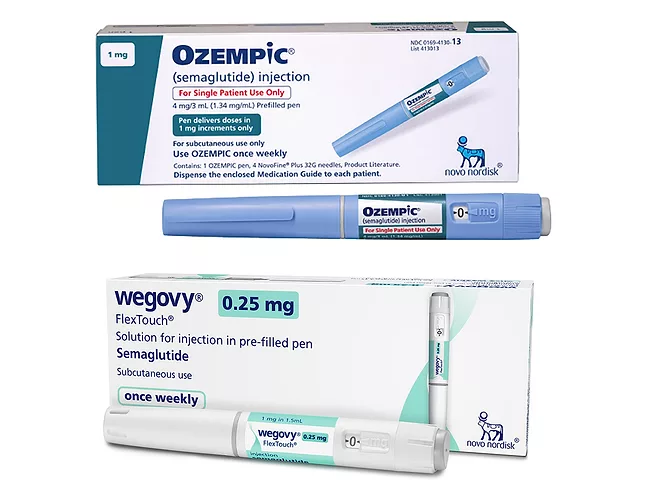
Now that Novo Nordisk A/S’ blockbuster semaglutide franchise has been selected as one drug for the next round of the CMS price negotiation, the Bagsværd, Denmark-based company is asking a U.S. appellate court to expedite its consideration of Novo’s challenge to the negotiations and the way CMS is implementing the program.
The EMA has started a review of Novo Nordisk A/S’ GLP-1 receptor agonist, semaglutide, after the Danish regulatory agency raised the possibility it causes an increased risk of suffering from an acute eye condition. After the first report in July 2024, the Danish regulator had received, by Dec. 10, 2024, a total of 19 reports of non-arteric anterior ischemic neuropathy, a rare condition that affects the small blood vessels at the front of the optic nerve. This can lead on to sudden vision loss and visual field defects.
In the final days of the Biden administration, the U.S. Department of Health and Human Services’ Centers for Medicare and Medicaid Services (CMS) laid out the latest 15 drugs that are subject to negotiated prices, with Novo Nordisk A/S’ GLP-1 drug Ozempic for type 2 diabetes topping the list, bringing Rybelsus and Wegovy along for the ride because they share the same active ingredient, semaglutide.
2024 was another banner year for GLP-1 receptor agonists (GLP-1RAs) on multiple fronts. They continued to expand into new indications, and provide their developers with both rich remuneration and scientific acclamation. There are now seven approved GLP-1RAs. Commercially, the most successful one so far is semaglutide, sold under the brand name Wegovy or Ozempic depending on the indication.
2024 was another banner year for GLP-1 receptor agonists (GLP-1RAs) on multiple fronts. They continued to expand into new indications, and provide their developers with both rich remuneration and scientific acclamation. There are now seven approved GLP-1RAs. Commercially, the most successful one so far is semaglutide, sold under the brand name Wegovy or Ozempic depending on the indication.
The Danish Medicines Agency is to ask the EMA’s pharmacovigilance committee to investigate a potential increased risk of an acute eye condition in diabetic patients being treated with the glucagon-like peptide-1 receptor agonist Ozempic (semaglutide).
When U.S. CMS Administrator Chiquita Brooks-LaSure announced Nov. 26 that the agency is “reinterpreting” the law in proposing a rule allowing Medicare and Medicaid to cover obesity drugs beginning in 2026, she called it a “historic step.” The rule, if finalized, could make obesity drugs like Novo Nordisk A/S’ Wegovy (semaglutide) and Eli Lilly and Co.’s Zepbound (tirzepatide) available to millions more Americans and further invigorate development of other obesity drugs. But given the lateness of the day in the Biden administration, the proposal may be more symbolic than historic.
Nearly $3.8 billion was earned by Novo Nordisk A/S and Eli Lilly and Co. in the third quarter for their glucagon-like peptide-1 (GLP-1) drugs to treat obesity. Novo’s GLP-1 drug, Wegovy (semaglutide), approved by the U.S. FDA in June 2021, had sales of DKK17.3 billion (US$2.5 billion), while Lilly’s Zepbound (tirzepatide), which is a GLP-1 and glucose-dependent insulinotropic polypeptide dual agonist FDA-approved in November 2023, posted sales of $1.26 billion for the quarter.
Danish pharma giant Novo Nordisk A/S is set to launch its blockbuster glucagon-like peptide-1 therapy, Wegovy (semaglutide), in South Korea’s growing obesity therapeutics market next week, a company official confirmed to BioWorld.
Given the demand for Ozempic and Wegovy and the revenue the GLP-1 drugs are generating for Novo Nordisk A/S in the U.S., a lot of generic companies are clamoring to cash in on the drugs’ current popularity. And there are some U.S. lawmakers more than willing to oblige.