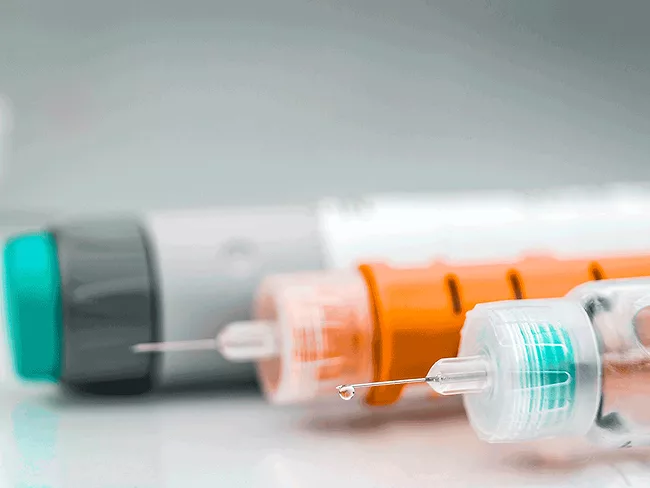
Fake versions of Novo Nordisk A/S’ 1-mg Ozempic prefilled pens are sounding alarms in Europe amid an ongoing shortage of the company’s semaglutide products resulting from demand in the weight-management space.
South Korean pharmaceutical company Hanmi Pharmaceutical Co. Ltd. may have found its footing after its misstep with Sanofi SA in 2020 for efpeglenatide, its glucagon-like peptide-1 (GLP-1) receptor agonist. On July 31, Hanmi announced that the once-dropped drug would be developed to treat obesity in the Korean population, submitting an IND application to the MFDS on July 28 to examine the once-a-week injection efpeglenatide in a phase III trial.
South Korean pharmaceutical company Hanmi Pharmaceutical Co. Ltd. may have found its footing after its misstep with Sanofi SA in 2020 for efpeglenatide, its glucagon-like peptide-1 (GLP-1) receptor agonist. On July 31, Hanmi announced that the once-dropped drug would be developed to treat obesity in the Korean population, submitting an IND application to the MFDS on July 28 to examine the once-a-week injection efpeglenatide in a phase III trial.
Mixing a trendy drug for a global health problem like obesity with a demand that far exceeds the supply cooks up a recipe too good for counterfeiters to ignore.
Mixing a trendy drug for a global health problem like obesity with a demand that far exceeds the supply cooks up a recipe too good for counterfeiters to ignore. That’s the problem patients are facing with Novo Nordisk A/S’ semaglutide products, Ozempic and Wegovy, which have been in short supply all over the world since early last year due to significant, and unexpected, demand for weight management.
Novo Nordisk A/S' Ozempic, a once-weekly injectable version of the company's glucagon-like peptide-1 (GLP-1) receptor agonist, semaglutide, first FDA-approved in late 2017, has won the agency' approval for a new indication: reducing the risk of major adverse cardiovascular events (MACE) in adults with type 2 diabetes (T2D) and known heart disease.