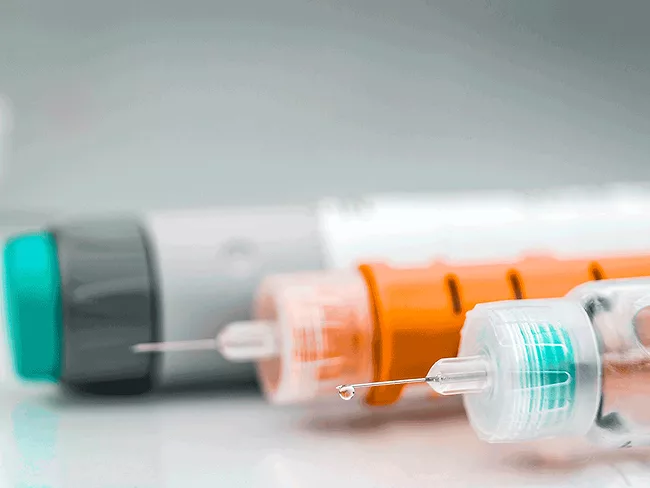
A slew of biosimilar versions of TNF-alpha inhibitor adalimumab will finally arrive on the U.S. market in 2023, almost seven years after the first such molecule, Amgen Inc.’s Amjevita (adalimumab-atto) gained U.S. FDA approval. Amgen commercially launched its product on Jan. 31. Seven more are lined up for launch over the summer, while two more are undergoing regulatory review. Their long-anticipated arrival will mark the beginning of the end for one of the most lucrative franchises in the history of the pharmaceutical industry. It represents, according to Cardinal Health Inc.’s newly published 2023 Biosimilars Report, “the largest loss of exclusivity event, perhaps ever in the U.S.”
With at least six others behind it, Amgen Inc.’s Amjevita is leading a 2023 U.S. biosimilars charge to challenge the all-time biggest-selling drug, Humira (adalimumab), from Abbvie Inc. Amjevita hit the U.S. market Jan. 31, and Amgen has the biosimilar priced at two levels, both lower than Humira’s. One is a list price 55% below Humira’s list price of about $115,000 annually and the second is 5% below Humira’s list price. Boehringer Ingelheim GmbH, Sandoz Inc., Samsung Bioepis Co. Ltd./Organon & Co., Pfizer Inc., Viatris Inc. and Coherus Biosciences Inc. all have biosimilar challengers to Humira that are set to launch in July 2023, all likely to come with a lower price tag than Humira’s.
Boan Biotechnology Co. Ltd. raised HK$152.8 million (US$19.6 million) from a Hong Kong IPO, capital the company will use to speed up product development, expand marketing and ramp up manufacturing.
Boan Biotechnology Co. Ltd. raised HK$152.8 million (US$19.6 million) from a Hong Kong IPO, capital the company will use to speed up product development, expand marketing and ramp up manufacturing.
Although it’s a make-or-break market for many novel drugs, the U.S. is still testing the waters with biosimilars to some extent. That’s expected to change when at least seven biosimilars, including an interchangeable, referencing Abbvie Inc.’s Humira (adalimumab) are set to launch in the U.S. within the first seven months of next year. Next week, BioWorld will look at the significance of that looming competition and how the global biosimilars market is evolving amid a changing landscape of players, policies and pipelines.
The revised Build Back Better bill Democrats in the U.S. Senate are looking to pass in the next few weeks could deliver savings of $18 billion to $24 billion per year from 2028 through 2031 through drug pricing reforms that include direct Medicare price negotiations, according to a Congressional Budget Office estimate.
Shanghai Henlius Biotech Inc. signed an exclusive licensing deal with Organon LLC under which Organon will in-license rights for two of Henlius’ internally developed biosimilar candidates for global commercialization, excluding China, Hong Kong, Macau and Taiwan.
The U.S. FDA’s accelerated approval path is front burner these days, what with Congress looking to modernize the path through provisions added to the must-pass user fee legislation, the controversy still boiling over the FDA’s accelerated approval last year of Biogen Inc.’s Alzheimer’s drug, Aduhelm (aducanumab), and a number of recent withdrawals of drugs granted accelerated approval years ago.
Shanghai Junshi Biosciences Co. Ltd. and Mabwell Bioscience Co. Ltd. have won marketing approval for the adalimumab biosimilar Junmaikang from China’s NMPA for the treatment of patients with rheumatoid arthritis, ankylosing spondylitis and psoriasis.
Even though Congress isn’t likely to approve BsUFA III for several months, the FDA is getting a jump on one of the BsUFA commitments it negotiated with industry to pilot a regulatory science program to facilitate the development of biosimilars and interchangeables.