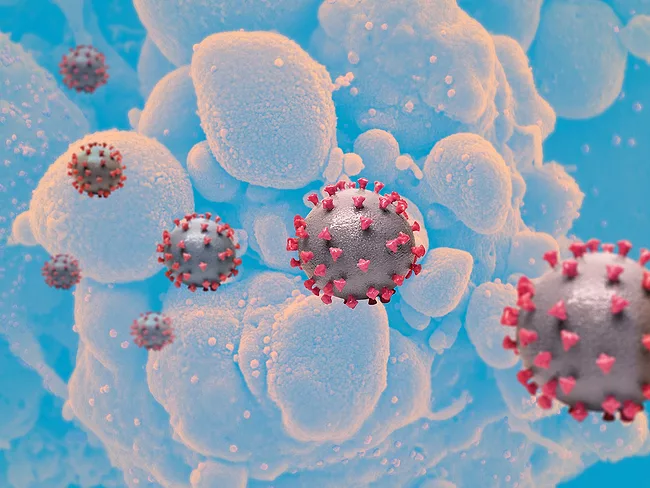
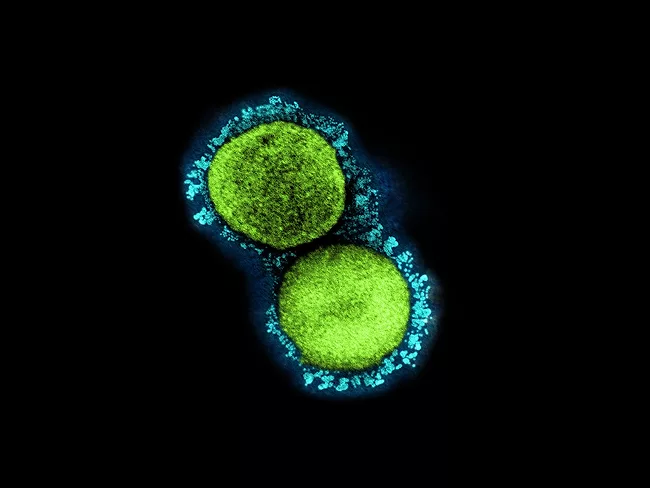
As of May 2023, the WHO recommends the use of a monovalent XBB.1 descendent lineage, such as omicron XBB.1.5, as the vaccine antigen for COVID-19 vaccines. However, BA.2.86 and its descendent lineages, such as JN.1, have emerged and rapidly spread worldwide.
Shemyakin Institute of Bioorganic Chemistry has synthesized perylenylethynylphenol derivatives acting as photosensitizers for photodynamic therapy reported to be useful for the treatment of SARS-CoV-2 infection (COVID-19).
Researchers from the Institute for Basic Science of Korea and collaborating institutions have designed a new class of peptide-based inhibitors targeting a crucial interface within the SARS-CoV-2 replication complex, offering a potential new avenue for antiviral therapy.
Scientists at the Institute of Organic Chemistry and Biochemistry of the Czech Academy of Sciences have synthesized nonstructural protein 14 (NSP14) (coronavirus) inhibitors reported to be useful for the treatment of coronavirus acute respiratory syndrome.
The Institute of Physical and Chemical Research and Kyoto University have synthesized isoindoline compounds reported to be useful for the treatment of viral infections.
Consejo Superior de Investigaciones Científicas (CSIC) has synthesized antiviral compounds reported to be useful for the treatment of coronavirus acute respiratory syndrome.