At first glance, Cellarity Inc. might appear as one more company harnessing the computational power of AI and machine learning to boost drug discovery efforts. A closer look, however, reveals a different approach, one that looks at cells and cellular behavior to address disease rather than the traditional method of seeking out molecular targets.
Flagship Pioneering-backed Profound Therapeutics Inc. made its debut with $75 million from its originator to support ongoing efforts with the Profoundry platform, which the company said has led to the discovery of tens of thousands of novel proteins as part of an ambitious plan for “remapping the landscape of the human genome.”
After two years of developing its platform, Vesalius Therapeutics Inc. now has $75 million in its pocket from Flagship Pioneering to understand and treat the diseases that account for 90% of the world’s illnesses. To resolve this massive amount of biological and industry complexity, Doug Cole, Vesalius’ chairman and co-founder and Flagship’s managing partner, noted the distinction between illness and disease. “Illness is what bothers you, it’s the experience of being sick and what the doctor might find when you’re examined,” Cole told BioWorld. “Disease is the mechanistic problem with the biology underlying the illness.”
Flagship Pioneering Inc., the serial biotech-founding investor that created RNA trailblazer Moderna Inc., is putting its money behind Senda Biosciences Inc. and a technology that aims create medicines by changing the way the body interacts with organisms such as plants and microbes. Senda has just announced the closing of a $98 million series B funding round, after completing a $55 million extension that brings total funding raised so far to $143 million.
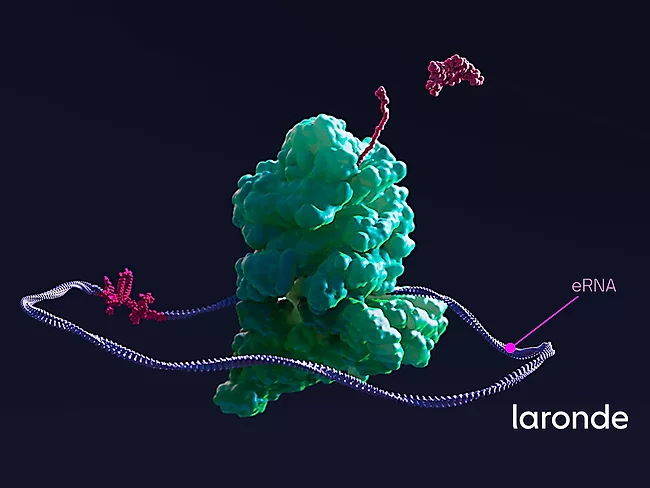
Flagship Pioneering, the company-creating venture fund that launched Moderna Inc. in 2012, is betting $50 million on a new twist in RNA-focused development at Laronde Inc. Leveraging its explorations of the therapeutic applicability of long non-coding RNA, Flagship CEO Noubar Afeyan said the company has created Endless RNA (eRNA), "a new class of medicines that can be programmed to persistently express therapeutic proteins in the body, at tunable levels."
Newly launched Inzen Therapeutics Inc. is wrestling with cell loss and what information those cells impart as they die. The premise, that cells leave a legacy to living cells, is at the heart of the company as it works to find and develop therapies based on its Thanokine Biology, which the company said could be used for preventing and treating cancer, fibrotic disorders, immune-inflammatory disorders, metabolic disorders and degenerative diseases.
Tessera Therapeutics Inc., a Cambridge, Mass.-based company working to "write therapeutic instructions into the genome," has raised $230 million in series B financing to back its development of potential cures and treatments for cardiovascular, oncological, neurodegenerative and infectious diseases.
In case you haven't heard, Tessera Therapeutics Inc. is working on techniques to write genes into the genome of patients. Tessera, which was developed in Flagship Pioneering Inc.'s Flagship Labs and became a stand-alone incorporated company two years ago, recently came out of stealth mode to highlight its Gene Writing platform based on mobile genetic elements, such as transposons and retrotransposons.
In an uncertain time that’s dominated by COVID-19, Flagship Pioneering Inc. and Arch Venture Partners collectively raised a massive $2.56 billion to fund new company creation and growth.