Autobahn Therapeutics Inc. has closed a US$32.7 million financing to support the company's continued work in the treatment of central nervous system (CNS) disorders and the advancement of ABX-002 through phase I and into phase II proof-of-concept studies for treatment-resistant depression (TRD).
In the steadily heating-up psychedelics space, Wall Street is closely watching a number of players, among them Compass Pathways plc, which has slated an R&D update for Oct. 12. The check-in could provide guidance for investors on how the FDA regards COMP-360, the firm’s oral psilocybin for treatment-resistant depression (TRD). It could also help observers guess about the fate of pipeline prospects in the hands of others, including GH Research plc, advancing a would-be TRD fix derived from dried venom secreted by the Bufo alvarius toad.
Compass Pathways plc rolled out favorable top-line findings from the largest randomized, controlled, double-blind psilocybin therapy study ever completed, showing that COMP-360 at 25 mg yielded a highly statistically significant and clinically relevant reduction in symptom severity after three weeks in patients with treatment-resistant depression (TRD)
.
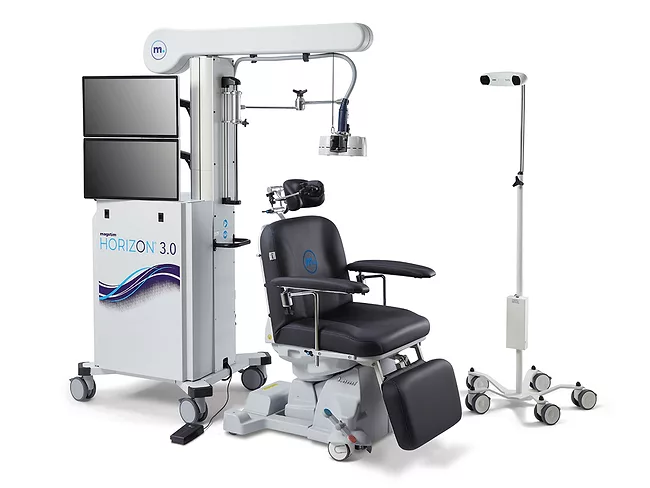
The FDA has granted Magstim Co. Ltd. 510(k) clearance for its transcranial magnetic stimulation (TMS) platform Horizon 3.0. TMS is a series of repetitive, focused magnetic pulses, used to stimulate brain cells. The noninvasive therapy has been touted as a cost-effective treatment for depression and is typically prescribed when antidepressants have failed, or the side effects are too disruptive to a patient’s lifestyle.
HONG KONG – Otsuka Pharmaceutical Co. Ltd. is celebrating its 100th anniversary by inking a collaboration and licensing agreement with Perception Neuroscience LLC to develop and commercialize the latter’s PCN-101 (r-ketamine) in Japan. The treatment targets mood disorders such as major depressive disorder and treatment-resistant depression. Perception is also developing PCN-101 to treat TRD outside Japan.
By acquiring privately held Cadent Therapeutics Inc., Novartis AG gains full rights to Cadent’s allosteric modulator program, part of which the two companies began collaborating on in 2015, and all the company’s outstanding stock. Cambridge, Mass.-based Cadent will receive as much as $770 million, $210 million of it up front, plus $560 million in milestones.
Neurocrine Biosciences Inc.’s chief business development and strategy officer, Kyle Gano, said “there was really no playbook” for the deal in which his firm is paying Takeda Pharmaceutical Co. Ltd. $120 million up front for an exclusive license to seven programs, including three clinical-stage assets targeting the notoriously difficult indications of schizophrenia and treatment-resistant depression (TRD), as well as depression-related anhedonia.
To better tap into the potential of transcranial magnetic stimulation (TMS), Stanford University researchers developed a high-dose, precision-targeted protocol known as Stanford Accelerated Intelligent Neuromodulation Therapy (SAINT).