The burgeoning psychedelic therapeutics market experienced a boost Jan. 25 as Small Pharma Inc. announced its synthetic, intravenous formulation of N,N-dimethyltryptamine (DMT), SPL-026, led to a statistically significantly, rapid reduction in depression symptoms in patients with major depressive disorder in a phase IIa trial, thus meeting its primary endpoint. DMT is a powerful hallucinogenic tryptamine substance which works as a 5-HT receptor agonist. It is found naturally in various plants, and is a schedule I controlled substance in the U.S. Although lesser known than other psychedelics such as magic mushrooms and LSD, it produces short-lived but intense auditory and visual hallucinogenic effects.
Magstim Inc. received U.S. FDA clearance for use of its Horizon 3.0 and E-z Cool Coil to treat adult patients diagnosed with both obsessive compulsive disorder (OCD) and major depressive disorder (MDD). The company’s non-invasive transcranial magnetic stimulation (TMS) therapy offers an option for patients who do not find adequate relief from the often life-disrupting symptoms of OCD with exposure therapy or medication.
Luye Pharma Group has received marketing approval from China’s NMPA for the triple monoamine reuptake inhibitor Ruoxinlin (toludesvenlafaxine hydrochloride) to treat patients with major depressive disorder, a condition that “has become one of the most prevalent mental disorders in China, causing a heavy burden on patients, their families and the entire society,” said Luye President Yang Rongbing.
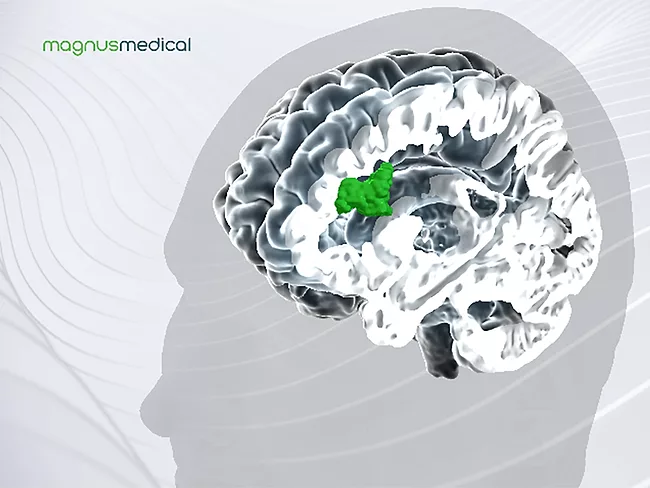
Magnus Medical Inc. received FDA clearance for a neuromodulation platform to treat major depressive disorder (MDD) in adults for whom antidepressant medication has been ineffective.
The mutual recognition agreement between Switzerland and the EU for medical devices lapsed in 2021, a development that was expected to add a significant amount of drag on Swiss device exports to EU nations.
Shares of Axsome Therapeutics Inc. (NASDAQ:AXSM) hit a 52-week low on Aug. 9, falling 46.5% to close at $24.37, after the FDA said deficiencies in an NDA in major depressive disorder for its drug, AXS-05 (dextromethorphan + bupropion), would "preclude labeling discussions" for now.
Biogen Inc. has announced contrasting results from phase III trials of therapies for a rare eye disease and depression, following last week’s controversial FDA approval of Alzheimer’s drug Aduhelm. The Cambridge, Mass.-based firm said a phase III gene therapy study in the rare retinal disease choroideremia missed its primary and secondary endpoints, although the news was better from a potential therapy for major depressive disorder.
Sage Therapeutics Inc. on March 17 disclosed another batch of positive phase III data with zuranolone, its oral, once-daily, two-week therapy for the treatment of major depressive disorder (MDD) and postpartum depression. News regarding the GABAA receptor-positive allosteric modulator came the same day that Praxis Precision Medicines Inc. reported fourth-quarter and full-year financial results, updating investors on PRAX-114, its drug in the same class for MDD.
The whopper deal between Biogen Inc. and Sage Therapeutics Inc. – a global collaboration and licensing deal involving the latter’s zuranolone (also known as SAGE-217) for major depressive disorder (MDD), postpartum depression (PPD) and other psychiatric disorders, as well as SAGE-324 for essential tremor (ET) and neurological disorders – drew mixed reviews from Wall Street. And, for Biogen investors, the would-be Alzheimer’s disease (AD) therapy aducanumab remains front of mind.
Testing Nuplazid (pimavanserin) against major depressive disorder (MDD), Acadia Pharmaceuticals Inc. became the latest to fail in the indication as the company unveiled top-line results from the 298-patient phase III effort called Clarity.