Newco Teitur Trophics ApS has raised €28 million (US$30.1 million) in a series A with which it will lay out a new route to targeting sortilin in the treatment of neurodegenerative diseases. The company is targeting the sortilin-related Vps10p domain containing receptor, which plays a role in regulating a number of pathways involved in the control of neuronal viability and function.
Teitur Trophics ApS, a spinout from Aarhus University seeded by the Bioinnovation Institute in 2020, has completed a €28 million (US$30.1 million) series A financing. Teitur has developed a platform of first-in-class cyclic peptides with a novel mechanism that preserves neuronal function, and these peptides have the potential to treat a broad range of neurodegenerative diseases.
The suppression of the SYF2 factor could be a new therapeutic strategy for the treatment of the different types of amyotrophic lateral sclerosis (ALS). According to a study from the University of Southern California, SYF2 acts on the TDP-43 protein, improving the survival of motor neurons affected by this disease. “We wanted to find something that would improve neuron survival across many different iPSC lines for ALS,” Justin Ichida told BioWorld.
The sigma 1 receptor is widely distributed in the nervous system and its function has been implicated in a number of neurological disorders including dementia, Alzheimer’s disease (AD) and other neurodegenerative diseases. In a recent publication, researchers from the University of Nebraska detailed the discovery of novel sigma 1 receptor modulators.
Shanghai Raising Pharmaceutical Co. Ltd. has synthesized prodrugs of thiamine acting as amyloid-β (Aβ) protein production inhibitors reported to be useful for the treatment of neurodegenerative diseases, preferably Alzheimer's disease (AD).
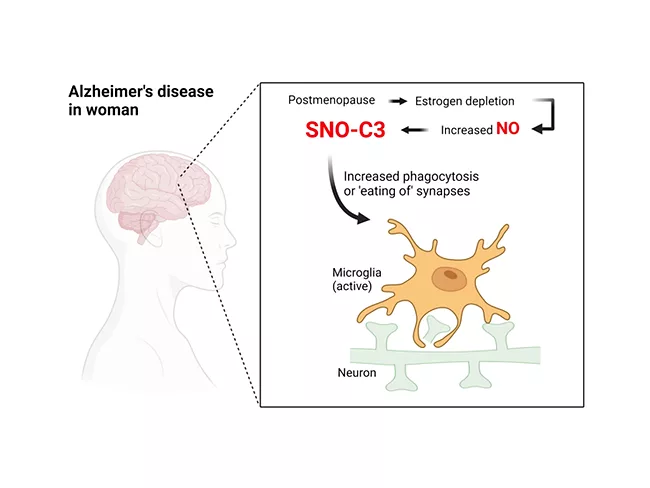
Alzheimer’s disease has a higher incidence in women. This sex difference was associated with a modification of certain proteins of the immune system. According to a recent study, the drop in estrogen with menopause increased the expression in the brain of a neurotransmitter, nitric oxide (NO), generating the S-nitrosylation of complement factor C3 (abbreviated SNO-C3), which activated the microglia.
Ono Pharmaceutical Co. Ltd. has entered a worldwide drug discovery collaboration agreement with Captor Therapeutics SA to develop novel small-molecule degrader drugs against a currently undrugged target of interest in neurodegenerative diseases.
Pharmaxis Ltd. has found new funding to breathe life into a drug that looked like it might sit on the shelf for a while, but now appears to be a good candidate for tackling Parkinson’s and other neurodegenerative diseases.